Context: El Niño Impact on India Economy
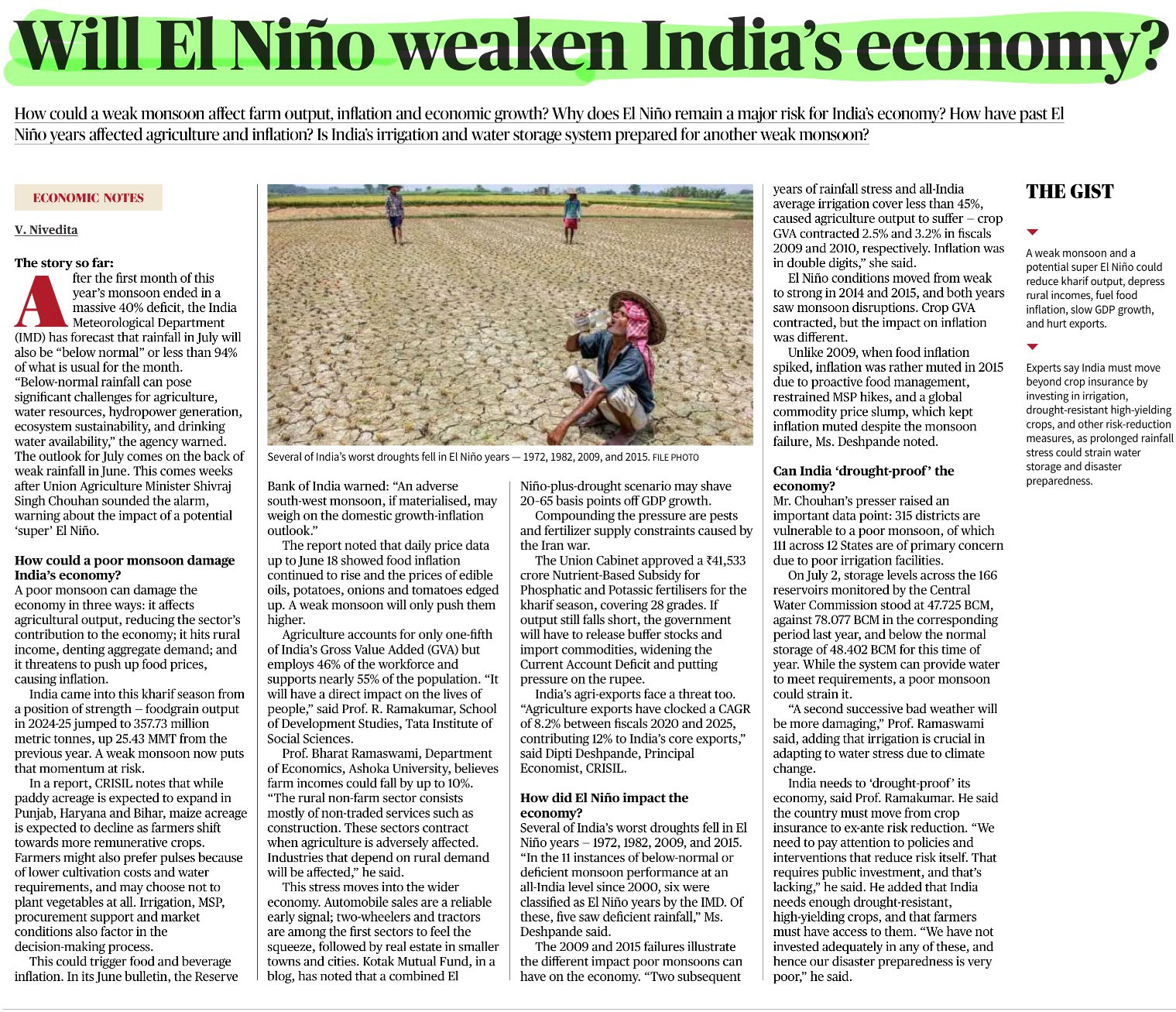
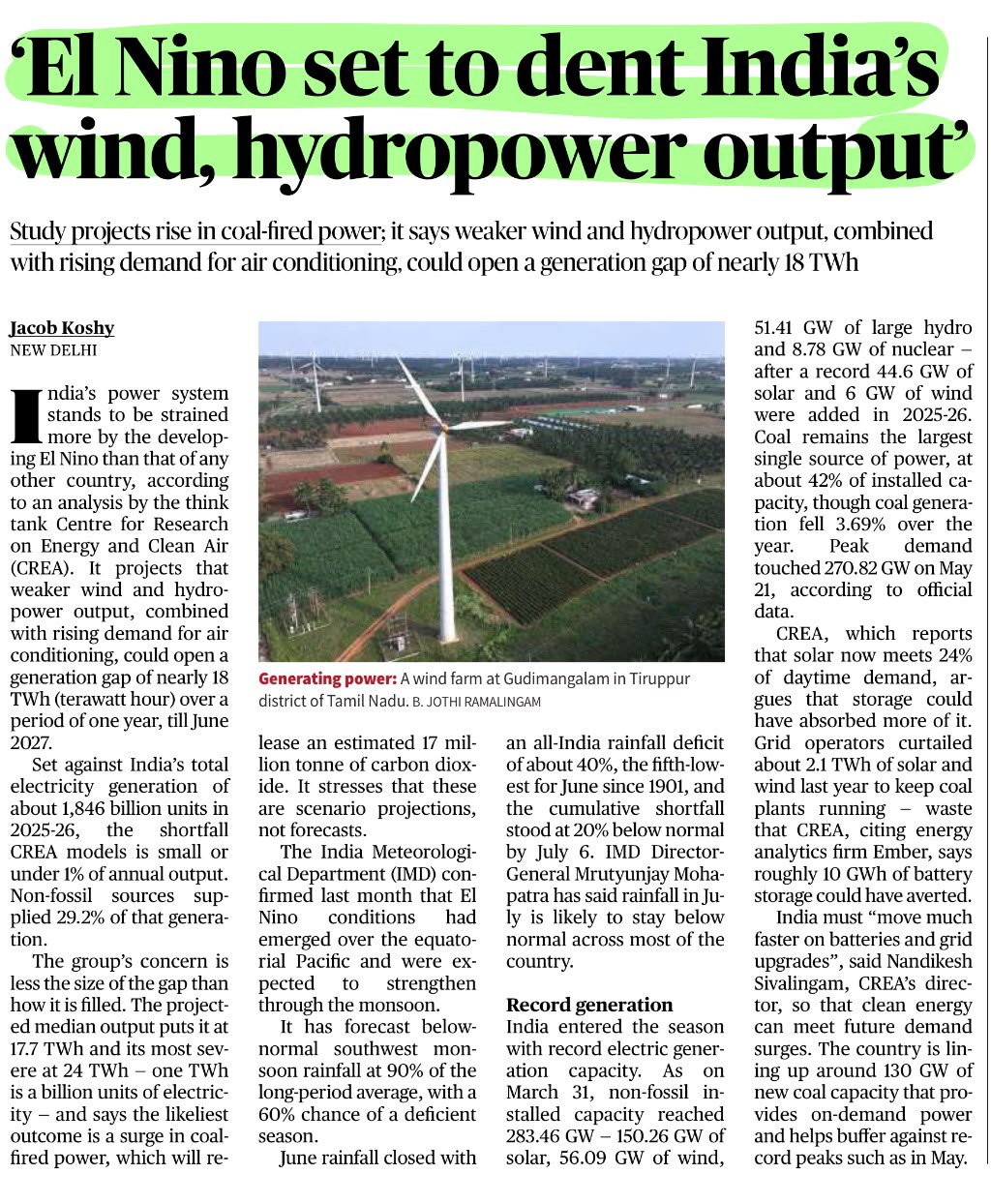
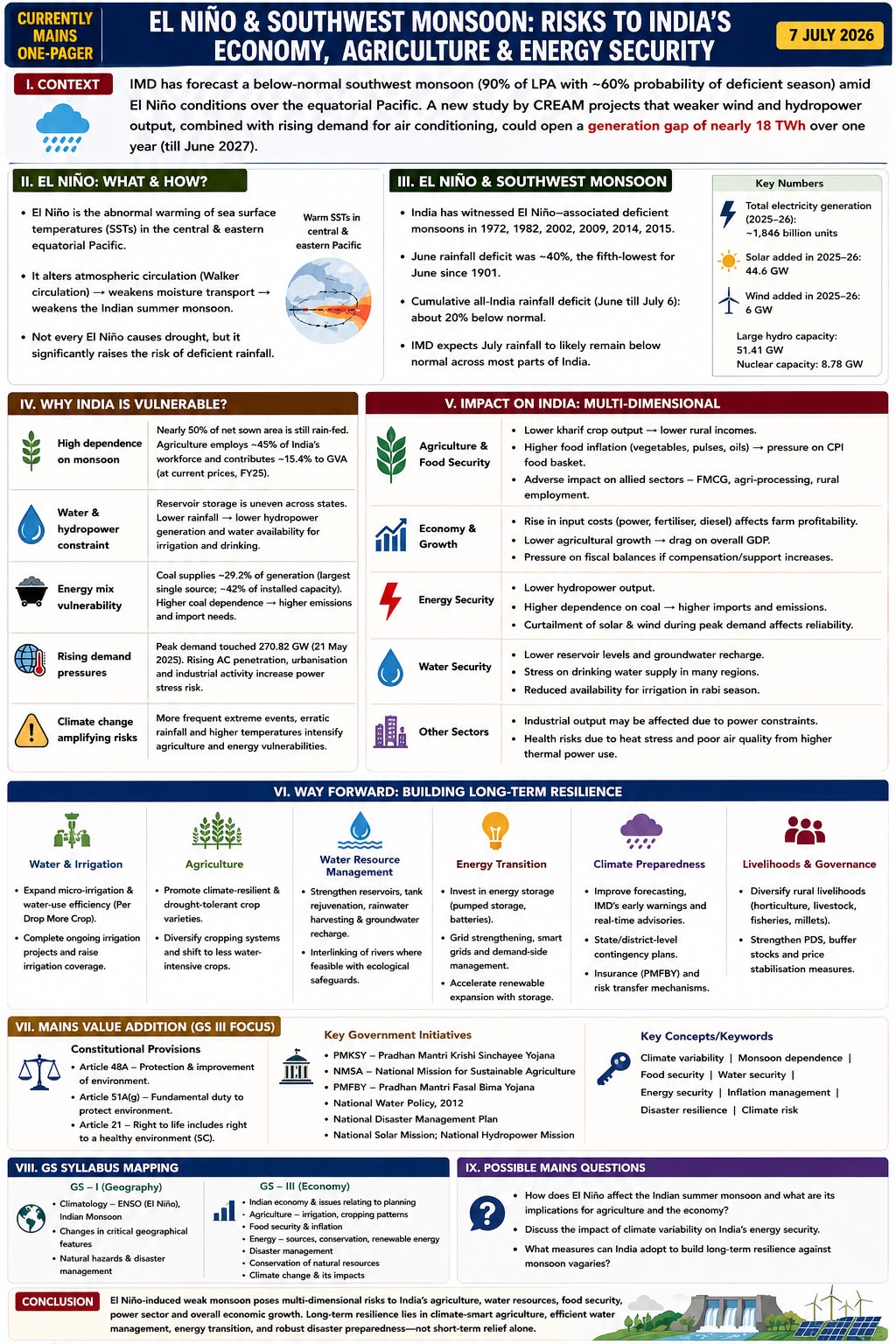
The article discusses how El Niño can affect India’s economy through weaker monsoon rainfall, lower agricultural output, inflationary pressure and reduced renewable energy generation.
El Niño
El Niño refers to abnormal warming of the central and eastern equatorial Pacific Ocean.
It weakens the Walker circulation and can reduce monsoon rainfall over India.
Impact on India’s Economy
1. Agriculture and Food Security
A weak monsoon can reduce:
- Kharif sowing
- Crop yields
- Rural incomes
- Farm profitability
Affected crops may include:
- Rice
- Pulses
- Oilseeds
- Cotton
- Sugarcane
2. Inflation
Lower agricultural output can increase food prices.
This affects:
- Consumer Price Index inflation
- Household budgets
- Rural demand
- RBI monetary policy
3. Rural Demand
Weak farm income reduces demand for:
- Consumer goods
- Two-wheelers
- Tractors
- FMCG products
- Rural services
4. Energy Sector
El Niño can affect renewable energy output.
Weaker wind and hydropower generation may increase dependence on coal-fired power.
5. Hydropower
Reduced rainfall weakens reservoir storage and hydropower output.
6. Wind Power
El Niño years may reduce wind generation in some regions.
7. Fiscal Pressure
The government may need higher spending on:
- Food subsidy
- Fertiliser subsidy
- Rural employment
- Irrigation support
- Crop insurance
Key Findings from the Article
A study by CREAM projected that weak wind and hydropower output during El Niño conditions could create a generation gap of nearly 18 TWh over one year.
The gap may be met largely through coal-based power, increasing emissions.
Why India Is Vulnerable
- High dependence on monsoon rainfall.
- Large rainfed agricultural area.
- Food inflation sensitivity.
- High dependence on hydropower and wind variability.
- Water storage constraints.
- Rural income dependence on agriculture.
Way Forward
1. Water and Irrigation Resilience
- Expand micro-irrigation.
- Improve canal efficiency.
- Complete irrigation projects.
- Promote water budgeting.
2. Agriculture Resilience
- Promote drought-resistant crops.
- Improve weather advisories.
- Diversify cropping patterns.
- Expand crop insurance.
3. Water Resource Management
- Improve reservoir management.
- Strengthen groundwater recharge.
- Use real-time water data.
4. Energy Transition Resilience
- Expand battery storage.
- Improve grid flexibility.
- Diversify renewable energy mix.
- Strengthen coal backup planning without long-term fossil lock-in.
5. Climate Preparedness
- Improve monsoon forecasting.
- Strengthen early warning systems.
- Prepare State-level climate action plans.
Key Takeaway
El Niño is not only a weather event. It can affect agriculture, inflation, energy security, rural demand and fiscal stability.