Context:
The World Health Organization’s Global Status Report on Cancer 2026 highlights widening inequities in access to cancer care, treatment and survival outcomes.
Key Data
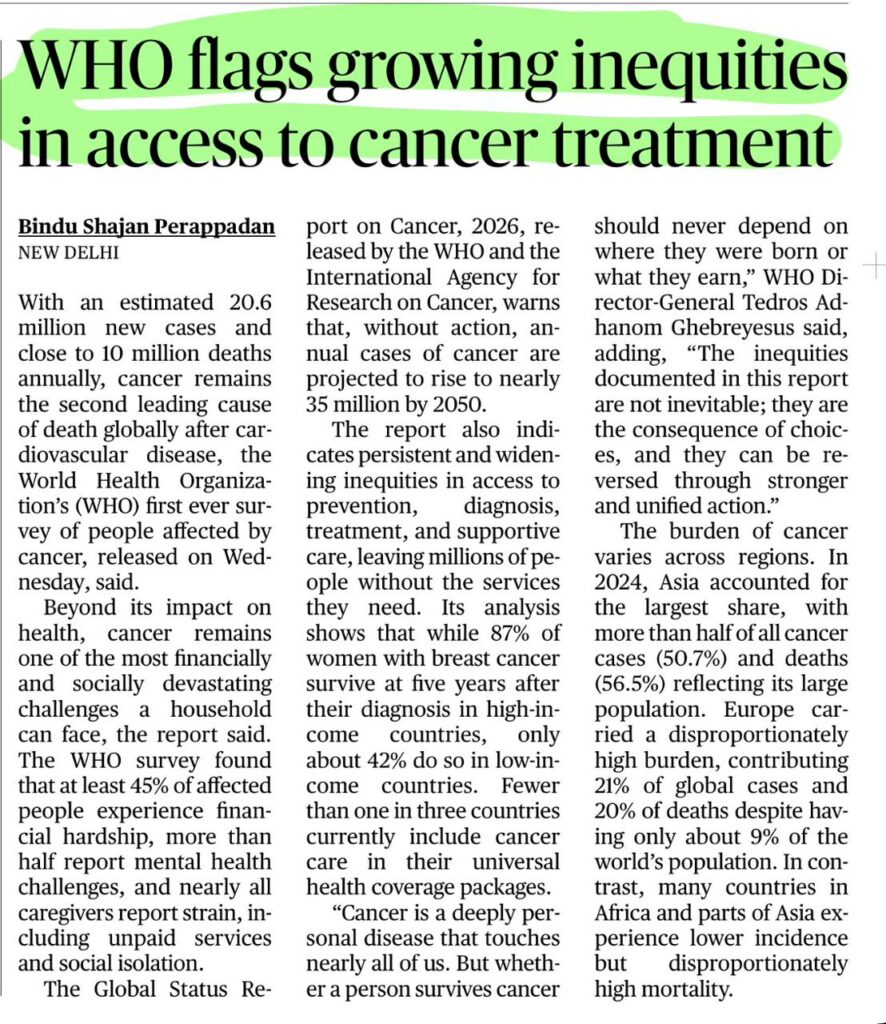
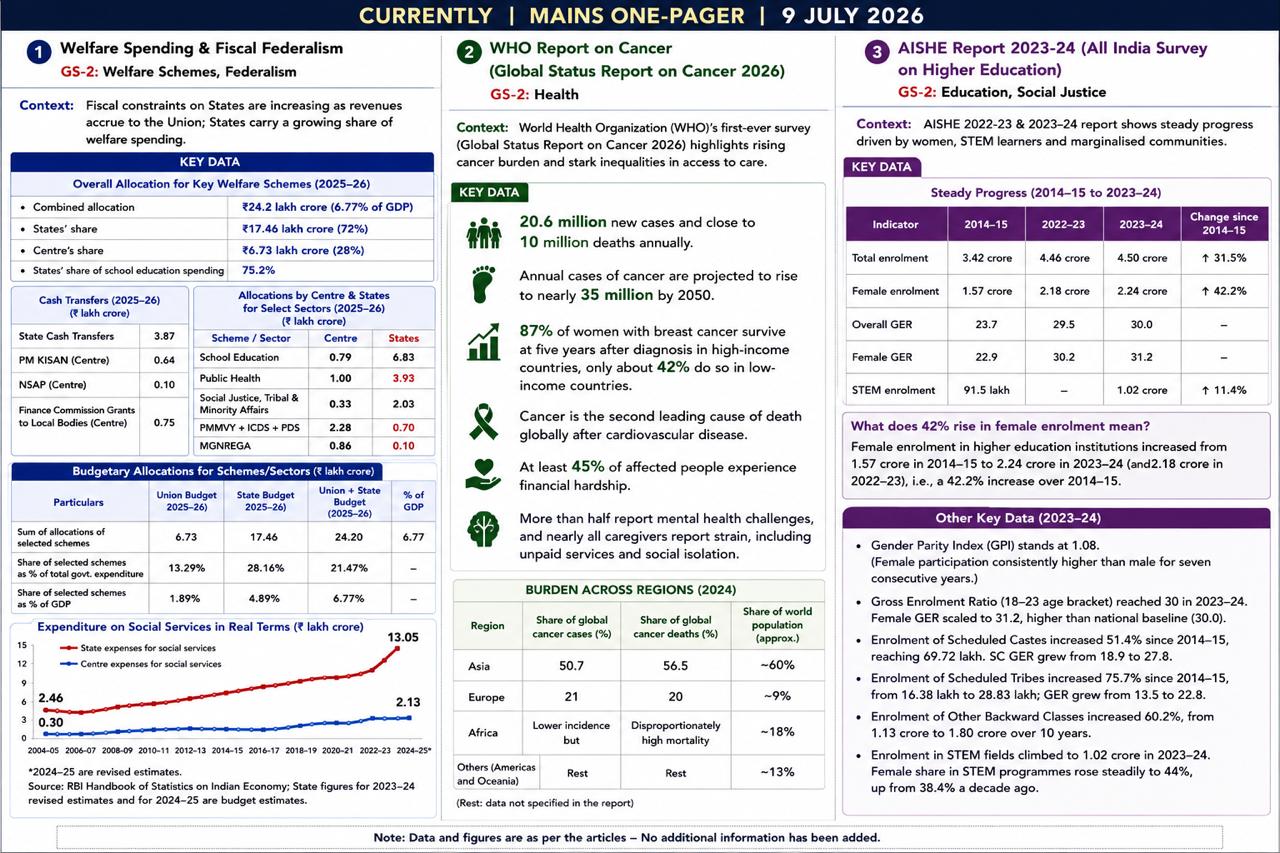
- Around 20.6 million new cancer cases are estimated globally.
- Nearly 10 million deaths occur annually due to cancer.
- Annual cancer cases are projected to reach nearly 35 million by 2050.
Cancer Inequality
Cancer treatment outcomes differ sharply between high-income and low-income countries.
Key Finding
About 87% of women with breast cancer survive five years after diagnosis in high-income countries.
This falls to only about 42% in low-income countries.
Why Inequality Exists
Cancer care inequality is caused by:
- Late diagnosis
- Poor screening coverage
- Limited treatment infrastructure
- High cost of medicines
- Shortage of oncologists
- Lack of radiotherapy centres
- Limited insurance coverage
- Weak palliative care
- Poor public health systems
Burden on Households
Cancer is one of the most financially devastating diseases.
It can lead to:
- Out-of-pocket expenditure
- Debt
- Loss of income
- Mental health stress
- Caregiver burden
- Social isolation
Regional Burden
Asia
Asia accounts for the largest share of global cancer cases and deaths because of its large population.
Africa
Africa and parts of Asia face lower incidence but disproportionately high mortality due to poor access to diagnosis and treatment.
Why It Matters for India
India needs stronger:
- Cancer screening
- Early diagnosis
- Affordable treatment
- Public cancer hospitals
- Palliative care
- Health insurance coverage
- Cancer registries
- Awareness campaigns
Link with Universal Health Coverage
Cancer care should not depend on ability to pay.
Equitable access to cancer treatment is essential for achieving Universal Health Coverage.
Way Forward
- Expand screening for breast, cervical and oral cancers.
- Strengthen district-level cancer care.
- Improve access to radiotherapy.
- Make essential cancer medicines affordable.
- Expand insurance coverage.
- Strengthen palliative care.
- Improve cancer registries and surveillance.
- Promote preventive measures against tobacco, alcohol and unhealthy diets.
Key Takeaway
Cancer is not only a medical issue. It is also a social justice issue because survival depends heavily on income, geography and access to healthcare.