Context: Ken Betwa River Linking Project
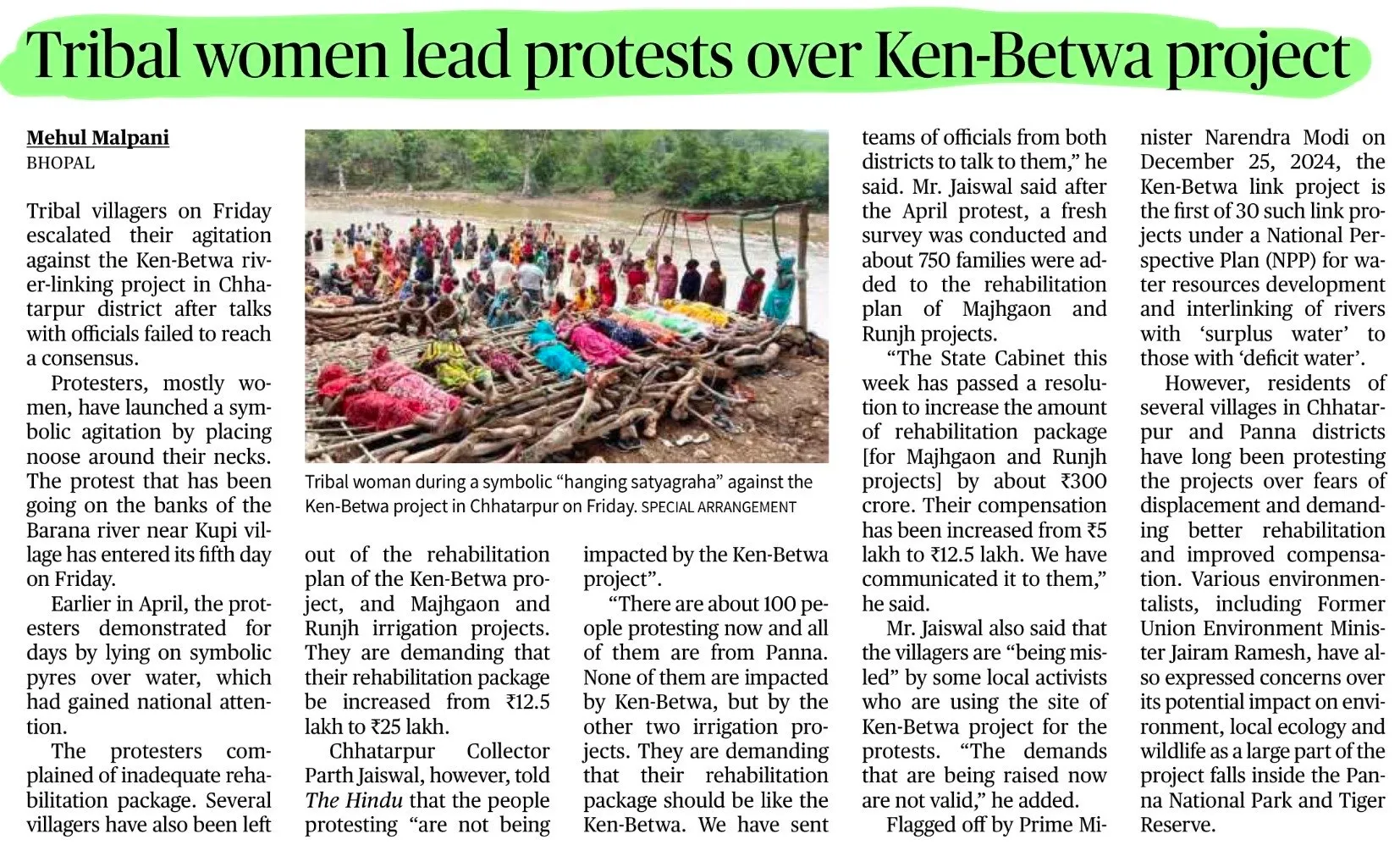
Tribal communities in Madhya Pradesh have renewed protests over the Ken–Betwa River Linking Project, demanding better rehabilitation and compensation for project-affected families.
Ken–Betwa River Linking Project
About
- Approved by the Union Cabinet in 2021.
- India’s first river interlinking project under the National Perspective Plan.
- Implemented in Madhya Pradesh and Uttar Pradesh.
Objective
The project aims to transfer water from the Ken River to the Betwa River.
It is intended to improve:
- Irrigation
- Drinking water supply
- Hydropower generation
especially in the drought-prone Bundelkhand region.
Key Components
- Daudhan Dam on the Ken River.
- Ken–Betwa Link Canal.
- Associated irrigation infrastructure.
Key Concerns
1. Displacement
Affected tribal families are demanding better rehabilitation and compensation.
2. Rehabilitation
Local communities argue that rehabilitation should be fair, timely and adequate.
3. Environmental Impact
The project may affect:
- Panna Tiger Reserve
- Forest ecosystem
- Wildlife habitats
- River ecology
4. Governance Concern
Large infrastructure projects must balance development with:
- Environmental protection
- Tribal rights
- Livelihood security
- Social justice
Significance
This topic can be used in answers on:
- River interlinking
- Water security
- Environmental governance
- Tribal rights
- Rehabilitation and resettlement
- Sustainable development
- Human-wildlife conflict
Key Takeaway
The Ken–Betwa project shows the classic development dilemma: water security and infrastructure benefits must be balanced with ecological protection and justice for displaced communities.