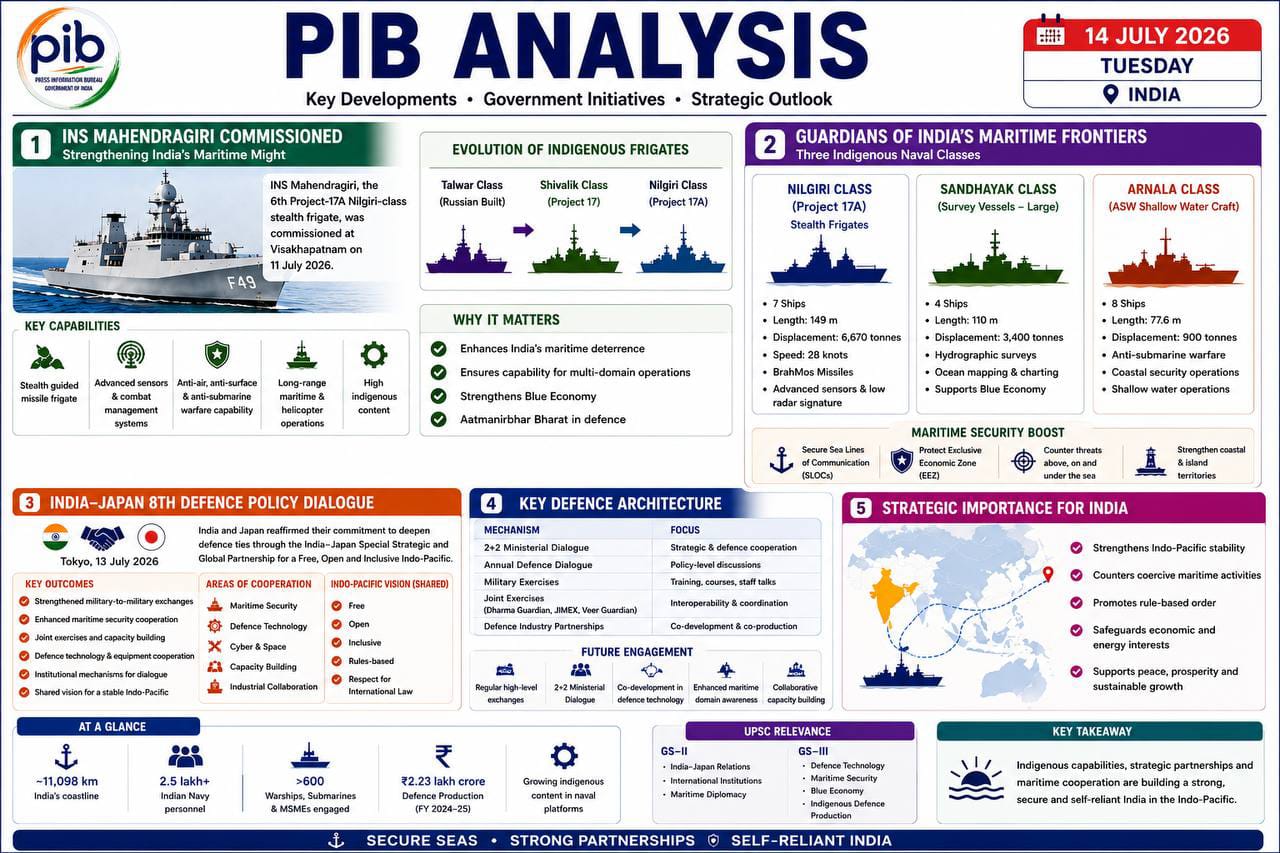
Context: India Maritime Frontiers Naval Classes
The PIB analysis highlighted India’s key indigenous naval platforms and classes, especially Nilgiri, Sandhayak and Arnala, as part of India’s maritime security and naval modernisation.
Nilgiri Class
Project
Type
- Stealth frigates
Role
Designed for:
- Surface warfare
- Anti-submarine warfare
- Air defence
- Maritime security operations
Importance
Nilgiri-class frigates strengthen blue-water capability and support indigenous shipbuilding.
Sandhayak Class
Type
- Survey Vessel Large
Role
Used for:
- Hydrographic surveys
- Seabed mapping
- Nautical charting
- Maritime data collection
Importance
Survey vessels support safe navigation, blue economy, coastal development and naval operations.
Arnala Class
Type
Role
Designed to detect and neutralise submarines in shallow coastal waters.
Importance
Arnala-class vessels strengthen coastal defence and anti-submarine capability.
Why These Naval Classes Matter
They support:
- Maritime security
- Indian Ocean surveillance
- Blue economy
- Coastal defence
- Indigenous defence manufacturing
- Aatmanirbhar Bharat
- Naval modernisation
Strategic Significance
India’s maritime frontiers are important for:
- Sea lines of communication
- Energy imports
- Trade routes
- Maritime domain awareness
- Security in the Indian Ocean Region
- Protection of offshore assets
Key Takeaway
India’s indigenous naval platforms are strengthening maritime security, blue-water capability and self-reliance in defence manufacturing.