Context: Chabahar Port attack impact
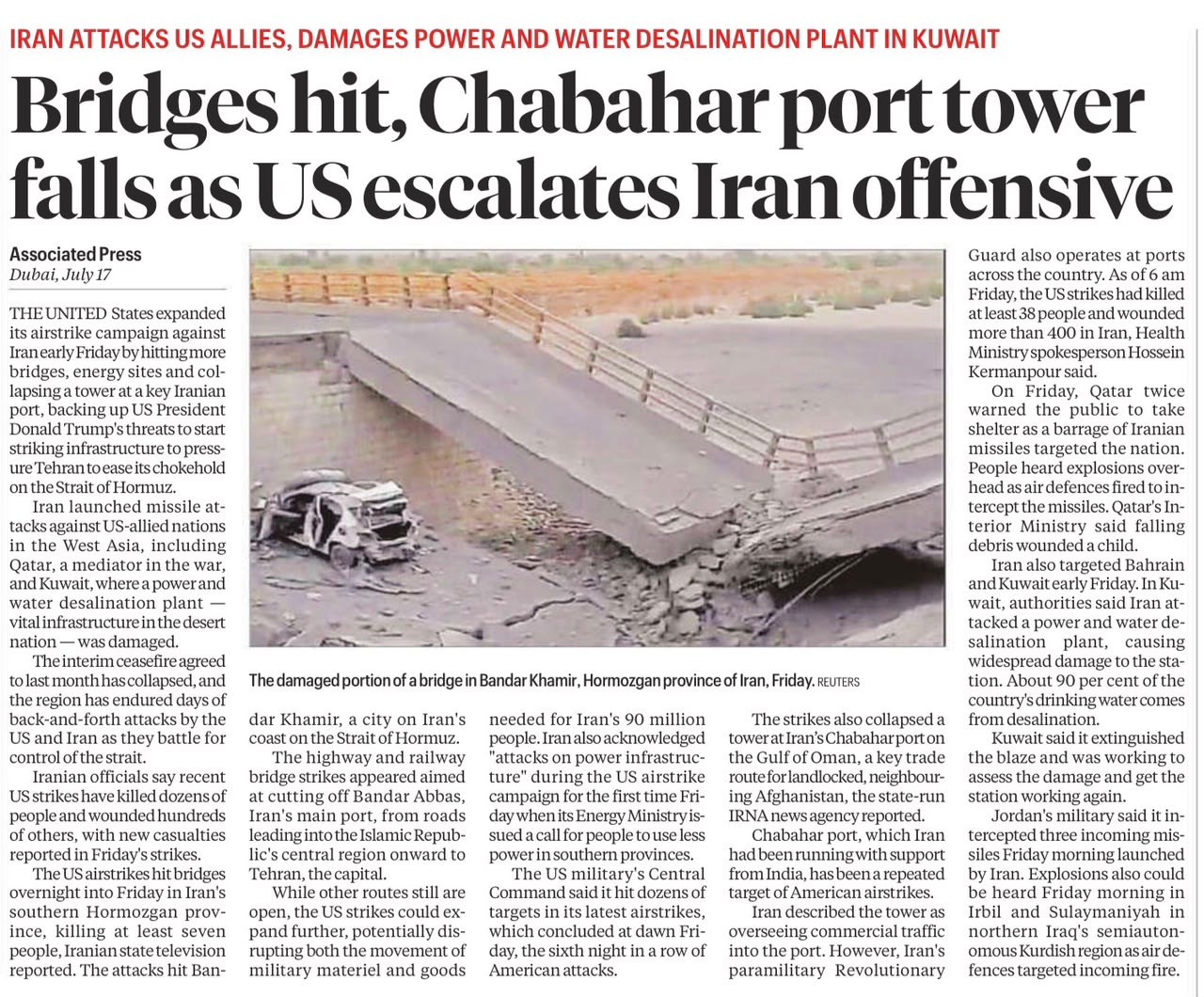
The U.S. intensified airstrikes on Iran, targeting key transport and energy infrastructure.
Iran retaliated by attacking U.S. allies in West Asia, escalating the regional conflict.
Major Infrastructure Destroyed
1. Road and Railway Bridges
Road and railway bridges in Iran’s Hormozgan Province were struck.
This disrupted connectivity to Bandar Abbas, Iran’s largest port.
2. Power Infrastructure
Power infrastructure was targeted.
Iran had to appeal for reduced electricity consumption.
3. Chabahar Port Tower
The commercial traffic control tower at Chabahar Port collapsed due to the strikes.
This disrupted port operations.
4. Retaliatory Missile Attacks
Iran launched retaliatory missile attacks on:
- Kuwait
- Bahrain
- Qatar
- Jordan
A power and water desalination plant in Kuwait was damaged.
Chabahar Port: Importance
1. Location
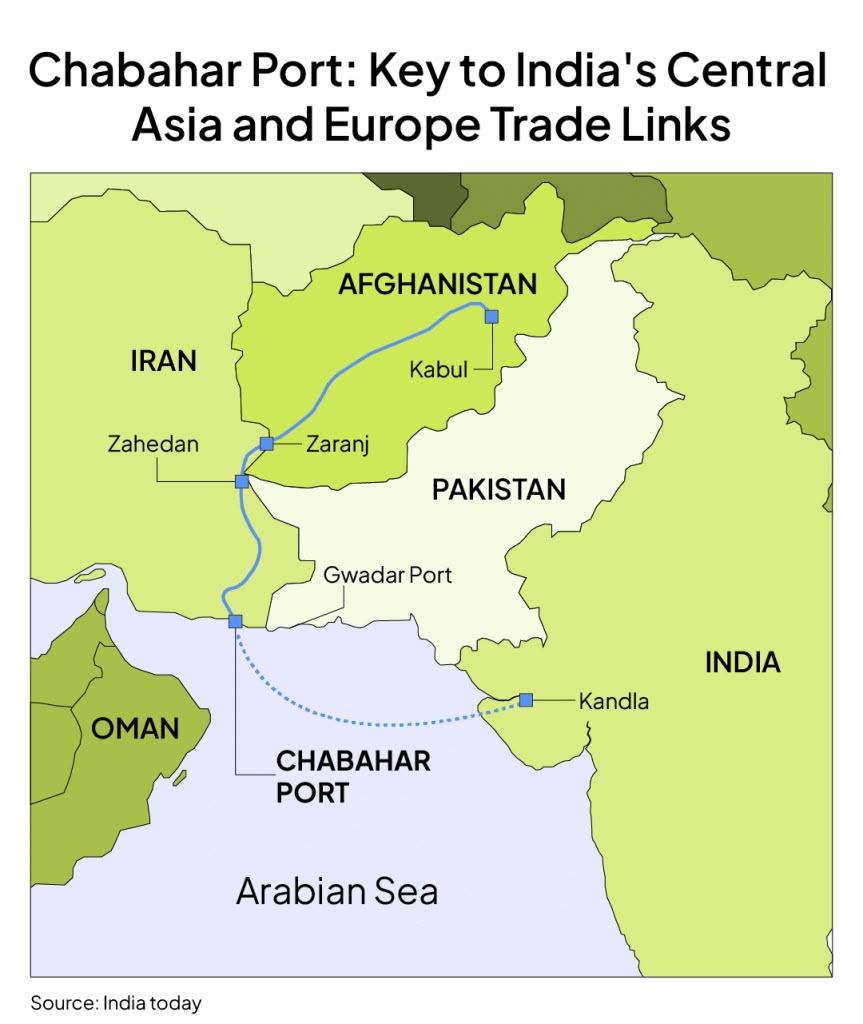
Chabahar Port is located on the Gulf of Oman, outside the Strait of Hormuz.
2. Access to Afghanistan and Central Asia
It gives India direct access to Afghanistan and Central Asia while bypassing Pakistan.
3. INSTC Link
Chabahar is a key component of the International North-South Transport Corridor and India’s regional connectivity strategy.
4. Strategic Importance for India
The attack raises concerns over:
- Regional trade
- Energy security
- India’s strategic interests in West Asia
- Connectivity to Central Asia
- Stability of maritime and port infrastructure
Why This Matters for India
West Asia is crucial for India because of:
- Energy imports
- Indian diaspora
- Remittances
- Maritime trade routes
- Connectivity projects
- Chabahar-linked Central Asia access
Any escalation in the region can affect India’s trade, fuel prices and strategic connectivity.
Key Takeaway
The attack on Chabahar-related infrastructure shows how West Asian instability can directly affect India’s trade routes, energy security and Central Asia strategy.