Context: India US Trade Tariffs
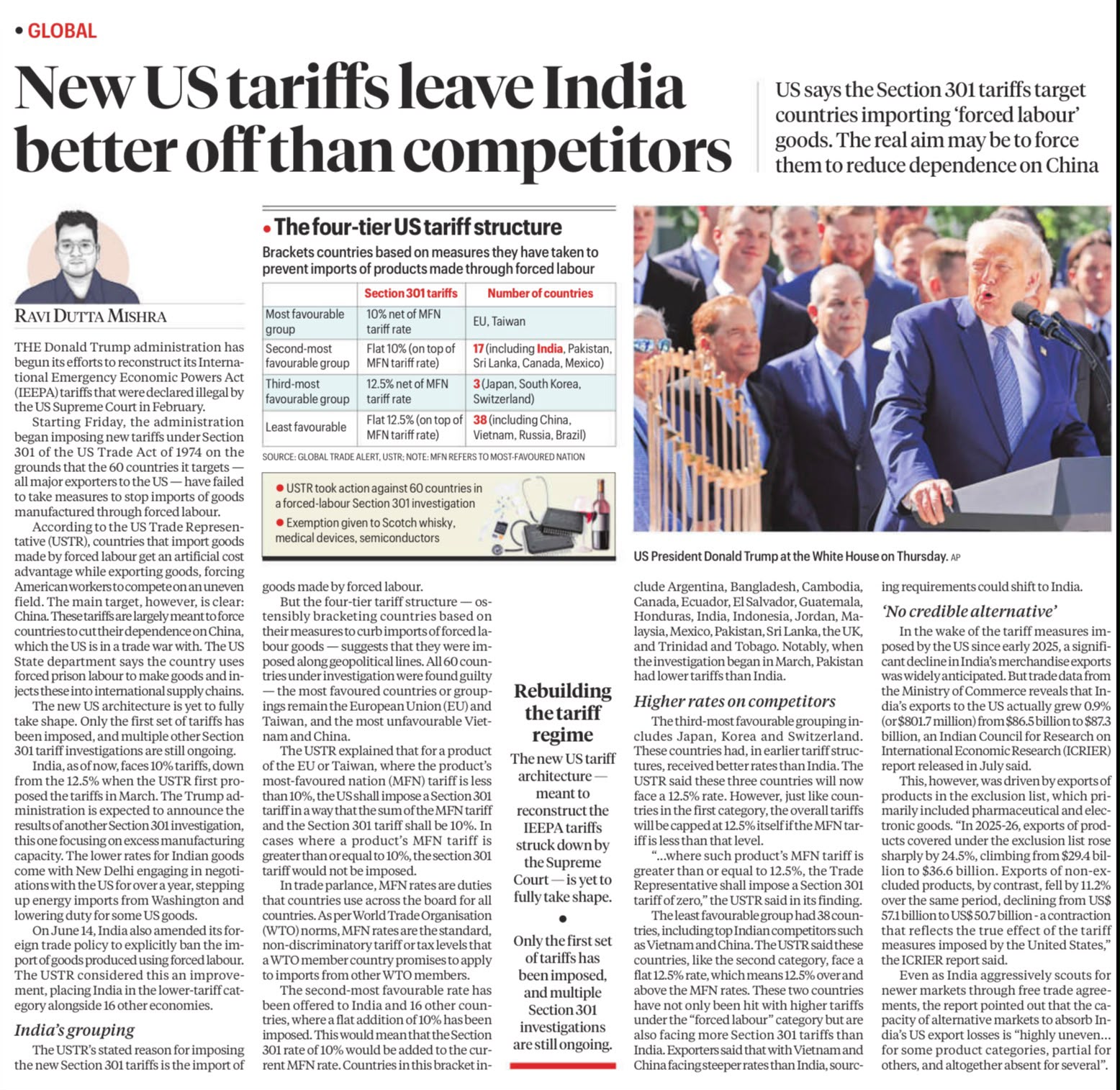
The United States has introduced a new tariff regime under Section 301 of the US Trade Act, 1974, restructuring import tariffs on nearly 60 countries.
India has been placed in a relatively favourable tariff category compared to competitors like China and Vietnam, improving the competitiveness of Indian exports in the US market.
Section 301 Tariffs
Section 301 of the US Trade Act, 1974 allows the US to take trade action against countries whose trade practices are considered unfair or harmful to US commerce.
The new tariff system replaces earlier tariffs imposed under the International Emergency Economic Powers Act, after those tariffs were invalidated by the US Supreme Court.
Purpose of the Tariff Regime
Officially, the tariffs aim to curb imports linked to forced labour.
However, the policy also reflects the US strategy of:
- Reducing dependence on China
- De-risking supply chains
- Promoting domestic manufacturing
- Diversifying sourcing towards trusted partners
Four-Tier Tariff Structure
Countries have been classified into four tariff categories.
India faces lower additional tariffs than major competitors such as China and Vietnam.
This creates a relative trade advantage for India, though not an absolute advantage.
Why India May Benefit
Lower tariffs can make Indian exports more competitive in the US market.
This gives India an opportunity to:
- Expand market share in the US
- Attract supply-chain relocation
- Strengthen its role in Global Value Chains
- Improve export competitiveness
Limits of the Advantage
Tariff advantage alone cannot guarantee export growth.
India must improve:
- Manufacturing competitiveness
- Logistics efficiency
- Infrastructure
- Ease of doing business
- Production scale
- Quality standards
Key Takeaway
The new US tariff regime gives India a relative advantage over some competitors, but India can benefit only if it strengthens manufacturing capacity, logistics and export competitiveness.