Context: Western Ghats Eco Sensitive Area
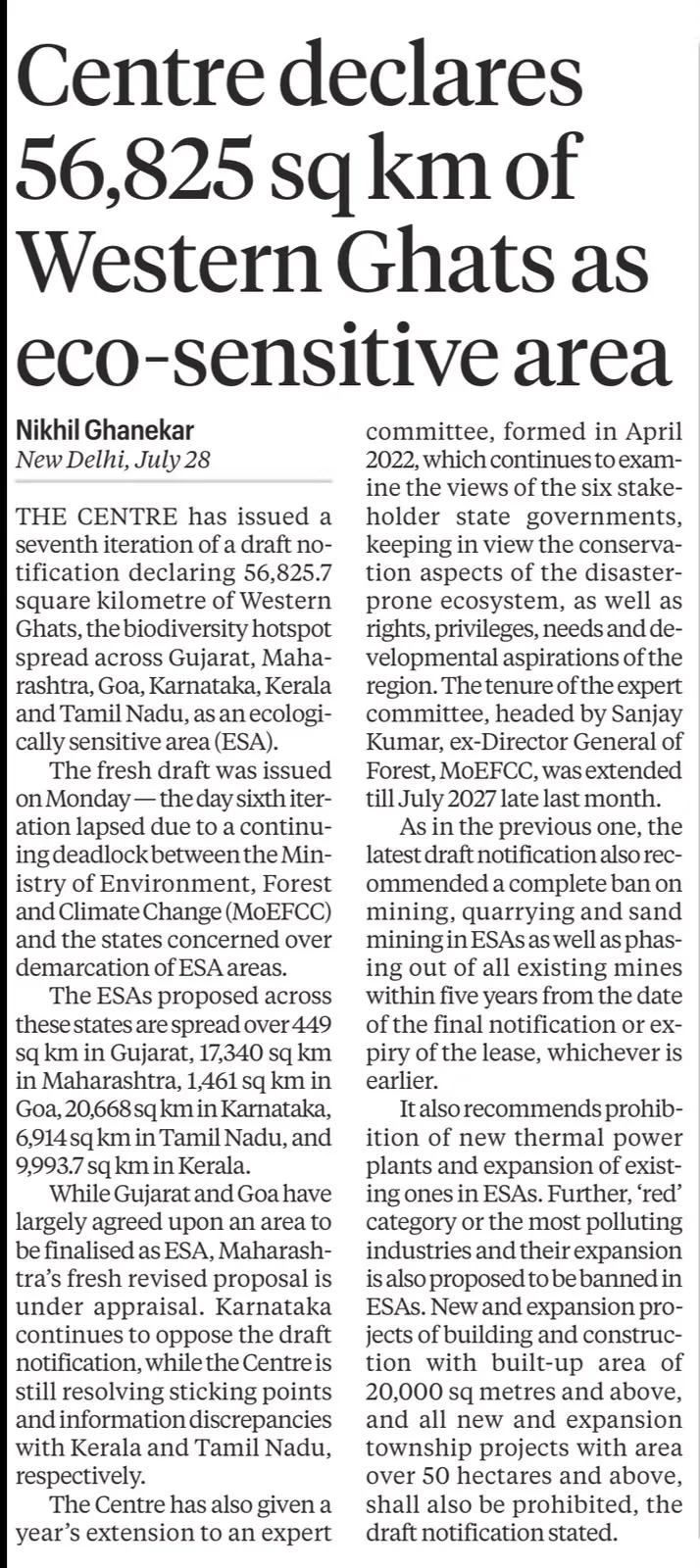
The Union Government has issued the 7th draft notification declaring 56,825.7 sq km of the Western Ghats across six States as an Eco-Sensitive Area.
The draft aims to protect the fragile Western Ghats ecosystem while also balancing the development concerns of State governments.
Western Ghats
The Western Ghats are one of the most ecologically important mountain chains in India.
They are recognised as one of the world’s eight hottest biodiversity hotspots.
They are also a UNESCO World Heritage Site.
Area Covered
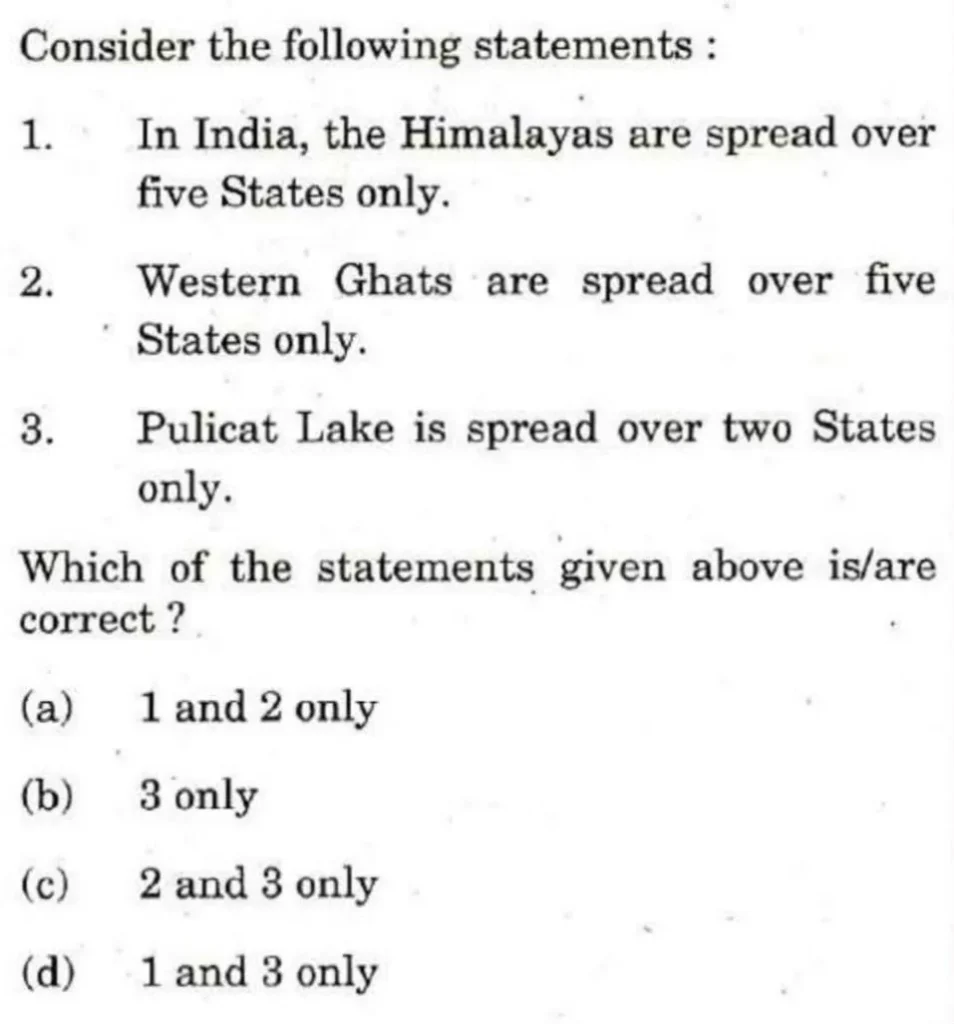
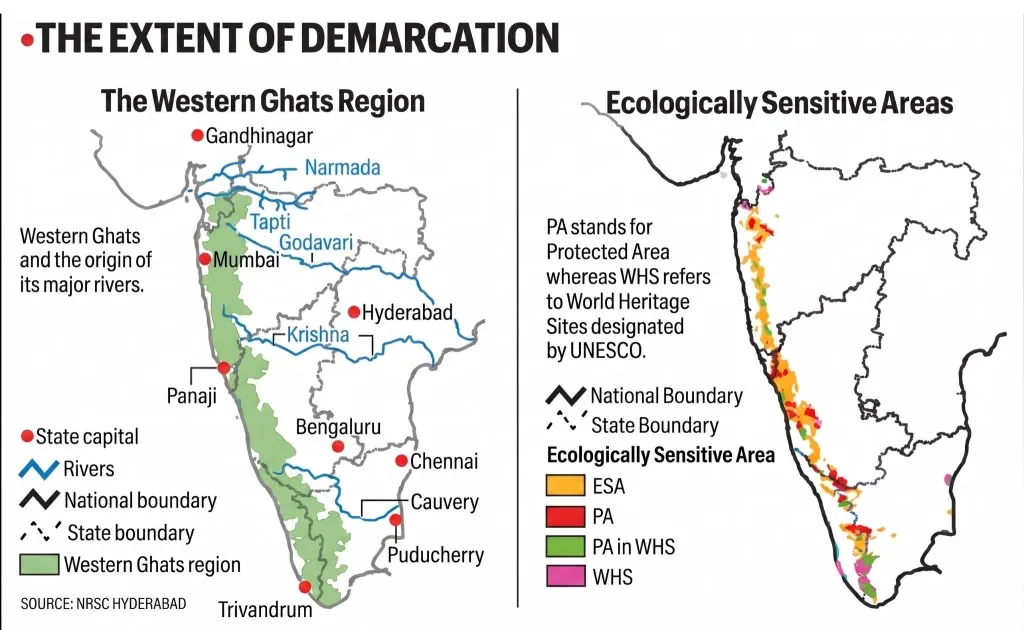
The proposed Eco-Sensitive Area covers parts of six States:
- Gujarat
- Maharashtra
- Goa
- Karnataka
- Kerala
- Tamil Nadu
The total proposed area is 56,825.7 sq km.
Why ESA Is Needed
The Western Ghats are important for:
- Biodiversity conservation
- Forest protection
- Wildlife habitats
- River catchments
- Monsoon regulation
- Reducing flood and landslide risks
Unregulated mining, quarrying, construction and industrial activity can damage this fragile region.
Proposed Restrictions
The draft notification proposes a ban on:
- New mining
- Quarrying
- Sand mining
- New thermal power plants
- Expansion of existing thermal power plants
- Red category highly polluting industries
Existing mines are proposed to be phased out within five years of the final notification or lease expiry, whichever is earlier.
Large construction and township projects will also face restrictions.
Why It Is Controversial
States fear that ESA restrictions may affect:
- Development projects
- Mining activities
- Infrastructure expansion
- Local livelihoods
- Land-use flexibility
There are also differences between the Centre and States over boundaries and demarcation of ESA areas.
Background
The proposal comes from the larger debate around Western Ghats conservation.
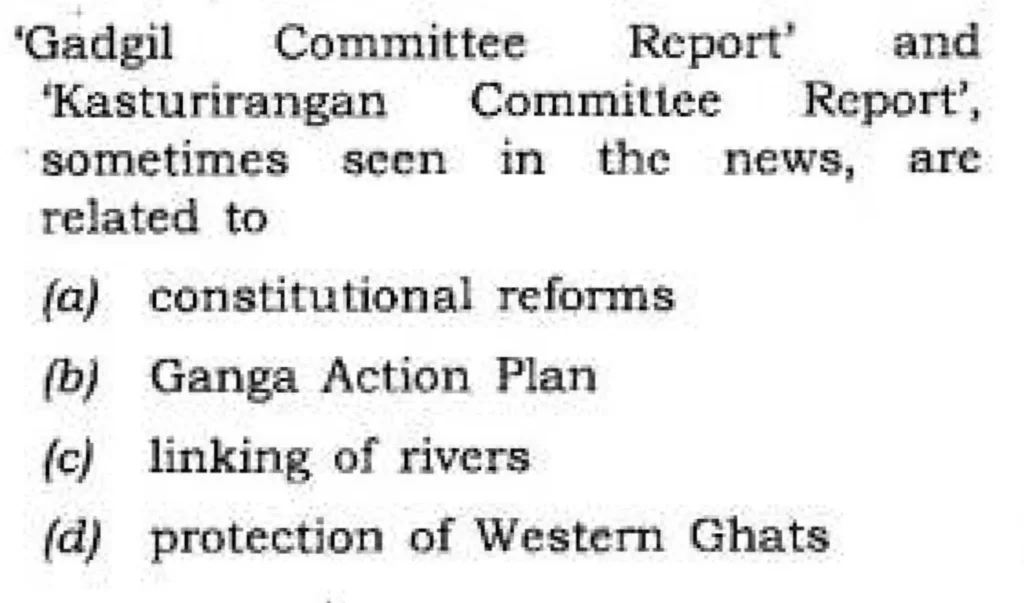
Two important committees shaped this debate:
Madhav Gadgil Committee
The Western Ghats Ecology Expert Panel suggested a stricter conservation model.
K. Kasturirangan Committee
This committee recommended a more balanced approach, protecting ecologically sensitive areas while allowing some development.
Significance
The ESA notification is important because it tries to prevent ecological degradation in one of India’s most fragile biodiversity regions.
It can help conserve forests, rivers, wildlife habitats and local ecological security.
Key Takeaway
The Western Ghats ESA issue is a classic development versus conservation debate. India needs protection of fragile ecosystems without ignoring local livelihood and State-level development concerns.