Context:
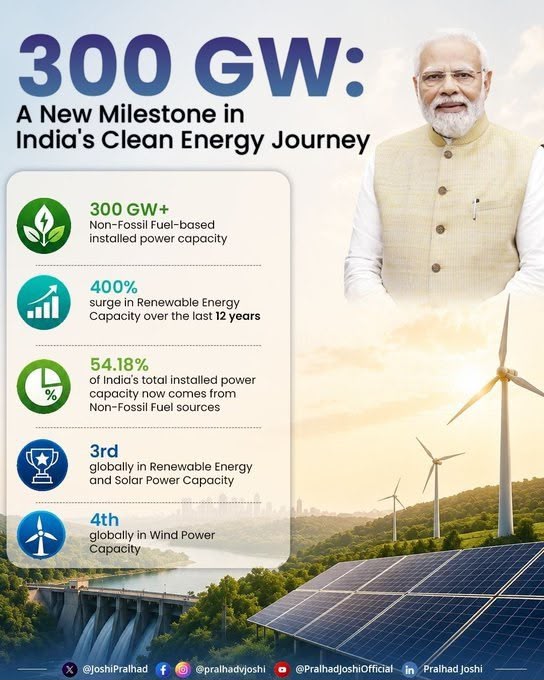
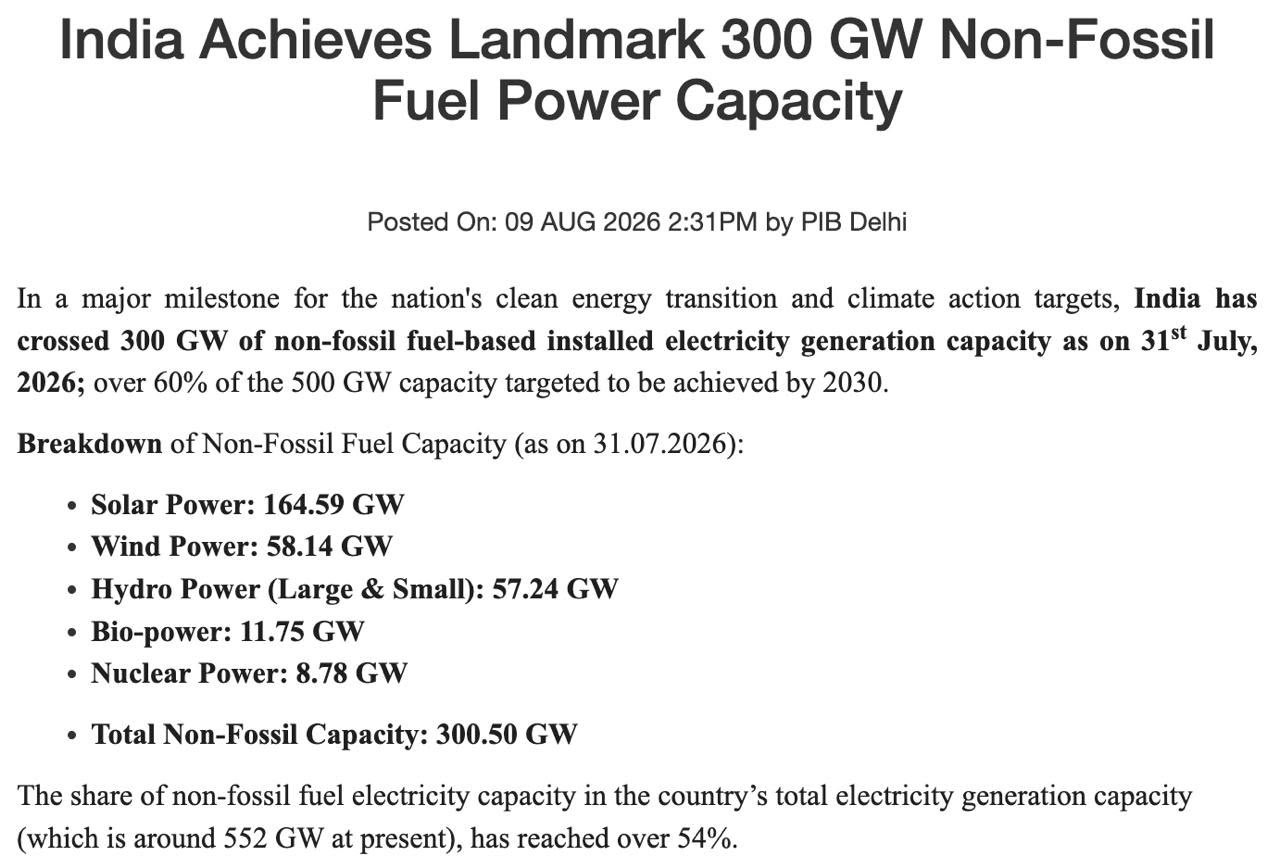
India has crossed 300 GW of non-fossil fuel-based installed electricity generation capacity as of 31 July 2026.
This is a major milestone in India’s clean-energy transition and climate action commitments.
India’s Non-Fossil Fuel Capacity
India’s total non-fossil fuel installed capacity reached 300.50 GW.
This is over 60% of the 500 GW capacity target to be achieved by 2030.
The share of non-fossil fuel electricity capacity in India’s total installed electricity generation capacity has reached over 54%.
Breakdown of Non-Fossil Fuel Capacity
As of 31 July 2026:
- Solar Power: 164.59 GW
- Wind Power: 58.14 GW
- Hydro Power, large and small: 57.24 GW
- Bio-power: 11.75 GW
- Nuclear Power: 8.78 GW
Total non-fossil capacity: 300.50 GW
Why This Milestone Matters
Climate Action
The milestone supports India’s climate commitments and transition away from fossil fuels.
It shows progress towards India’s non-fossil capacity targets.
Energy Security
More domestic renewable and non-fossil capacity reduces dependence on imported fossil fuels.
This strengthens energy security.
Renewable Leadership
India is among the leading countries globally in renewable energy.
The document notes that India ranks:
- 3rd globally in renewable energy and solar power capacity
- 4th globally in wind power capacity
Economic Significance
Clean energy expansion supports:
- Green jobs
- Domestic manufacturing
- Solar and wind supply chains
- Grid modernisation
- Energy access
- Investment in storage and transmission
Challenges Ahead
India still needs to address:
- Grid integration
- Storage capacity
- Renewable intermittency
- Land and transmission constraints
- Financing
- Domestic manufacturing depth
- Distribution company health
Way Forward
India should accelerate storage deployment.
Transmission infrastructure must be expanded.
Renewable purchase obligations and clean-energy procurement should be strengthened.
Domestic manufacturing of solar, wind, batteries and grid equipment should be promoted.
India should also focus on hybrid projects, pumped hydro, battery storage and green hydrogen where suitable.
Key Takeaway
Crossing 300 GW of non-fossil capacity is a major clean-energy milestone. The next challenge is to make this transition reliable through storage, transmission, grid flexibility and domestic manufacturing.