Context: BRICS payment systems link
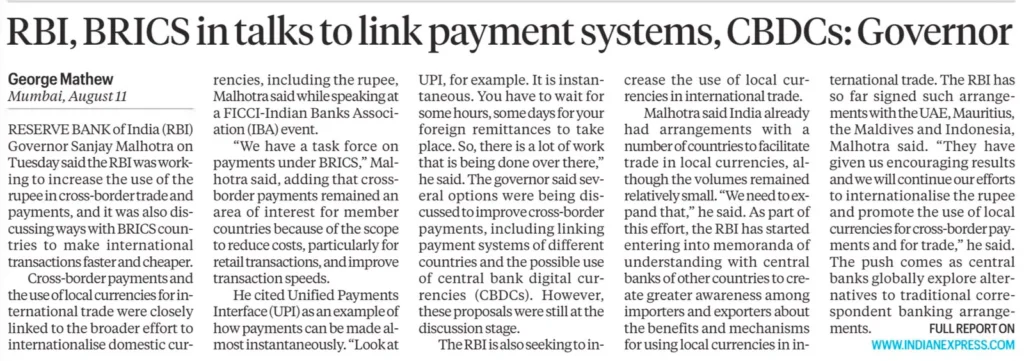
RBI is working with BRICS countries to make cross-border payments faster, cheaper and more efficient through payment-system linkages, local currencies and CBDCs.
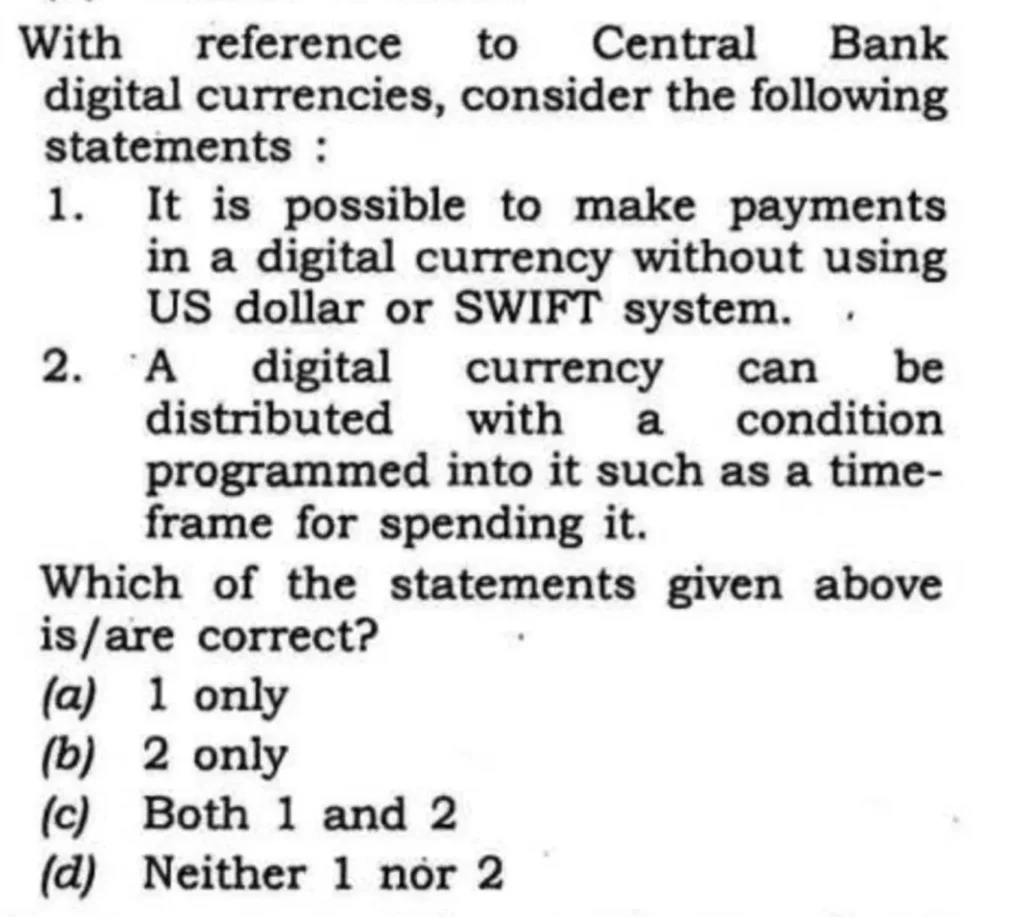
Central Bank Digital Currency
- CBDC is the digital form of sovereign currency issued by a central bank.
- India’s CBDC is the Digital Rupee, issued by the RBI.
- CBDC is different from UPI.
- CBDC is digital money, while Unified Payments Interface is the payment system used to transfer money.
- Interoperable CBDCs can enable faster and cheaper cross-border settlement with fewer intermediaries.
BRICS Framework
At the 17th BRICS Summit in Rio de Janeiro in 2025, the Rio de Janeiro Declaration called for continued work on the BRICS Cross-Border Payments Initiative and greater interoperability of national payment systems.
The RBI is participating in discussions on payment-system linkages and possible CBDC use through the BRICS Payment Task Force.
India’s Approach
The RBI is promoting trade settlement in local currencies, including the rupee.
Local-currency arrangements already exist with:
- United Arab Emirates
- Mauritius
- Maldives
- Indonesia
However, volumes remain small.
Strategic Significance
This can reduce dependence on traditional correspondent banking and dominant international currencies.
It can also lower transaction costs and make international payments more efficient.
Key Takeaway
BRICS payment-system linkages and CBDC discussions are part of a wider attempt to make cross-border payments faster, cheaper and less dependent on traditional international payment channels.