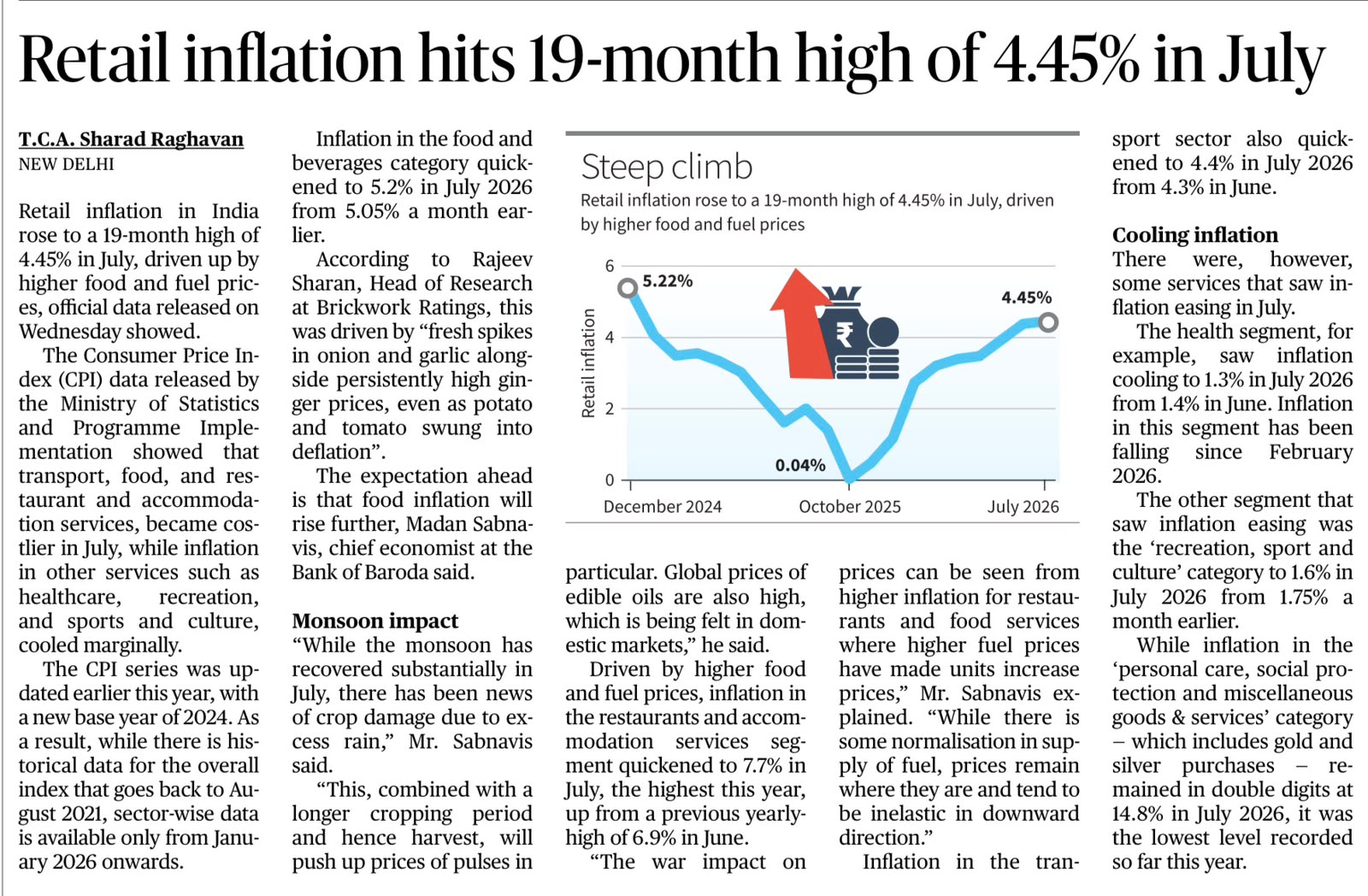
Context: India Retail Inflation July 2026
India’s retail inflation, measured through the Consumer Price Index, rose to 4.45% in July 2026, a 19-month high, mainly due to rising food and fuel-related prices.
CPI: Basics
Consumer Price Index measures the change in prices of a representative basket of goods and services purchased by households.
It is the principal measure of retail inflation in India.
CPI is compiled by the Ministry of Statistics and Programme Implementation through the National Statistical Office.
The latest CPI series uses 2024 = 100 as the base year.
It covers both rural and urban consumers.
The combined CPI is used for the national inflation rate.
Major CPI Components
CPI includes major components such as:
- Food and beverages
- Housing
- Clothing and footwear
- Fuel and light
- Household goods
- Health
- Transport
- Education
- Recreation
Latest Inflation Data
CPI inflation rose to 4.45% in July 2026.
It was up from 4.38% in June 2026.
Food inflation stood at 5.52%, making food the major source of upward pressure.
Rural inflation was 4.84%.
Urban inflation was 3.96%.
The RBI’s inflation target is 4%, with a tolerance band of 2–6% under the flexible inflation-targeting framework.
Why Inflation Increased
Food Prices
Fresh increases in prices of onion, ginger and pulses pushed food inflation upward.
Global edible-oil prices also remained elevated.
Weather Impact
Excess rainfall and crop damage may reduce supply and push up prices, especially pulses.
Fuel Costs
Higher fuel prices increased transportation and food-service costs.
Restaurants and accommodation inflation rose to 7.7%.
Global Factors
West Asian geopolitical tensions and elevated global commodity prices added to domestic price pressures.
Key Takeaway
Retail inflation rose mainly because of food and fuel-related pressures. Although inflation remains within the RBI’s tolerance band, the rise shows the vulnerability of household prices to food supply, weather, fuel costs and global commodity shocks.