Context: Hexavalent Chromium Groundwater Pollution
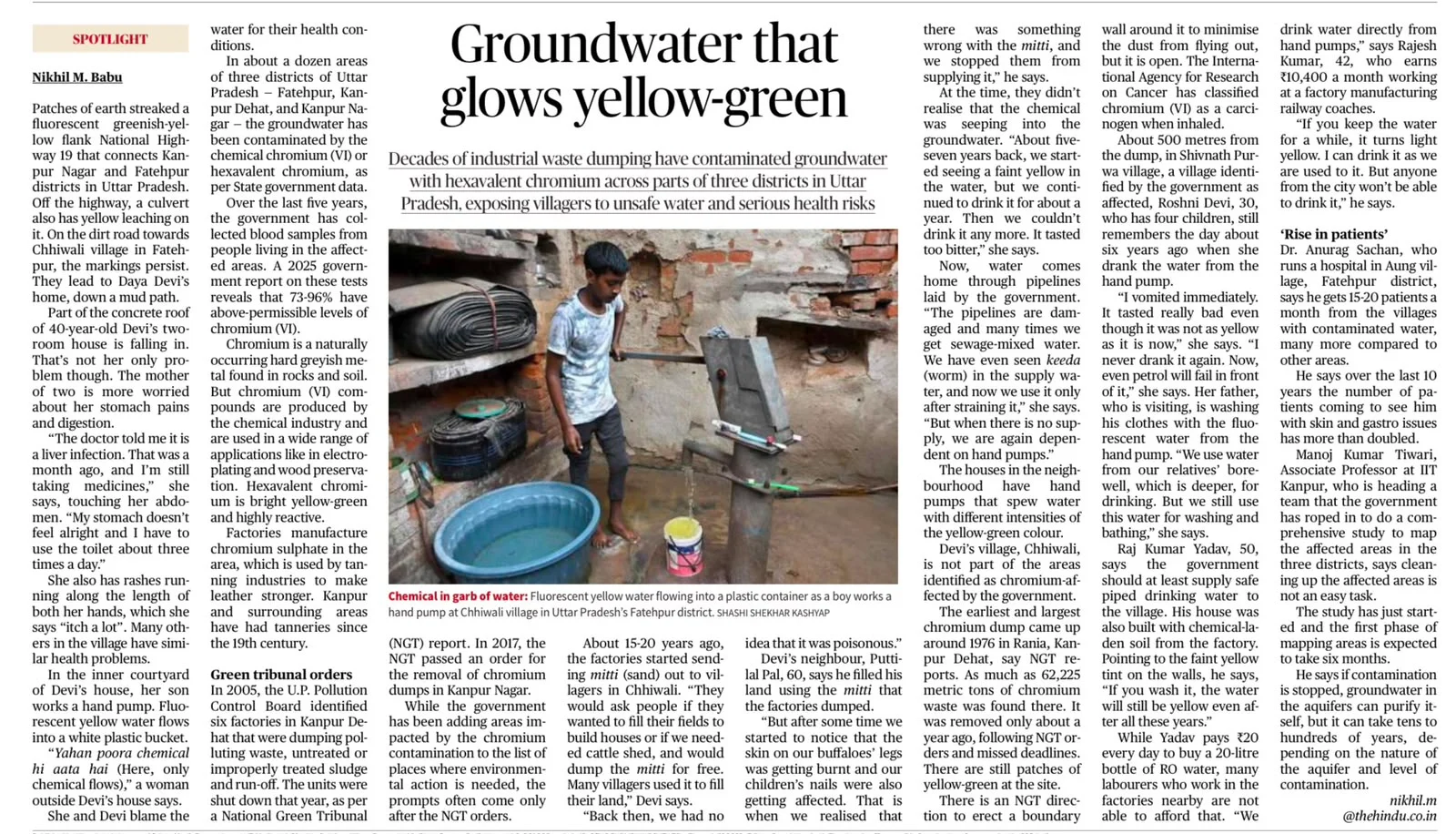
Groundwater in parts of Kanpur Nagar, Kanpur Dehat and Fatehpur has been contaminated by hexavalent chromium [Cr(VI)], linked to decades of improper disposal of industrial waste. The issue highlights how legacy industrial pollution can persist in soil and aquifers and eventually enter the human body.
1. How Chromium Contaminates Groundwater
Industrial source: Chromium-containing waste from industries such as leather tanning and electroplating is dumped or inadequately treated.
Leaching: Rainwater carries soluble chromium from contaminated waste/soil into the ground → soil contamination → aquifer contamination.
Persistence: Once Cr(VI) reaches groundwater, it can migrate with groundwater flow, making contamination difficult and expensive to reverse.
Human exposure: Communities dependent on contaminated groundwater may ingest or otherwise come into contact with chromium → groundwater becomes a direct exposure pathway.
2. Why Cr(VI) Is a Serious Contaminant
Highly toxic: Cr(VI) is substantially more toxic than the relatively less harmful trivalent chromium [Cr(III)].
Carcinogenic: The International Agency for Research on Cancer classifies chromium(VI) compounds as carcinogenic when inhaled.
Bio-health concern: A 2025 government assessment cited in the article found elevated Cr(VI) levels in the blood of 73–96% of sampled people in affected areas.
3. Why Contamination Becomes a Long-Term Crisis
Legacy pollution: Old industrial waste can continue releasing chromium even after the original industrial activity has stopped.
Groundwater dependence: Where alternative safe-water sources are inadequate, people remain exposed.
Remediation difficulty: Unlike surface pollution, contaminated aquifers are invisible, spatially extensive and technically difficult to clean.
Governance gap: Delayed removal of hazardous waste and weak enforcement allow the contamination pathway to continue.
4. Tackling Groundwater Contamination
Prevent at source: Enforce hazardous-waste treatment and disposal standards; apply the Polluter Pays Principle.
Contain & remediate: Identify contamination hotspots, isolate/remove legacy waste and use site-specific groundwater remediation.
Protect communities: Provide reliable safe piped drinking water and health screening in affected areas.
Monitor aquifers: Continuous groundwater-quality monitoring using GIS, sampling networks and periodic health surveillance.