Admissions Open: MAD-X for UPSC Prelims 2027 · Batch starts 1st Nov 2026
Explore MAD-X
Practice with UPSC Test Series featuring detailed evaluation, model answers, rankings, and personalized feedback.
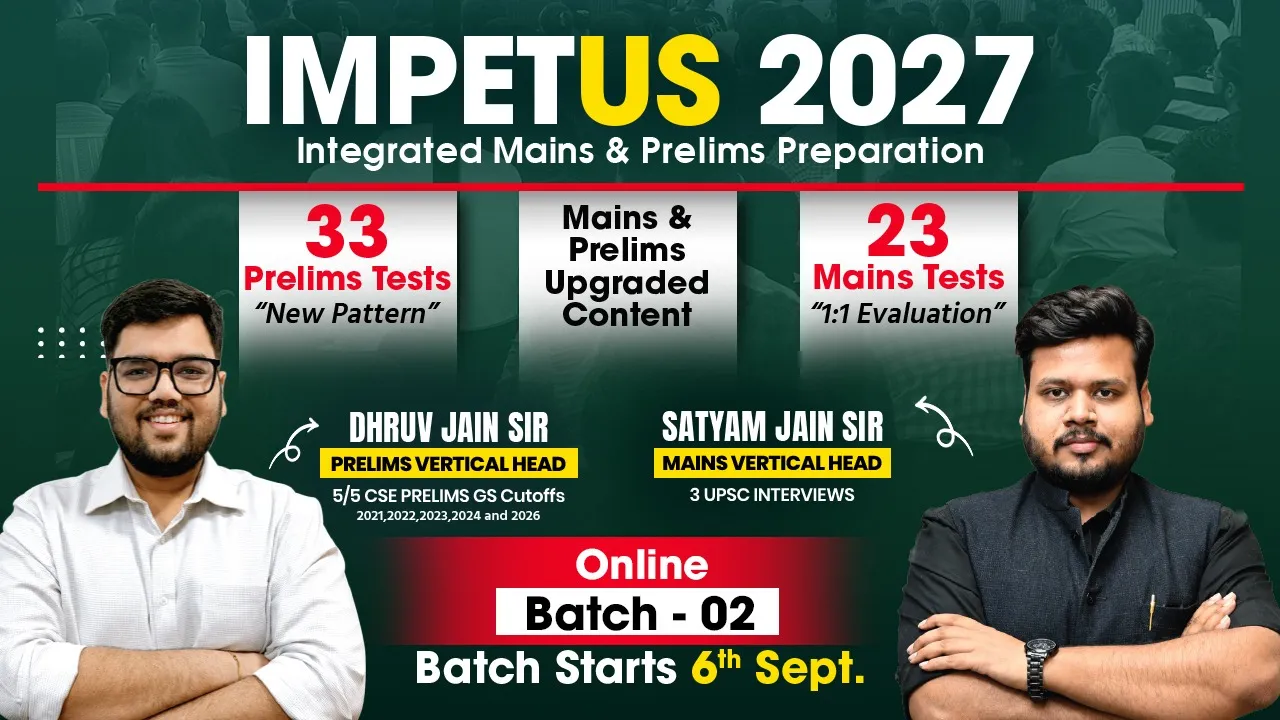
Integrated Mains & Prelims Execution with UnderStand
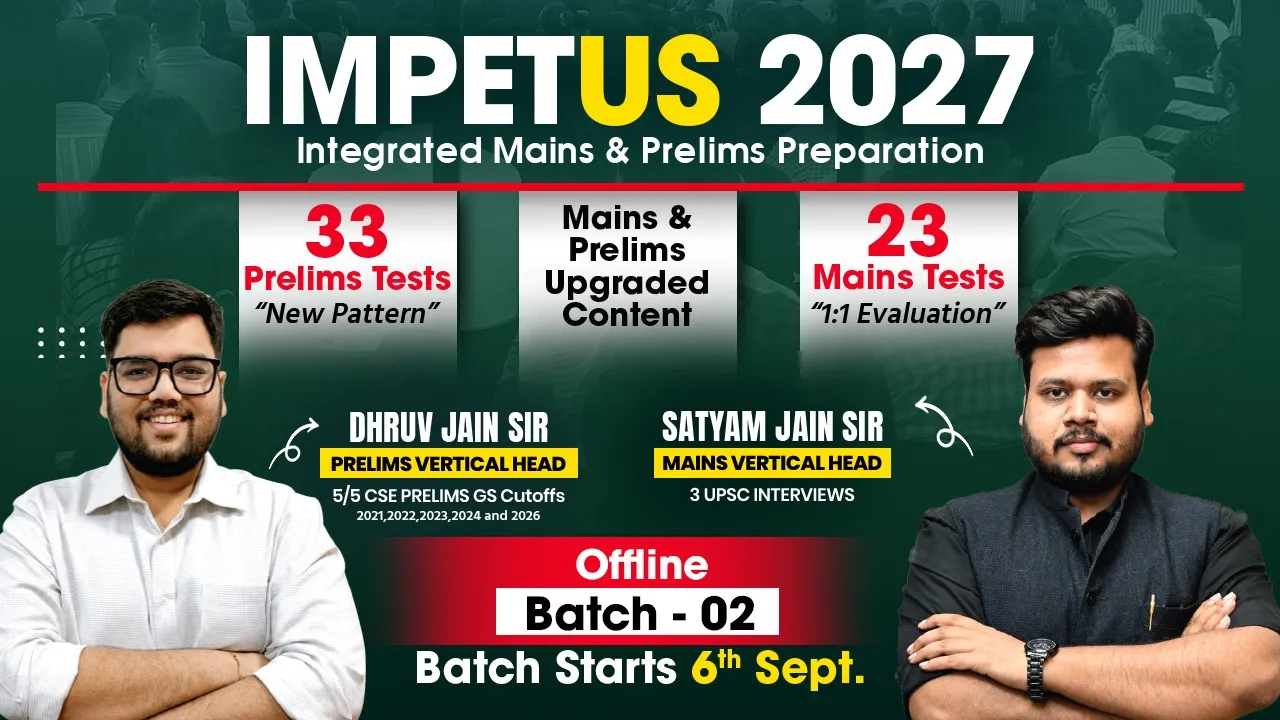
Integrated Mains & Prelims Execution with UnderStand
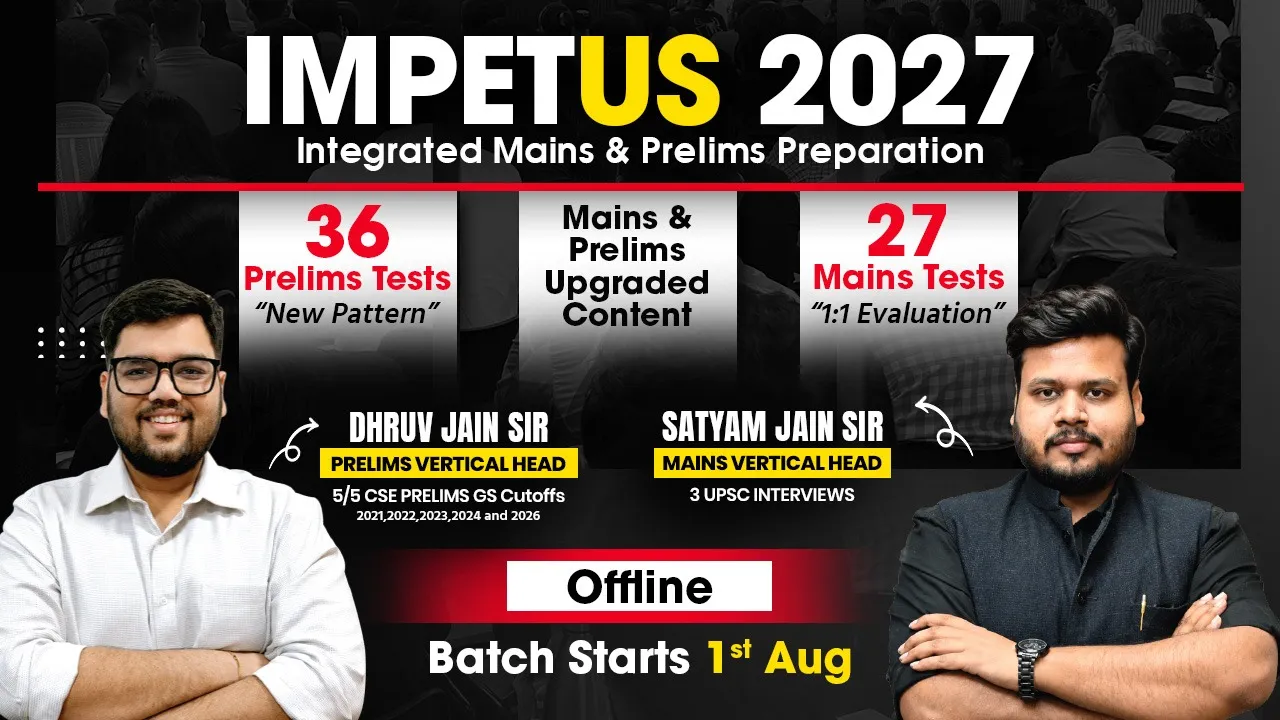
Integrated Prelims & Mains Preparation
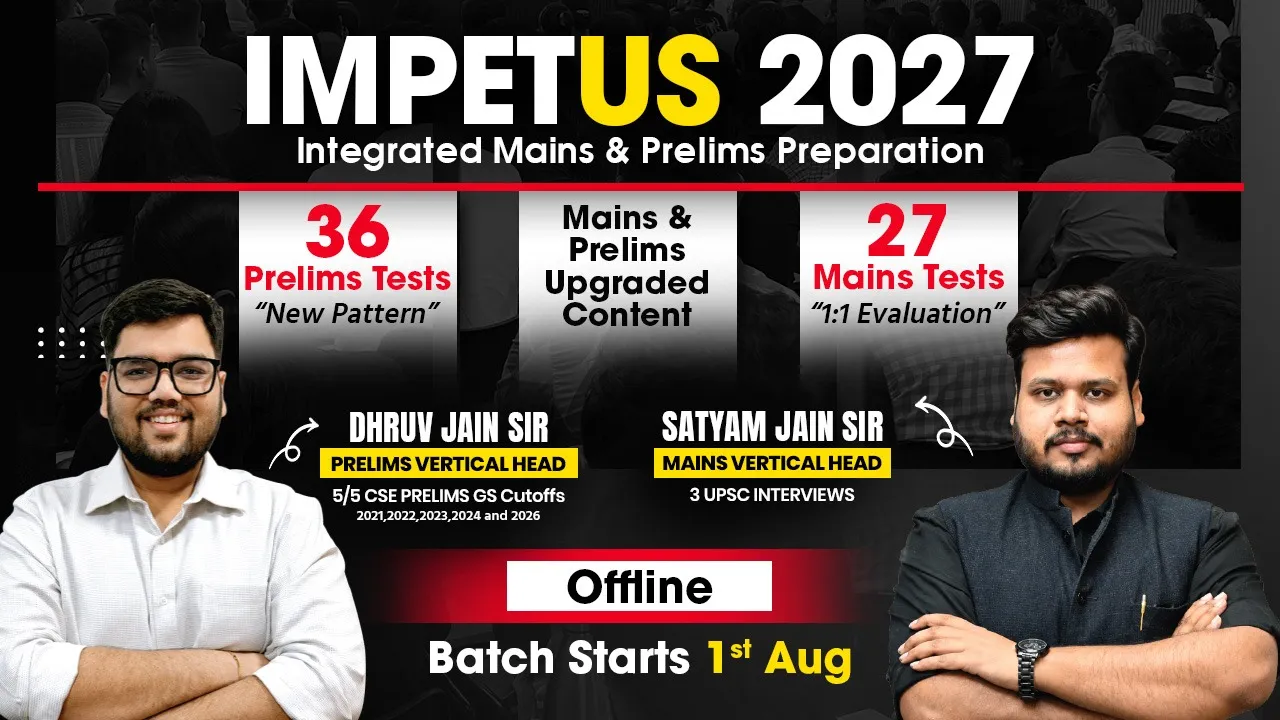
Integrated Prelims & Mains Preparation
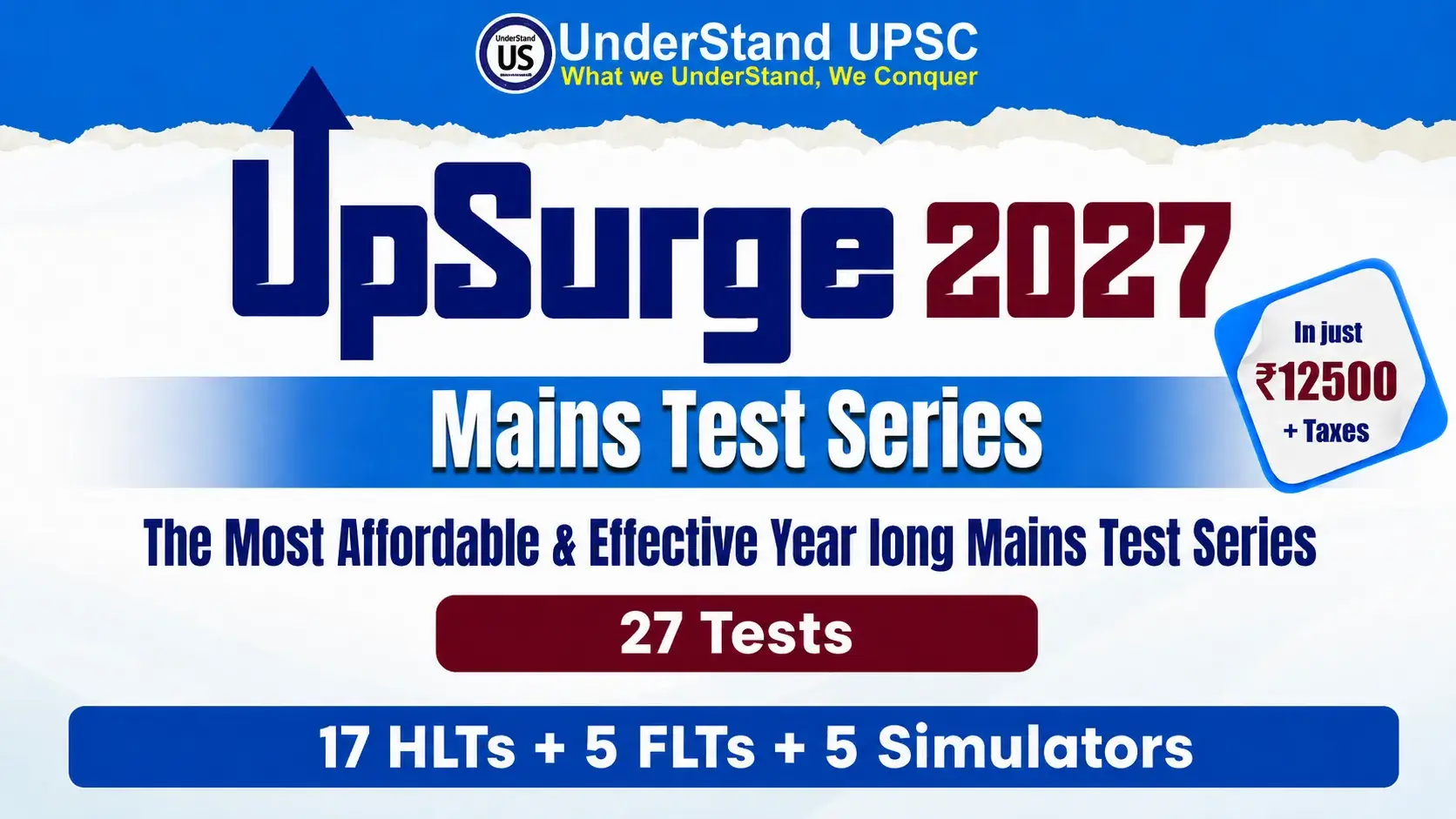
Conquer Mains with UpSurge
Upsurge Mains 2027 Schedule
Test Deliverables :
A complete testing architecture with full-length tests and UPSC-like simulators to gradually build conceptual command, answer stamina and exam temperament.
Detailed evaluation focused on content quality, structure, demand identification, presentation, examples, data usage and value addition, instead of only giving generic marks and feedback.
Post-test discussion directly by UPSC rankers and high scorers, helping students UnderStand how toppers approach the same question with better structure, depth and articulation.
High-quality ideal answers along with selected topper-style copies to show students the difference between knowledge-based answers and marks-fetching answers.
Questions designed around UPSC PYQ trends, recurring themes, current issues and evolving examiner demand, so students do not practise random questions but exam-relevant ones.
Tests conducted in a strict UPSC-like environment with:fixed timing, answer booklet format, page discipline and pressure-based writing practice to develop real Mains temperament.
TEST SCHEDULE:
| Date | Day | Phase | Mains Test | Mains Format | Mains Qs | Theme | Detailed Syllabus / Student Target |
| 26-Jul-2026 | Saturday | Orientation Session (Upsurge Mains 2027) – Timing: 05:00 PM onwards | |||||
| 9-Aug-2026 | Sunday | GS3 Phase | Mains HT-1 | Half Length Test | 10 | Agriculture + Food Processing | ▶ Major crops, cropping patterns in various parts of the country, different types of irrigation and irrigation systems storage, transport and marketing of agricultural produce and issues and related constraints; e-technology in the aid of farmers. ▶ Issues related to direct and indirect farm subsidies and minimum support prices; Public Distribution System – objectives, functioning, limitations, revamping; issues of buffer stocks and food security; Technology missions; Economics of animal rearing. ▶ Land reforms in India. |
| 16-Aug-2026 | Sunday | GS3 Phase | Mains HT-2 | Half Length Test | 10 | Economy + Industry, Investment, Infra | ▶ Indian Economy and issues relating to planning, mobilization of resources, growth, development and employment. ▶ Inclusive growth and issues arising from it. ▶ Government Budgeting. ▶ Effects of liberalization on the economy, changes in industrial policy and their effects on industrial growth. ▶ Infrastructure: Energy, Ports, Roads, Airports, Railways etc ▶ Investment models. |
| 23-Aug-2026 | Sunday | GS3 Phase | Mains HT-3 | Half Length Test | 10 | Environment + DM + SnT | ▶ Conservation, environmental pollution and degradation, environmental impact assessment. ▶ Disaster and disaster management. ▶ Science and Technology—developments and their applications and effects in everyday life. ▶ Achievements of Indians in science & technology; indigenization of technology and developing new technology. ▶ Awareness in the fields of IT, Space, Computers, robotics, nano-technology, bio-technology and issues relating to intellectual property rights. |
| 30-Aug-2026 | Sunday | GS3 Phase | Mains HT-4 | Half Length Test | 10 | Internal Security | ▶ Linkages between development and spread of extremism. ▶ Role of external state and non-state actors in creating challenges to internal security. ▶ Challenges to internal security through communication networks, role of media and social networking sites in internal security challenges, basics of cyber security; money-laundering and its prevention. ▶ Security challenges and their management in border areas; linkages of organized crime with terrorism. ▶ Various Security forces and agencies and their mandate. |
| 6-Sep-2026 | Sunday | GS3 Consolidation | Mains Full Test-1 | Full Test | 20 | GS3 Integrated Full | GS3 Integrated Full |
| 13-Sep-2026 | Sunday | GS4 Phase | Mains HT-5 | Half Length Test | 10 | Ethics I | ▶ Ethics and Human Interface: Essence, determinants and consequences of Ethics in human actions; dimensions of ethics; ethics in private and public relationships. ▶ Human Values – lessons from the lives and teachings of great leaders, reformers and administrators; role of family, society and educational institutions in inculcating values. ▶ Attitude: content, structure, function; its influence and relation with thought and behaviour; moral and political attitudes; social influence and persuasion. ▶ Aptitude and foundational values for Civil Service, integrity, impartiality and non-partisanship, objectivity, dedication to public service, empathy, tolerance and compassion towards the weaker-sections. |
| 20-Sep-2026 | Sunday | GS4 Phase | Mains HT-6 | Half Length Test | 10 | Ethics II | ▶ Emotional intelligence-concepts, and their utilities and application in administration and governance. ▶ Contributions of moral thinkers and philosophers from India and the world. ▶ Public/Civil service values and Ethics in Public administration: Status and problems; ethical concerns and dilemmas in government and private institutions; laws, rules, regulations and conscience as sources of ethical guidance; accountability and ethical governance; strengthening of ethical and moral values in governance; ethical issues in international relations and funding; corporate governance. ▶ Probity in Governance: Concept of public service; Philosophical basis of governance and probity; Information sharing and transparency in government, Right to Information, Codes of Ethics, Codes of Conduct, Citizen’s Charters, Work culture, Quality of service delivery, Utilization of public funds, challenges of corruption. |
| 27-Sep-2026 | Sunday | GS4 Phase | Mains HT-7 | Half Length Test | 10 | Case Studies | ▶ Case Studies |
| 4-Oct-2026 | Sunday | GS4 Consolidation | Mains Full Test-2 | Full Test | 20 | GS4 Integrated Full | GS4 Integrated Full |
| 11-Oct-2026 | Sunday | Essay | Mains Full Test-3 | Full Test | Essay Full | ||
| 18-Oct-2026 | Sunday | GS1 Phase | Mains HT-8 | Half Length Test | 10 | Ancient, Medieval and Art and Culture | ▶ Indian culture will cover the salient aspects of Art Forms, Literature and Architecture from ancient to modern times. |
| 25-Oct-2026 | Sunday | GS1 Phase | Mains HT-9 | Half Length Test | 10 | Modern History + World History + Post Independence | ▶ Modern Indian history from about the middle of the eighteenth century until the present – signifi cant events, personalities, issues. ▶ The Freedom Struggle: its various stages and important contributors/contributions from different parts of the country. “▶ Post-independence consolidation and reorganization within the country. ▶ History of the world will include events from 18th century such as industrial revolution, world wars, redrawal of national boundaries, colonization, decolonization, political philosophies like communism, capitalism, socialism etc.— their forms and effect on the society.” |
| 1-Nov-2026 | Sunday | GS1 Phase | Mains HT-10 | Half Length Test | 10 | Physical Geography | ▶ Salient features of the world’s physical geography. ▶ Important Geophysical phenomena such as earthquakes, Tsunami, Volcanic activity, cyclones etc., geographical features and their location – changes in critical geographical features (including water-bodies and ice-caps) and in flora and fauna and the effects of such changes. |
| 08-Nov-2026 | Sunday | GS1 Phase | Mains HT-11 | Half Length Test | 10 | Economic Geography | ▶ Distribution of key natural resources across the world (including South Asia and the Indian sub-continent). |
| 15-Nov-2026 | Sunday | GS1 Phase | Mains HT-12 | Half Length Test | 10 | Indian Society | ▶ Salient features of Indian Society, Diversity of India. |
| 22-Nov-2026 | Sunday | GS1 Phase | Mains HT-13 | Half Length Test | 10 | Indian Society | ▶ Role of women and women’s organisation, population and associated issues, poverty and devel opmental issues, urbanization, their problems and their remedies. Effects of globalization on Indian society. ▶ Social empowerment, communalism, regionalism & secularism. |
| 29-Nov-2026 | Sunday | GS1 Consolidation | Mains Full Test-4 | Full Test | 20 | GS1 Integrated Full | GS1 Integrated Full |
| 06-Dec-2026 | Sunday | GS2 Phase | Mains HT-14 | Half Length Test | 10 | Polity 1 | ▶ Indian Constitution—historical underpinnings, evolution, features, amendments, significant provisions and basic structure. ▶ Functions and responsibilities of the Union and the States, issues and challenges pertaining to the federal structure, devolution of powers and finances up to local levels and challenges therein. ▶ Separation of powers between various organs, dispute redressal mechanisms and institutions. ▶ Comparison of the Indian constitutional scheme with that of other countries. |
| 13-Dec-2026 | Sunday | GS2 Phase | Mains HT-15 | Half Length Test | 10 | Polity 2 | ▶ Parliament and State Legislatures—structure, functioning, conduct of business, powers & privileges and issues arising out of these. ▶ Structure, organization and functioning of the Executive and the Judiciary—Ministries and Departments of the Government; pressure groups and formal/informal associations and their role in the polity. ▶ Salient features of the Representation of People’s Act. ▶ Appointment to various Constitutional posts, powers, functions and responsibilities of various Constitutional Bodies. ▶ Statutory, regulatory and various quasi-judicial bodies. |
| 20-Dec-2026 | Sunday | GS2 Phase | Mains HT-16 | Half Length Test | 10 | Governance + Social Justice | ▶ Government policies and interventions for development in various sectors and issues arising out of their design and implementation. ▶ Development processes and the development industry—the role of NGOs, SHGs, various groups and associations, donors, charities, institutional and other stakeholders. ▶ Important aspects of governance, transparency and accountability, e-governance—applications, models, successes, limitations, and potential; citizens charters, transparency & accountability and institutional and other measures. ▶ Role of civil services in a democracy. ▶ Welfare schemes for vulnerable sections of the population by the Centre and States and the performance of these schemes; mechanisms, laws, institutions and bodies constituted for the protection and betterment of these vulnerable sections. ▶ Issues relating to development and management of Social Sector/Services relating to Health, Education, Human Resources. ▶ Issues relating to poverty and hunger. |
| 27-Dec-2026 | Sunday | GS2 Phase | Mains HT-17 | Half Length Test | 10 | IR | ▶ India and its neighborhood relations. ▶ Bilateral, regional and global groupings and agreements involving India and/or affecting India’s interests. ▶ Effect of policies and politics of developed and developing countries on India’s interests, Indian diaspora. ▶ Important International institutions, agencies and fora—their structure, mandate. |
| 03-Jan-2027 | Sunday | GS2 Consolidation | Mains Full Test-5 | Full Test | 20 | GS2 Integrated Full | GS2 Integrated Full |
| 7-Jan-2027 | Thursday | Essay | Mains Full Test – Simulator Test 1 | Full Test | Full Test | Essay Full | |
| 8-Jan-2027 | Friday | GS Paper 1 & 2 | Mains Full Test – Simulator Test 2 + Simulator Test 3 | Full Test | Full Test | GS Paper 1 + GS Paper 2 | |
| 9-Jan-2027 | Saturday | GS Paper 3 & 4 | Mains Full Test – Simulator Test 4 + Simulator Test 5 | Full Test | Full Test | GS Paper 3 + GS Paper 4 | |

A Platform OF The Students
For The Students
By The Students




Copyright © 2026 USARAMBHA EDUCATION (UnderStand UPSC). All Rights Reserved.

