Context
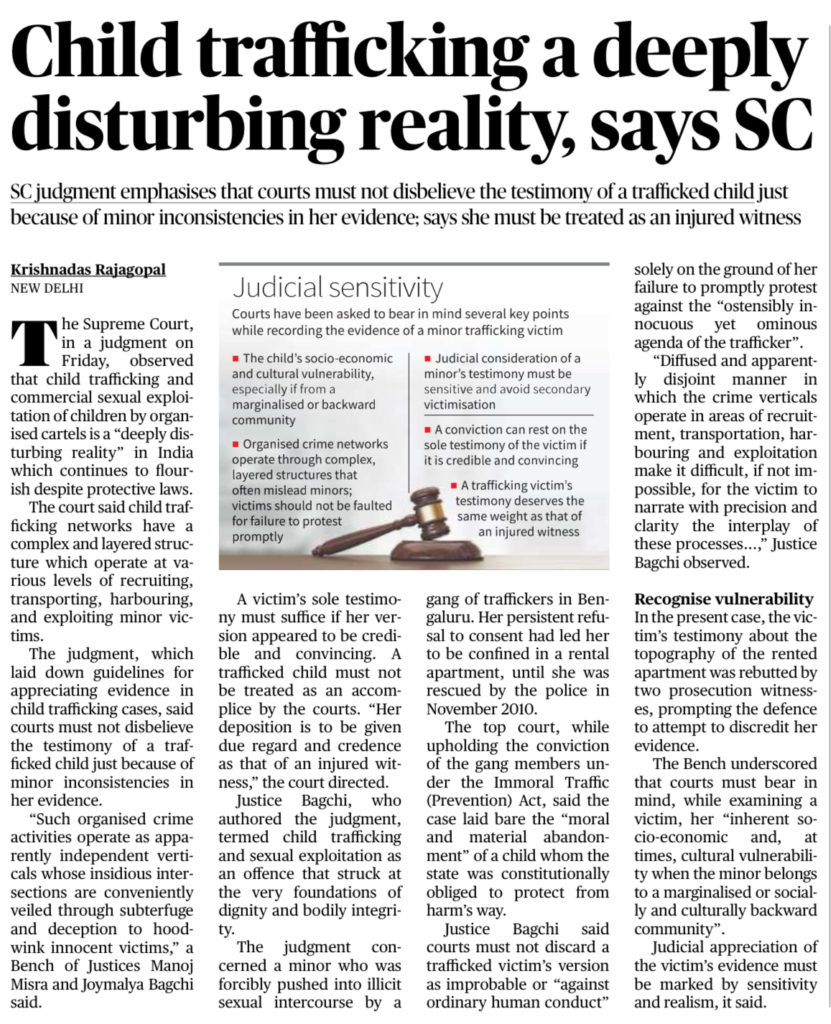
The Supreme Court of India delivered an important judgment on child trafficking, underlining judicial sensitivity while appreciating evidence of trafficked minors and strengthening victim-centric justice.
Summary
• Child trafficking and commercial sexual exploitation are a “deeply disturbing reality” despite existing laws.
• Sole testimony of a trafficked child can be sufficient for conviction if it is credible and convincing.
• Courts must not reject testimony due to minor inconsistencies or delayed resistance by the victim.
• A trafficked child should be treated as an injured witness, not as an accomplice.
• Judicial approach must recognise the socio-economic and cultural vulnerability of minors, especially from marginalised backgrounds.
• Emphasis on avoiding secondary victimisation and ensuring sensitivity and realism in trials.