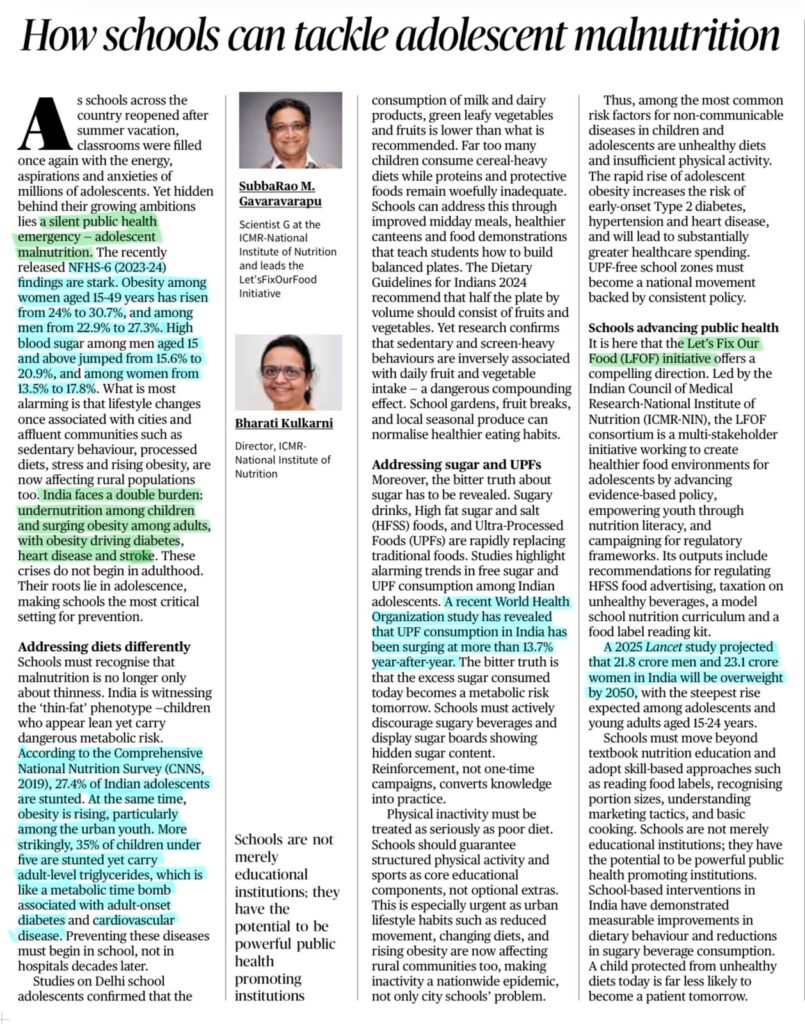
Context: Adolescent Malnutrition in India
Rising adolescent malnutrition and obesity call for school-based interventions to promote healthy dietary habits and prevent future lifestyle diseases.
Adolescent Malnutrition
Adolescent malnutrition refers to malnutrition among children aged 10–19 years.
It includes:
- Undernutrition
- Stunting
- Anaemia
- Micronutrient deficiency
- Overweight
- Obesity
Double Burden of Malnutrition
India faces both:
- Undernutrition
- Rising obesity
This increases the risk of:
- Type-2 diabetes
- Hypertension
- Cardiovascular diseases
- Poor productivity
- Long-term health burden
Why Schools Matter
Schools are one of the most effective platforms for:
- Lifelong nutrition education
- Healthy food habits
- Physical activity
- Early screening
- Behavioural change
- Preventive healthcare
Key Data
Comprehensive National Nutrition Survey, 2019
- 27.4% adolescents are stunted.
NFHS-6, 2023–24
Obesity
- Women: 24% → 30.7%
- Men: 22.9% → 27.3%
High Blood Sugar
- Women: 13.5% → 17.8%
- Men: 15.6% → 20.9%
WHO
- Ultra-Processed Food consumption in India is increasing by more than 13.7% annually.
Lancet, 2025 Projection
By 2050:
- 23.1 crore women projected to be overweight.
- 21.8 crore men projected to be overweight.
Way Forward
1. Nutrition Education
Integrate nutrition education into the school curriculum.
2. Healthy School Meals
Ensure healthy meals in schools and improve dietary diversity.
3. Restrict HFSS and UPF Foods
Restrict:
- High Fat, Sugar and Salt foods
- Ultra-Processed Foods
in and around schools.
4. Physical Activity
Promote daily physical activity, sports and fitness routines.
5. Screening and Counselling
Regularly conduct:
- BMI checks
- Nutrition screening
- Counselling
- Parental awareness sessions
UPSC Mains Question
“The double burden of adolescent malnutrition threatens India’s demographic dividend. Discuss the role of schools in promoting nutrition, healthy lifestyles and preventive healthcare.”
10 marks, 150 words