Context:
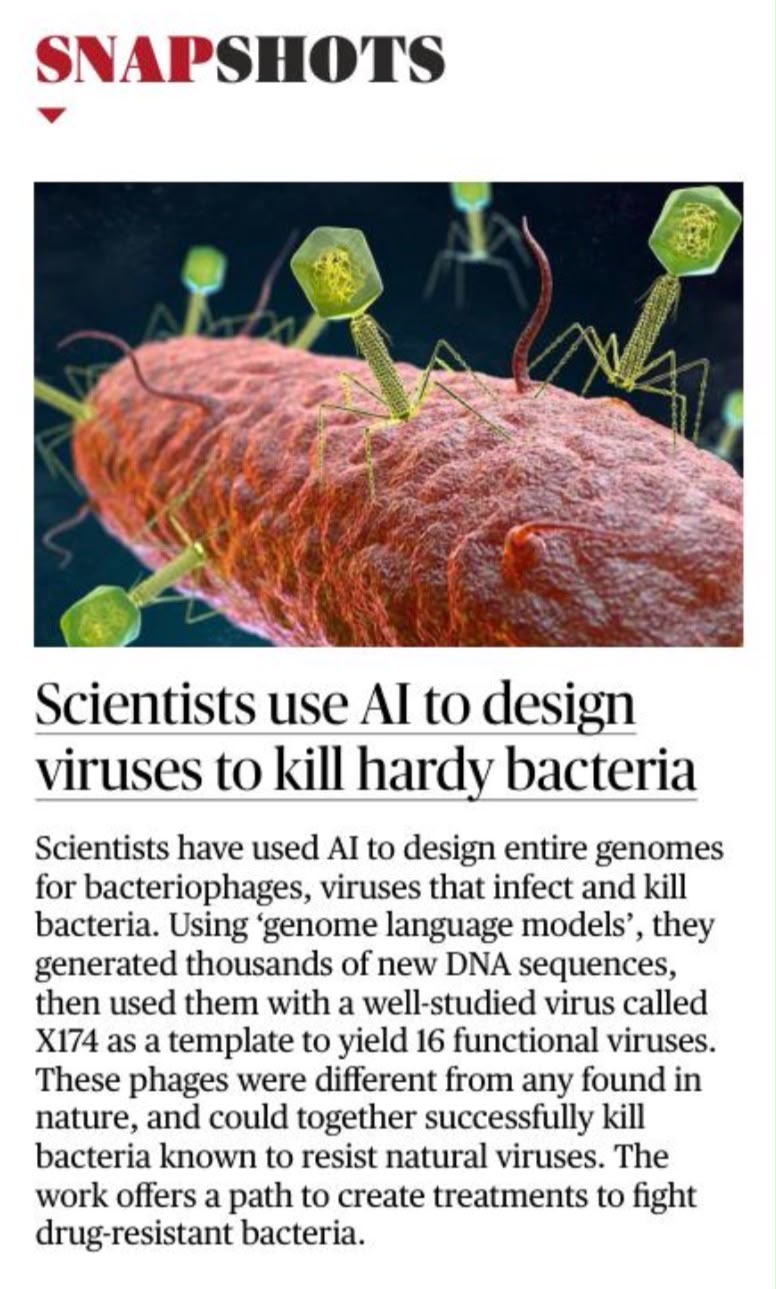
Scientists have used Artificial Intelligence to design bacteriophages capable of killing bacteria that resist naturally occurring phages.
This opens a potential new approach against antimicrobial-resistant infections.
Bacteriophage: Basics
Bacteriophages, also called phages, are viruses that specifically infect bacteria.
They use bacterial cells to replicate.
They are generally host-specific.
This means a phage that infects one bacterial species or strain may not infect another.
After infecting a susceptible bacterium, a lytic phage multiplies inside it and ultimately lyses or destroys the bacterial cell.
Bacteriophages are found widely in nature, including soil, freshwater and oceans.
What Is New?
AI-Designed Genomes
Scientists used genome language models to generate thousands of candidate DNA sequences for new bacteriophages.
X174 Template
Researchers used the well-studied bacteriophage X174 as a template.
They obtained 16 functional viruses.
Novel Phages
The engineered phages were different from naturally occurring viruses.
Together, they killed bacteria that were resistant to natural phages.
Potential Application
These engineered phages could contribute to phage therapy against difficult-to-treat drug-resistant bacterial infections.
Why It Matters
Antimicrobial Resistance
Antimicrobial Resistance is a major global health challenge.
As bacteria become resistant to antibiotics, new treatment tools are needed.
AI-designed phages may become an alternative or complement to conventional antibiotics.
Precision Therapy
Phages can be highly specific to their bacterial hosts.
This means they may target harmful bacteria while causing less disruption to beneficial microbiota.
AI and Biotechnology
The development shows how AI can accelerate the design-test-optimise cycle in synthetic biology.
AI can help generate biological designs faster, which scientists can then test in laboratories.
Important Clarification
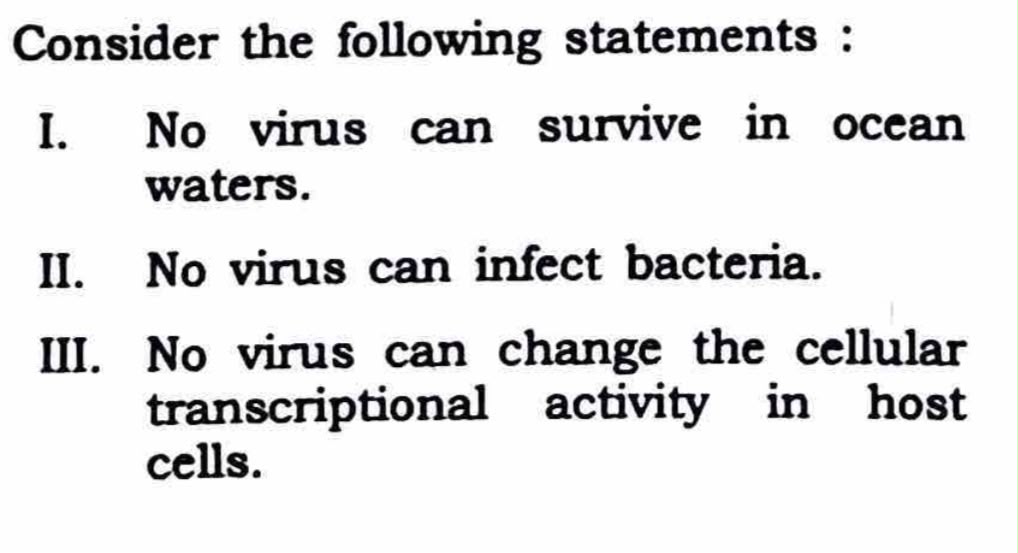
Viruses can infect bacteria.
Bacteriophages are exactly such viruses.
Viruses also exist widely in natural environments, including oceans.
Key Takeaway
AI-designed bacteriophages show how biotechnology and artificial intelligence can combine to fight antimicrobial resistance. They could become a future precision tool against drug-resistant bacteria.