Source: The Indian Express, Tags: 25 April 2026
Context: Anti-Defection Law
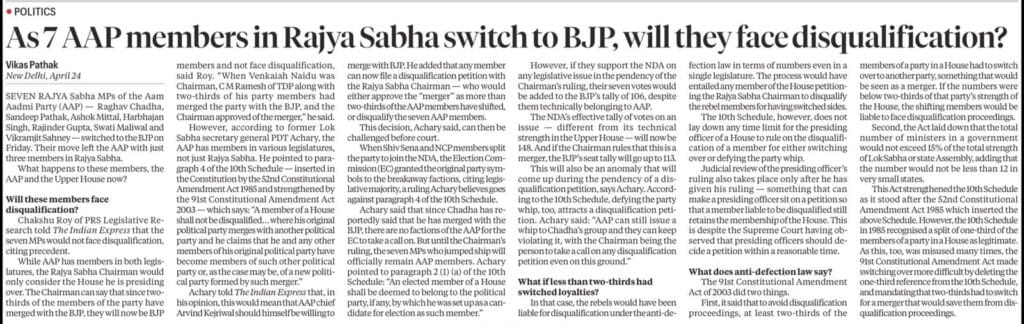
Seven AAP MPs in the Rajya Sabha joined the BJP. The key issue is whether this attracts disqualification under the anti-defection law.
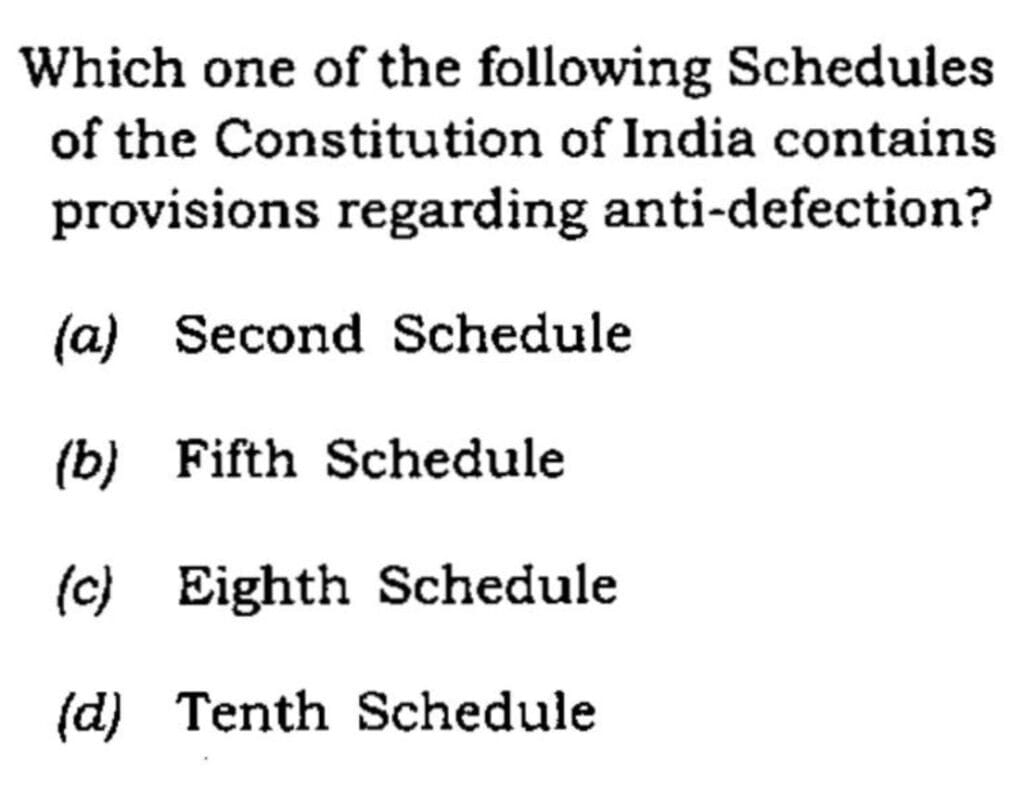
Anti-Defection Law (Tenth Schedule)
Origin and Evolution
- Added by the 52nd Constitutional Amendment Act, 1985
- Strengthened by the 91st Constitutional Amendment Act, 2003
Purpose
- Prevent defections and maintain party discipline
Core Rule
- A member is disqualified if he/she:
- Voluntarily gives up party membership
- Votes or abstains against the party whip
Exception – Merger (Central to this case)
- Paragraph 4: No disqualification if at least two-thirds of a party’s members in a House agree to merge with another party
91st Amendment (Key Impact)
- Abolished protection for split (one-third)
- Only two-thirds merger is a valid safeguard now
Decision Authority
Why disqualification may not apply
- AAP had 10 MPs in Rajya Sabha; 7 have switched
- This crosses the two-thirds threshold
- Therefore, it can be treated as a “merger” under Paragraph 4, not defection
- If the Chairman accepts this as a merger, no disqualification applies