India–Nepal Relations: ₹15,000-Crore Assistance Package and Joint Vision
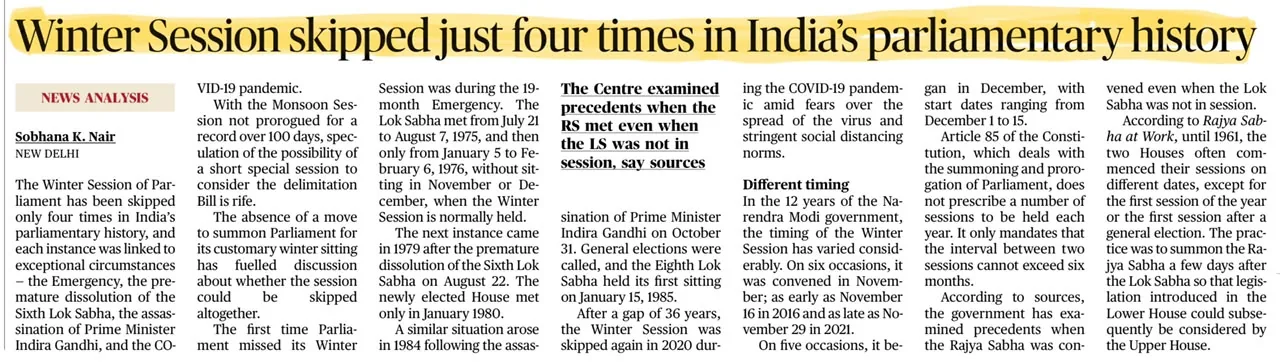
Context: During Nepal Prime Minister Balendra Shah’s first bilateral visit abroad (22–23 November 2026), India announced a ₹15,000-crore assistance package. Both countries also adopted the Joint Vision Document, ‘Viksit Bharat and Samunnat Nepal: Re-imagining the Partnership’.
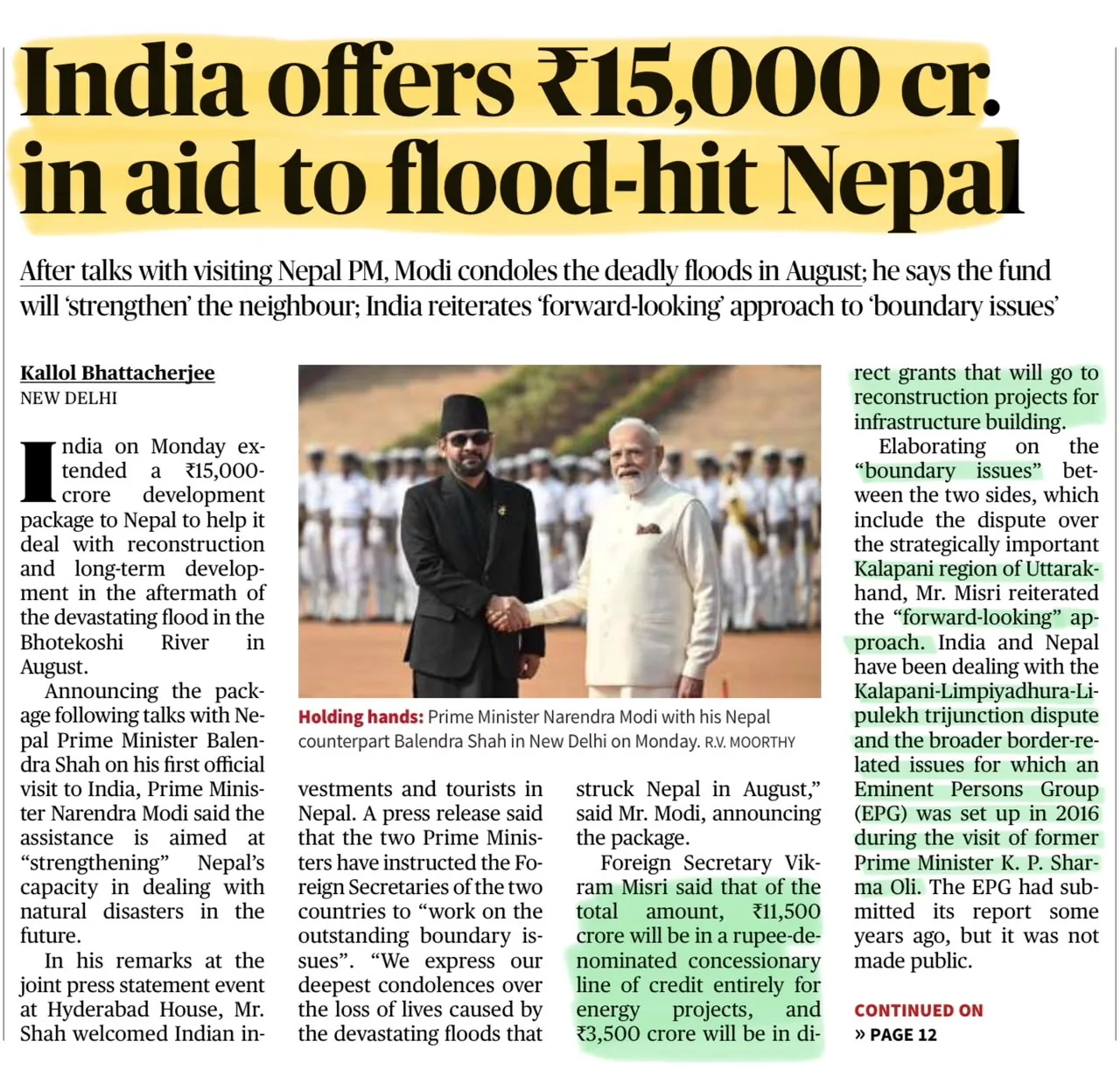
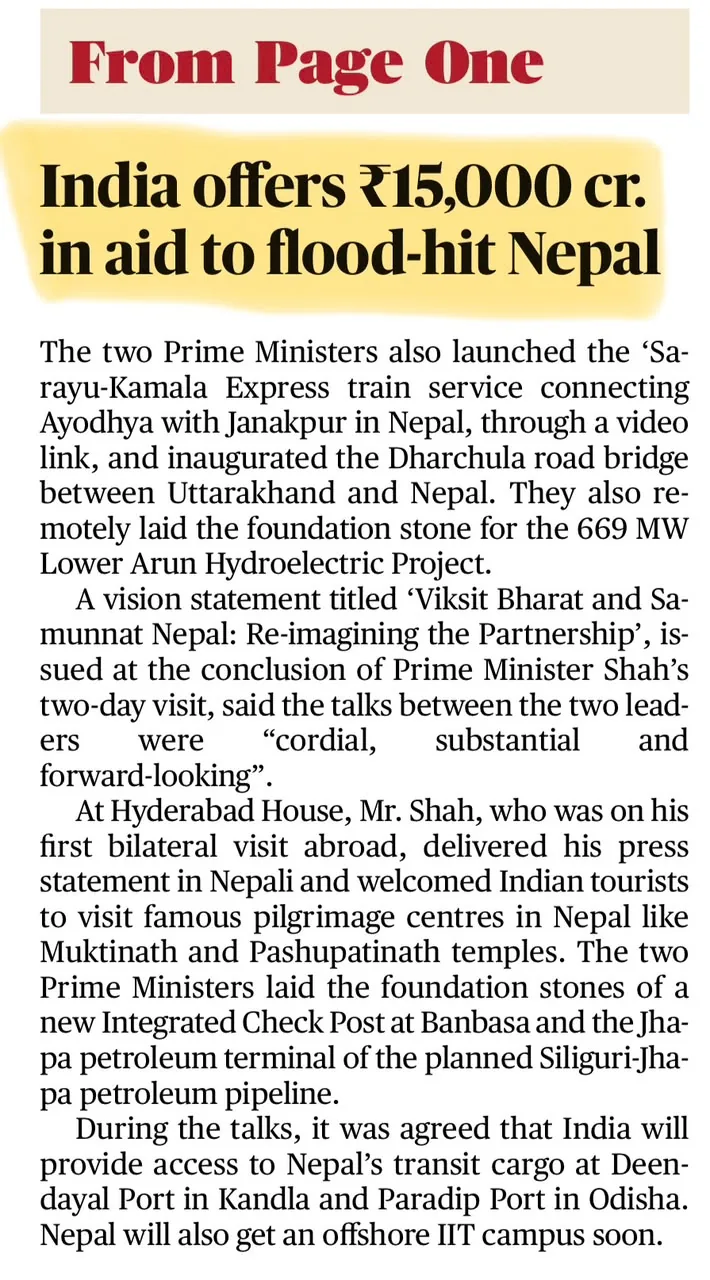
India’s ₹15,000-Crore Assistance Package
₹11,500 crore rupee-denominated concessional LoC – entirely for energy projects.
₹3,500 crore for infrastructure reconstruction.
Reconstruction and long-term development after the August 2026 floods in the Bhotekoshi River region.
Ten Pillars of the Joint Vision Document
Review trade agreements, investment, cross-border SEZs and IT parks, transit connectivity.
Hydropower and multipurpose projects, early-warning systems, post-disaster recovery.
Rail, road, ICPs, petroleum pipelines and UPI integration.
Civil-service training and exchange of administrative best practices.
India–Nepal Startup Partnership, Centre of Excellence in Kathmandu.
Indian institutions’ branches in Nepal; more scholarships.
National cricket academy in Nepal; access to Indian training facilities.
Ramayana, Buddhist and Shiva-Shakti religious circuits.
Upgrade Nepal’s National Medical Laboratory; affordable medicines.
Agro-Industrial Park in Chitwan; ICAR Centre of Excellence.
Major Projects and Announcements
Sarayu-Kamala Express (Ayodhya–Janakpur); Jayanagar–Bardibas and Jogbani–Biratnagar links.
Dharchula road bridge between Uttarakhand and Nepal.
669 MW Lower Arun Hydroelectric Project.
Siliguri–Jhapa pipeline and Jhapa petroleum terminal.
New ICP at Banbasa; Nepal cargo via Deendayal (Kandla) and Paradip ports.
Proposed offshore IIT campus in Nepal.
Treaties and Institutional Mechanisms
Nepal–East India Company treaty; basis of boundary interpretations.
Framework of close ties; Nepal seeks revision.
Reviewed overall ties incl. the 1950 Treaty; report not made public.
Foreign Minister-level review mechanism.
Technical work incl. boundary pillars.
Monitors the Joint Vision; meets at least every six months.
Major Challenges
Dispute near the India–Nepal–China trijunction over the source of the Kali River.
Dispute linked to the shifting course of the Gandak.
Rising Chinese investment and infrastructure in Nepal.
Trade deficit, transit dependence and benefit-sharing in hydropower.
Open-border crime; Agnipath uncertainty over Gorkha recruitment.
Way Forward
Use historical records, maps and technical surveys.
Address the 1950 Treaty through consensus.
Trade, transit and infrastructure to cut asymmetry.
Regular monitoring of the Joint Vision through the HLMG.
Prelims Practice MCQ
+2 correct • −0.66 wrongWith reference to India–Nepal relations, consider the following statements:
1. The Kalapani–Limpiyadhura–Lipulekh dispute lies near the India–Nepal–China trijunction.
2. The Treaty of Sugauli was signed between Nepal and independent India in 1950.
3. The Eminent Persons Group set up in 2016 reviewed the overall bilateral relationship, including the 1950 Treaty.
Which of the statements given above are correct?
UPSC Mains Question
GS2 • 15 Marks • 250 WordsDevelopment partnership is India’s most effective tool in Nepal, but unresolved political issues limit its impact. Discuss with reference to the recent Joint Vision Document.
- Policies — Neighbourhood First, Act East connectivity, HIT formula (Highways, I-ways, Trans-ways).
- Treaties — Sugauli 1816, Peace and Friendship 1950, Mahakali Treaty 1996.
- Projects — Arun III, Lower Arun, Motihari–Amlekhgunj pipeline, ICPs.
- Keywords — asymmetric interdependence, China factor, open border, hydro-diplomacy.