Context: The power of mangroves over seawalls
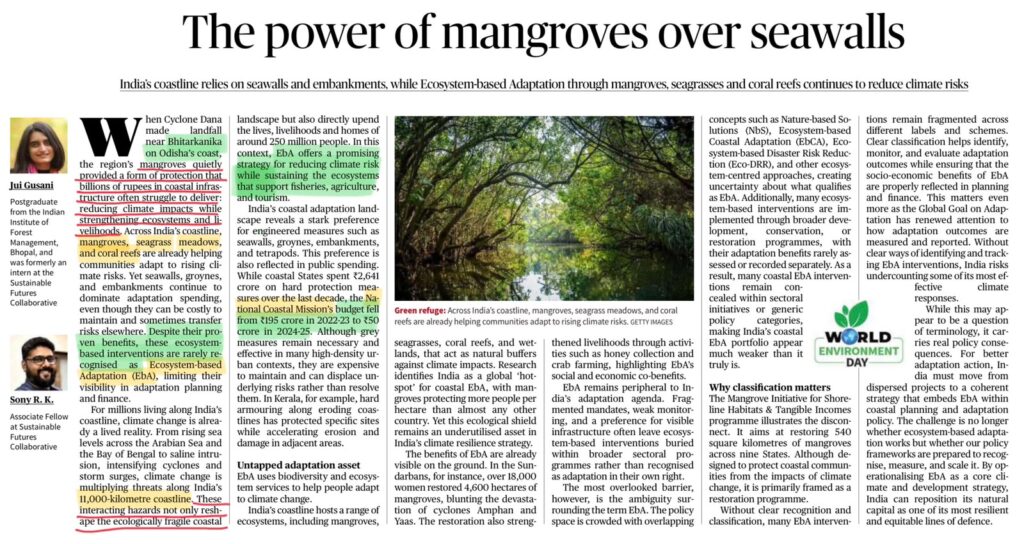
The article argues that Ecosystem-Based Adaptation through mangroves, seagrass meadows and coral reefs can provide sustainable climate resilience and coastal protection while supporting biodiversity and livelihoods.
Mangroves: Basics
- Salt-tolerant vegetation found in inter-tidal coastal areas, estuaries and deltas.
- Act as natural barriers against cyclones, storm surges, tsunamis and coastal erosion.
- Important Blue Carbon Ecosystem with high carbon sequestration potential.
- Support fisheries, biodiversity and coastal livelihoods.
Major Mangrove Areas
- Sundarbans, West Bengal
- Bhitarkanika, Odisha
- Godavari–Krishna Delta, Andhra Pradesh
- Pichavaram, Tamil Nadu
- Andaman and Nicobar Islands
Ecosystem-Based Adaptation
Meaning
- Use of ecosystems and biodiversity to help communities adapt to climate change.
How Adaptation Happens
Mangroves
- Reduce cyclone impact, storm surges and coastal erosion.
Coral Reefs
- Absorb wave energy and protect coastlines.
Seagrass Meadows
- Stabilise seabed and store carbon.
Wetlands
- Absorb floodwaters and regulate water flow.
Benefits
- Coastal protection
- Flood control
- Carbon sequestration
- Biodiversity conservation
- Livelihood support
- Cost-effective adaptation
National Coastal Mission
- Launched: 2014
- Under: National Action Plan on Climate Change
- Ministry: Ministry of Environment, Forest and Climate Change
Objective
- Climate-resilient coastal management through conservation of mangroves, coral reefs and other coastal ecosystems while protecting coastal communities and livelihoods.