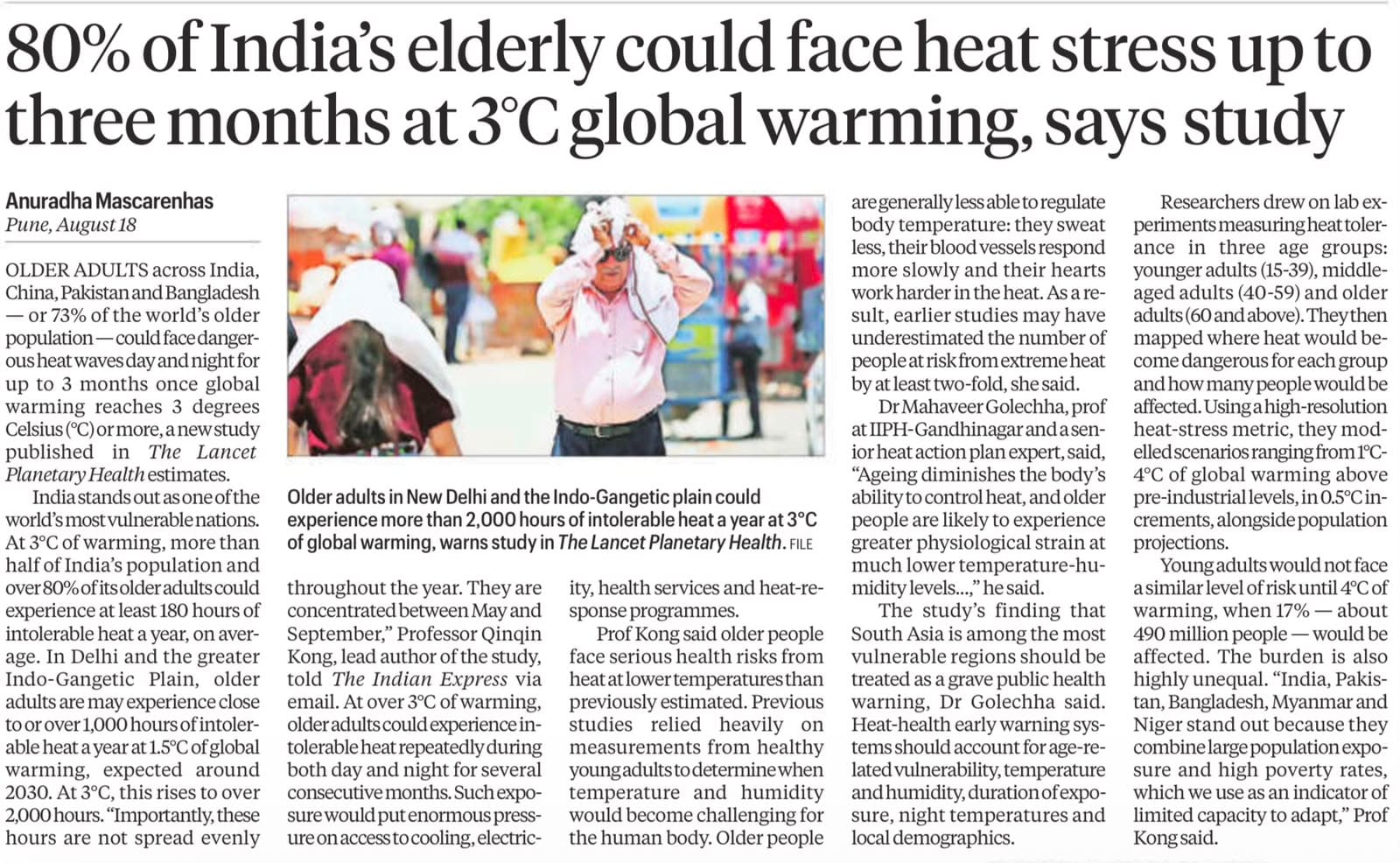
Context: Elderly heat stress in India
A Lancet Planetary Health study highlights the disproportionate heat vulnerability of the elderly as global warming intensifies. India’s Indo-Gangetic region is emerging as a major heat-stress hotspot.
What the Study Shows
At 3°C global warming, over 80% of India’s elderly population could face at least 180 hours of intolerable heat annually.
This could potentially extend over three months.
Delhi and the Indo-Gangetic Plain face particularly severe exposure.
Elderly people in these regions could experience over 2,000 hours of intolerable heat annually at 3°C warming.
Even at 1.5°C warming, elderly people in the region could face around 1,000 hours of intolerable heat annually.
The study indicates that previous assessments may have underestimated heat vulnerability by at least two-fold.
This is because older adults have lower physiological capacity to cope with heat.
What This Means for India
Public health:
Greater exposure will increase the risk of heat-related illness and mortality among the elderly.
Heat Action Plans:
Heat warnings need to become age-sensitive.
They should incorporate:
- Humidity
- Duration of exposure
- Night-time heat
Warnings should not rely only on maximum temperature.
Urban adaptation:
High-risk regions such as Delhi and the Indo-Gangetic Plain need stronger adaptation measures.
These include:
- Cooling infrastructure
- Heat shelters
- Water access
- Healthcare preparedness
Targeted climate adaptation:
The elderly should be treated as a specific vulnerable group in India’s climate and disaster-management planning.
Key Takeaway
Heat stress is becoming a serious public-health and climate-adaptation challenge for India. Elderly citizens need special protection through age-sensitive heat warnings, cooling infrastructure and targeted health preparedness.