Context: Ethical Issues in Governance
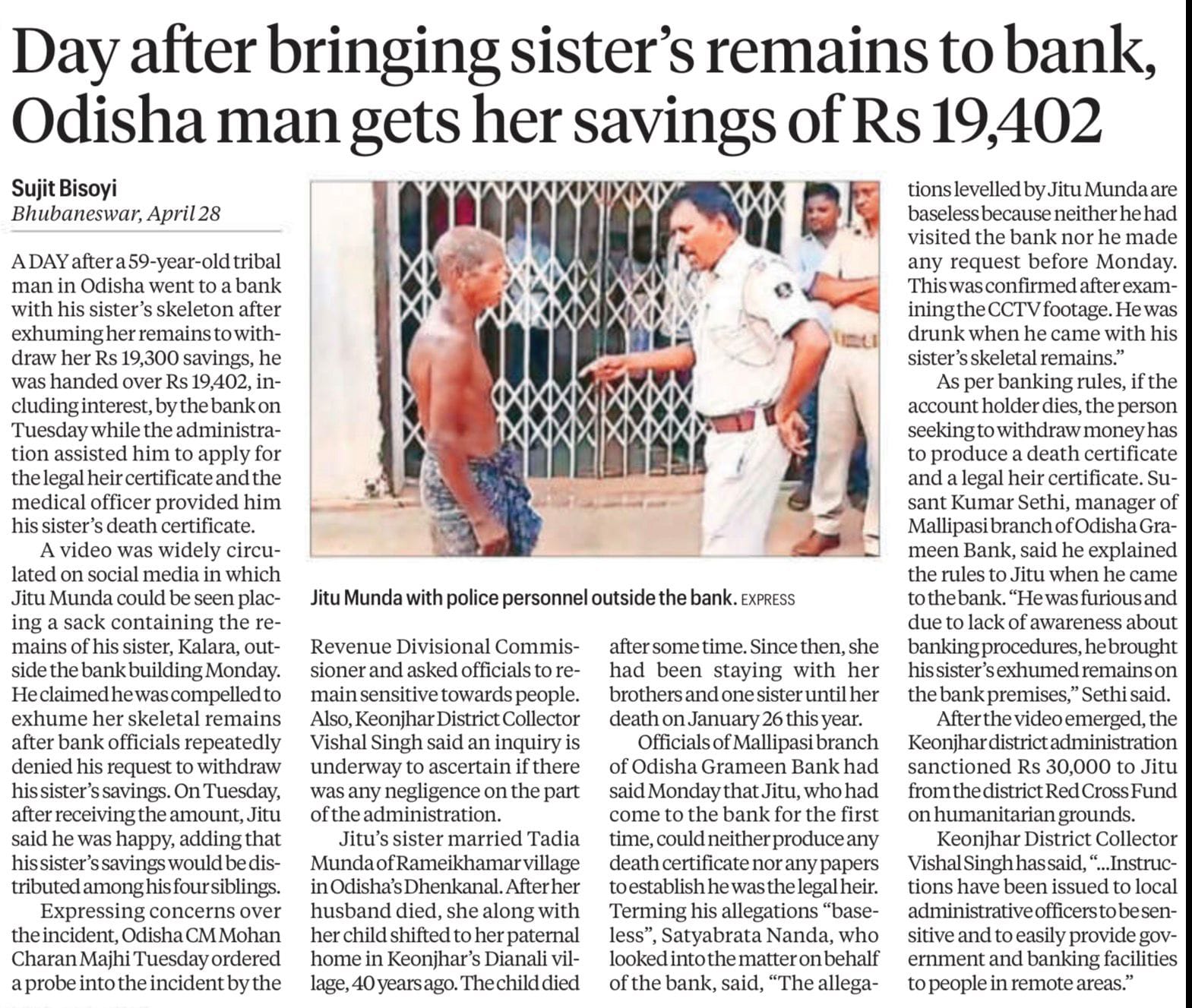
In Odisha, a tribal man (Jitu Munda) was denied access to his deceased sister’s bank savings due to absence of a death certificate and legal heir certificate. In desperation, he brought her skeletal remains to the bank. Only after public attention did authorities intervene, enabling release of ₹19,402 and providing additional relief.
Ethical Analysis
1. Failure of Empathy & Compassion
- Public officials followed rules mechanically, ignoring human suffering
- Violates principle of compassionate governance and human dignity
2. Lack of Equity & Social Justice
- A vulnerable tribal citizen could not access basic services
- Reflects exclusion of marginalised groups
- Violates equity in public service delivery
3. Procedural Justice vs Substantive Justice
- Focus remained on procedural compliance (documents)
- Ignored substantive justice (rightful claim to savings)
- Ethical governance demands balancing both
4. Failure of Accountability & Responsiveness
- Action taken only after media/public pressure
- Indicates weak responsiveness and delayed accountability
5. Information Asymmetry & Lack of Awareness
- Citizen unaware of procedures
- State failed in duty of care, awareness creation, and citizen facilitation
6. Last-mile Governance Failure
- Breakdown in delivery at grassroots level
- Shows gap between policy intent and implementation