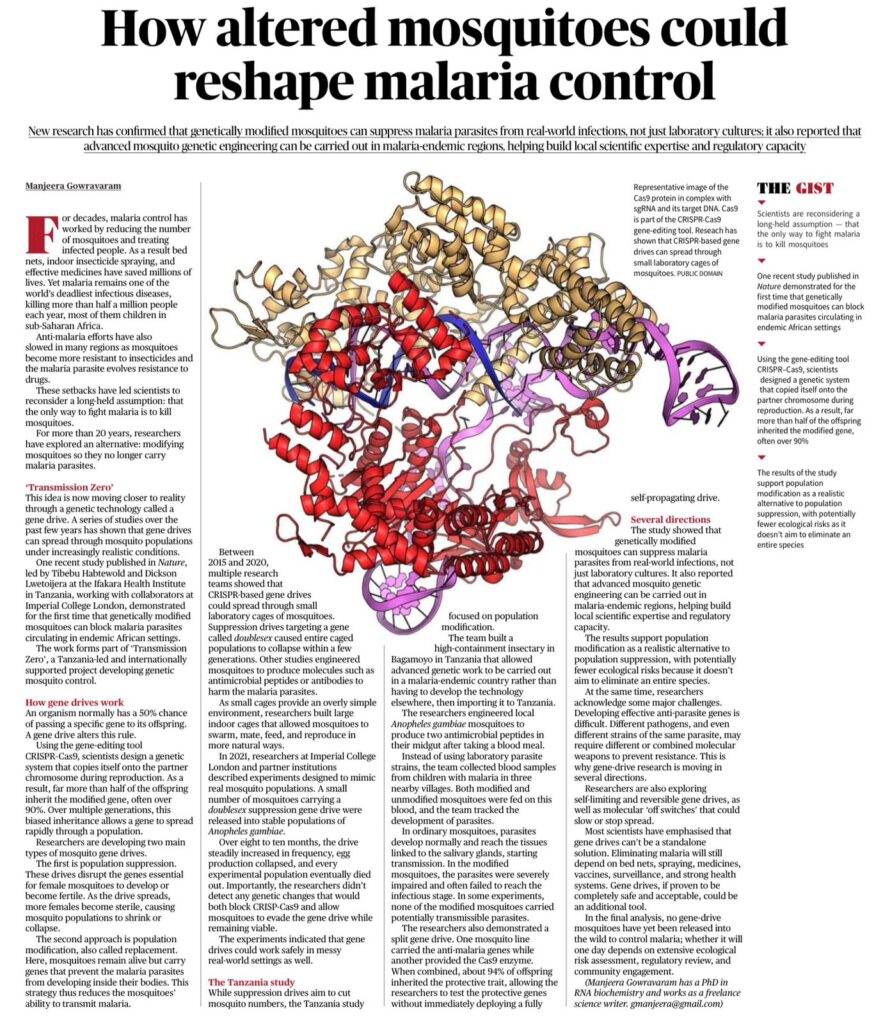
Context: Genetically Modified Mosquitoes Malaria
Scientists have shown that genetically modified mosquitoes can block malaria parasites in real-world conditions using CRISPR-based gene drives, shifting strategy from killing mosquitoes → making them unable to transmit disease.
1. How this process works?
- Step 1: Gene editing (CRISPR-Cas9)
A gene is inserted into mosquitoes that produces anti-malaria molecules or blocks parasite growth. - Step 2: Gene drive mechanism
The edited gene copies itself to the partner chromosome → inheritance jumps from 50% → >90%. - Step 3: Rapid spread
Modified mosquitoes breed → most offspring carry the trait → spreads through wild population. - Step 4: Inside the mosquito
Malaria parasite (Plasmodium) fails to develop in the gut/salivary glands. - Outcome
Mosquitoes still exist but cannot transmit malaria → “Transmission Zero” approach.
2. Key mosquitoes & diseases
A. Anopheles (female)
- Disease: Malaria
- Parasite: Plasmodium
- Note: Main target for genetic modification
B. Aedes aegypti / Aedes albopictus
- Diseases: Dengue, Chikungunya, Zika, Yellow fever
- Note: Day-biting mosquito
C. Culex
- Diseases: Japanese Encephalitis, Filariasis (Elephantiasis), West Nile fever