Context: Ground-Level Ozone
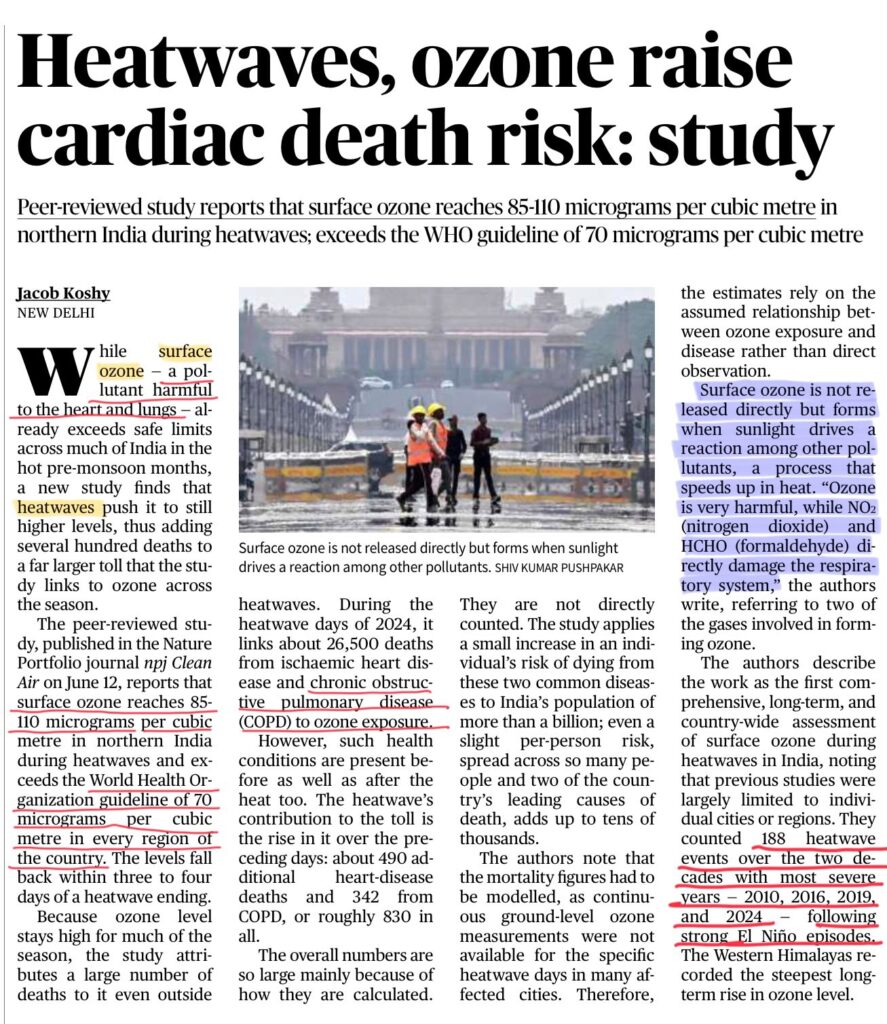
A study published in npj Clean Air found that heatwaves significantly increase ground-level ozone concentrations in India, pushing them beyond the World Health Organization safety guideline.
Ground-Level Ozone
Stratospheric Ozone — Good Ozone
- Forms the ozone layer.
- Protects Earth from harmful ultraviolet radiation.
Ground-Level Ozone — Bad Ozone
- Harmful air pollutant.
- Formed when sunlight reacts with:
- Nitrogen Dioxide
- Formaldehyde
- Volatile Organic Compounds
WHO Guideline
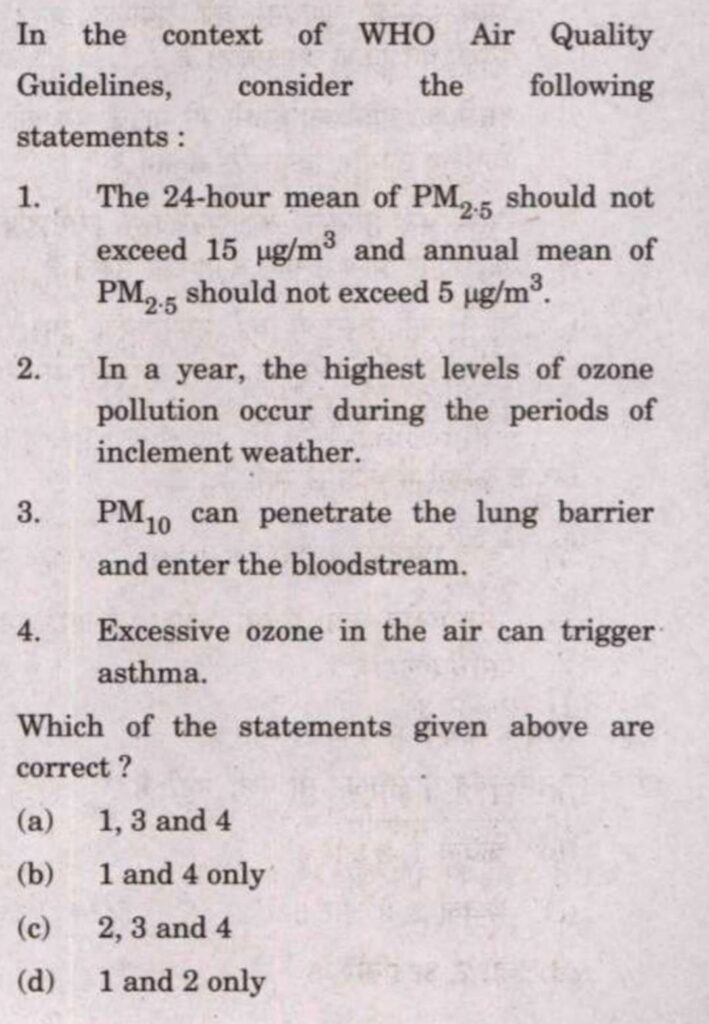
Ozone concentration should not exceed 70 µg/m³ during any 8-hour period.
Heatwaves: IMD Criteria
Plains
- 40°C or above
Coastal Areas
- 37°C or above
Hilly Regions
- 30°C or above
Duration
- Conditions persist for at least 2 consecutive days with significant departure from normal temperature.
Link Between Heatwaves and Ozone
Higher temperature + Stronger sunlight = Faster ozone formation
Key Findings
- Study analysed 188 heatwave events across India.
- Ozone levels in northern India reached 85–110 µg/m³, exceeding WHO limits.
- Major ozone spikes were observed during:
- 2010
- 2016
- 2019
- 2024
Health Impact
Ground-level ozone damages the lungs and heart.
It aggravates:
- Asthma
- Chronic Obstructive Pulmonary Disease
- Cardiovascular diseases
Mains Significance
This topic connects:
- Climate change
- Heatwaves
- Air pollution
- Public health
- Urban planning
- Disaster management
It can be used to show how climate stress multiplies existing health risks.