Source: The Indian Express | Explained Page | Tags: 15 June 2026, Alternative Fuel Technologies, Biofuels, Energy Security, GS3
Context: Higher Ethanol Blending in India
After achieving the 20% ethanol blending target, E20, ahead of schedule, India is preparing for higher ethanol blends such as E25, E30 and E85, along with adoption of flex-fuel vehicles to reduce crude oil imports and strengthen energy security.
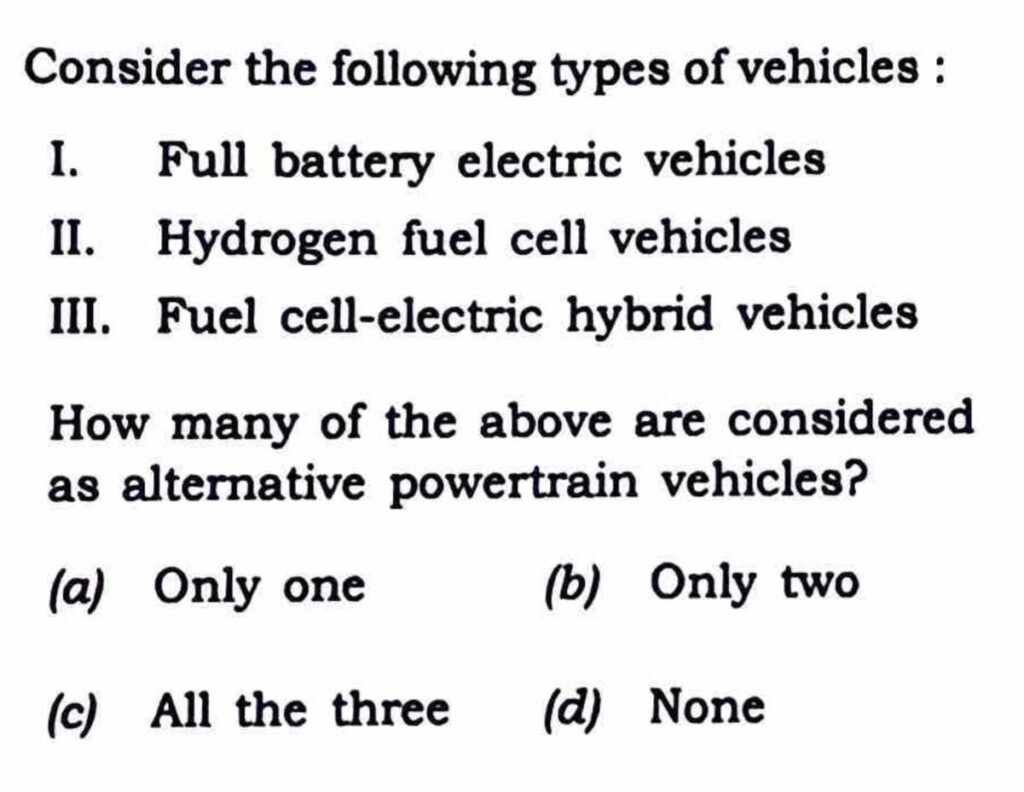
Alternative Powertrain Vehicles
Alternative Powertrain Vehicles use fuels or propulsion systems other than conventional petrol or diesel engines.
Important Types
- Battery Electric Vehicle
- Hydrogen Fuel Cell Vehicle
- Fuel Cell-Electric Hybrid Vehicle
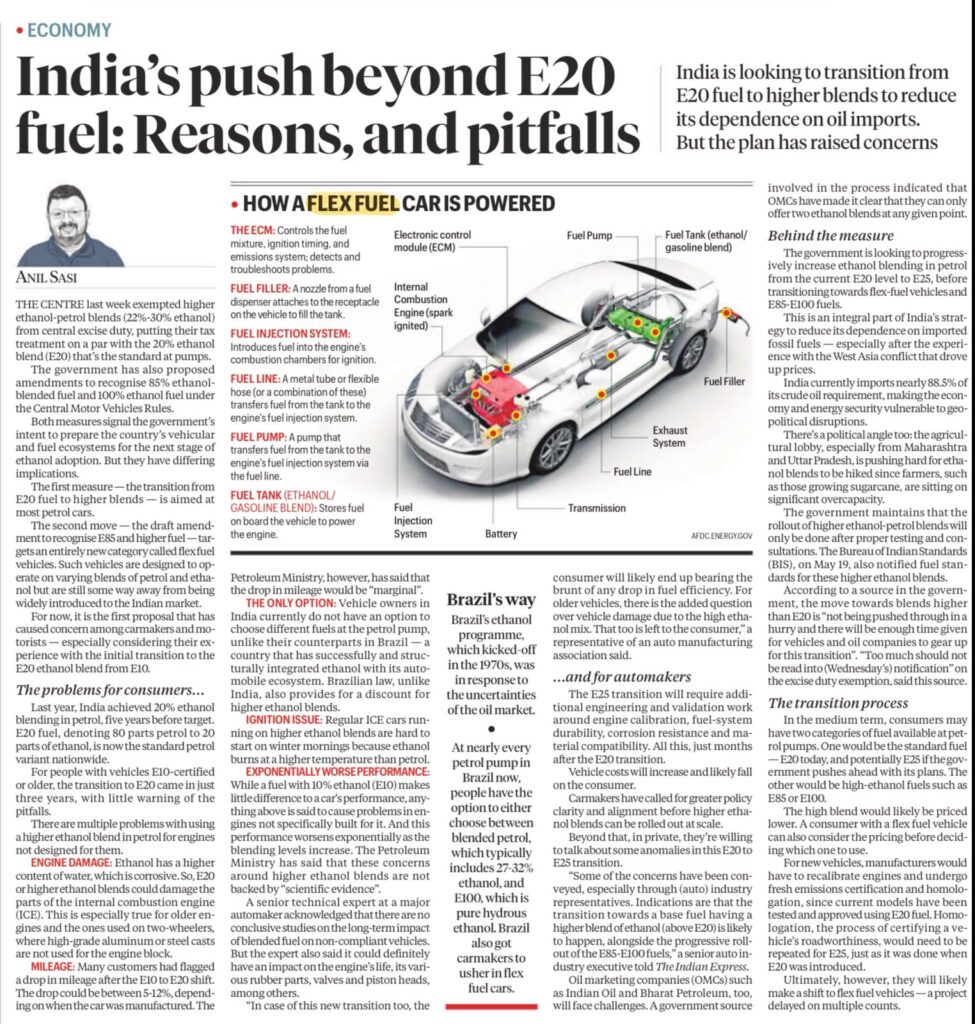
- Flex-Fuel Vehicle
Flex-Fuel Vehicle
A Flex-Fuel Vehicle can run on different petrol-ethanol blends.
How It Works
It uses an Engine Control Module, an onboard computer that detects the fuel blend and automatically adjusts engine performance.
Its engine and fuel system components are designed to handle higher ethanol content.
Ethanol Blends
E20
- 20% Ethanol
- 80% Petrol
- Current national target achieved
E85
- 85% Ethanol
- 15% Petrol
- Requires flex-fuel vehicles and supporting infrastructure
Why is India Moving Beyond E20?
- India imports nearly 85% of its crude oil requirement.
- Higher ethanol blending can further reduce import dependence.
- Supports domestic biofuel production.
- Supports farmer incomes.
- Builds a long-term flex-fuel ecosystem.
Long-Term Roadmap
E20
→ Higher Ethanol Blends
→ Flex-Fuel Ecosystem
Brazil’s Experience
- Ethanol programme started in the 1970s.
- Flex-fuel vehicles dominate the market.
- Consumers can choose petrol, ethanol or blends at fuel stations.
India’s Challenges
- Most vehicles are currently optimised for E20.
- Higher ethanol blends may reduce mileage because ethanol has lower energy content.
- Vehicle modification is required.
- Fuel infrastructure needs to be upgraded.
- Adequate ethanol supply must be ensured.
- Food vs fuel concerns may arise if feedstock demand increases.