Context
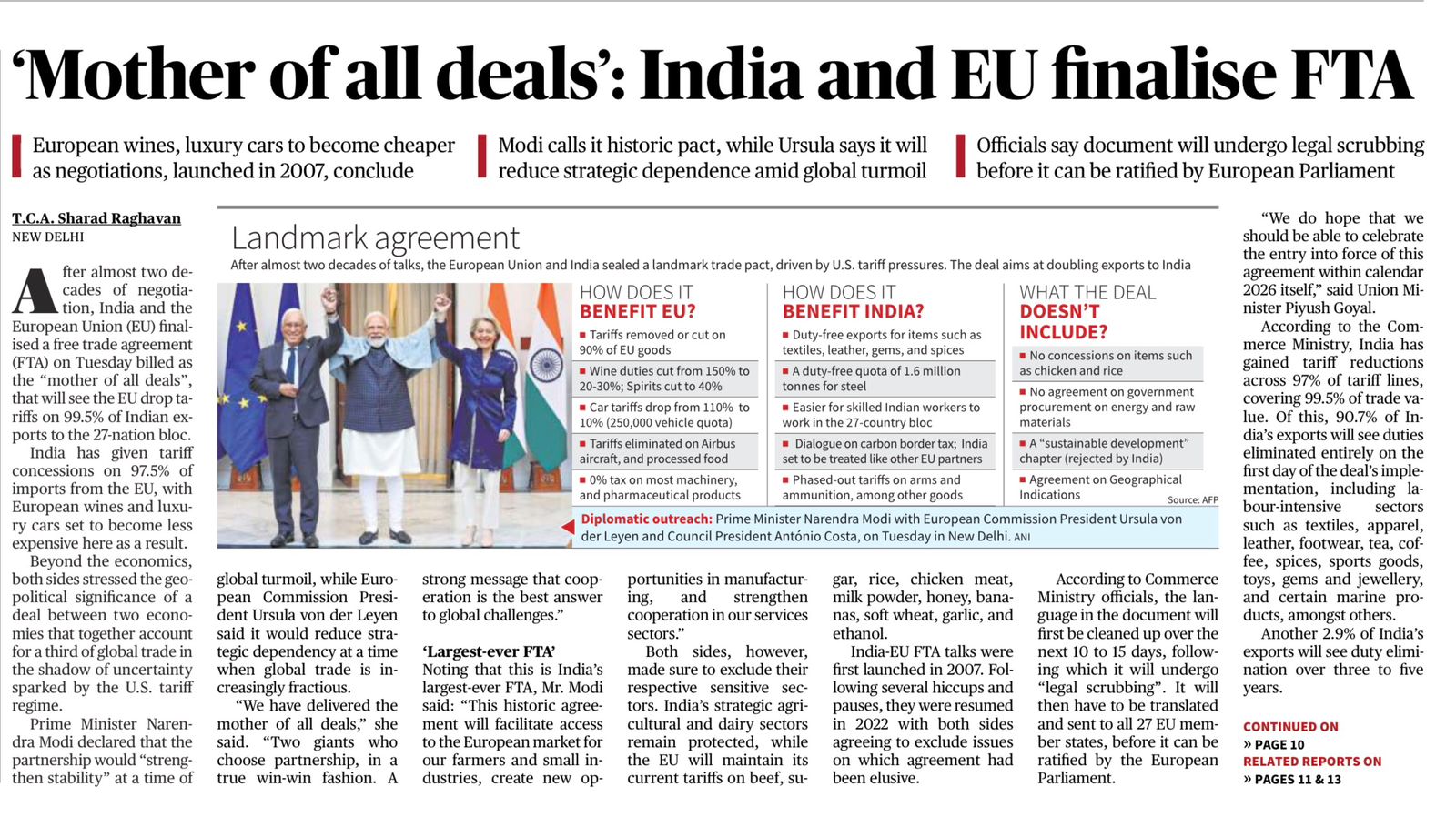
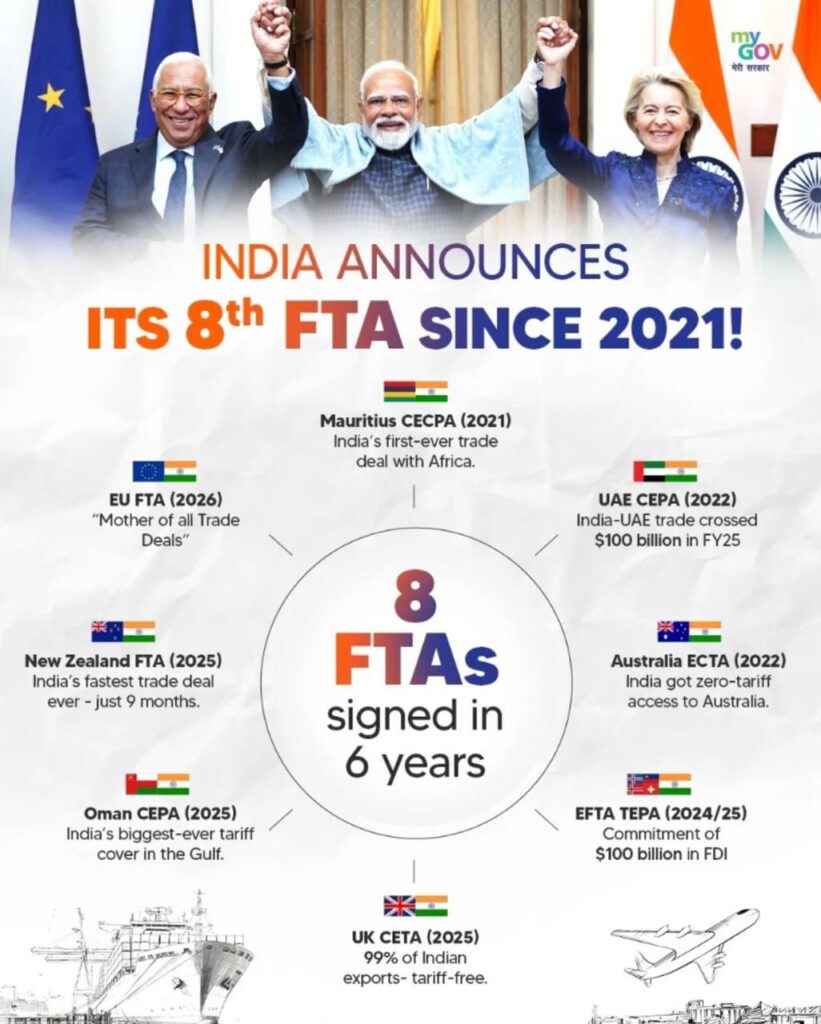
After nearly two decades of negotiations, India and the European Union have concluded a landmark Free Trade Agreement (FTA), billed as the largest trade deal for both sides amid global trade uncertainty.
Nature of deal
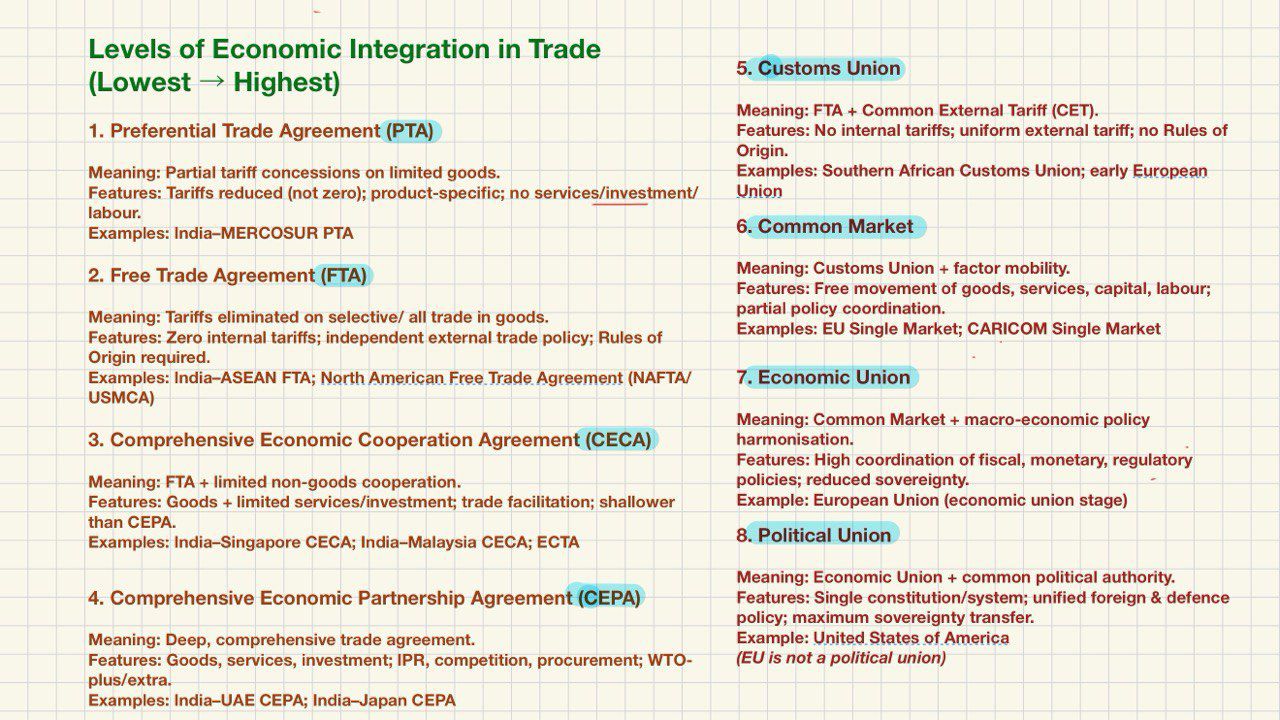
• India–EU Free Trade Agreement (FTA)
• Negotiations launched: 2007
• Concluded: 2026
• Covers 27 EU member states
Market Access & Tariffs
EU side
• Tariffs removed/reduced on ~90% EU goods
• Wine duties: 150% → 20–30%
• Car tariffs: 110% → 10% (quota: ~2.5 lakh vehicles)
• Zero duty on most machinery & pharma products
India side
• EU to drop tariffs on 99.5% of Indian exports
• 97% of Indian export value gets duty-free access from Day 1
• Remaining ~2.9% phased out over 3–5 years
Key Gains for India
• Duty-free exports: textiles, leather, gems & jewellery, spices
• Easier mobility for skilled Indian professionals in EU
• Duty-free quota: 1.6 million tonnes of steel
• Boost to manufacturing, MSMEs, services
• Reduced strategic dependence; diversification of trade partners
Sensitive Sectors (Protected / Excluded)
• India protected: dairy, agriculture, rice, chicken