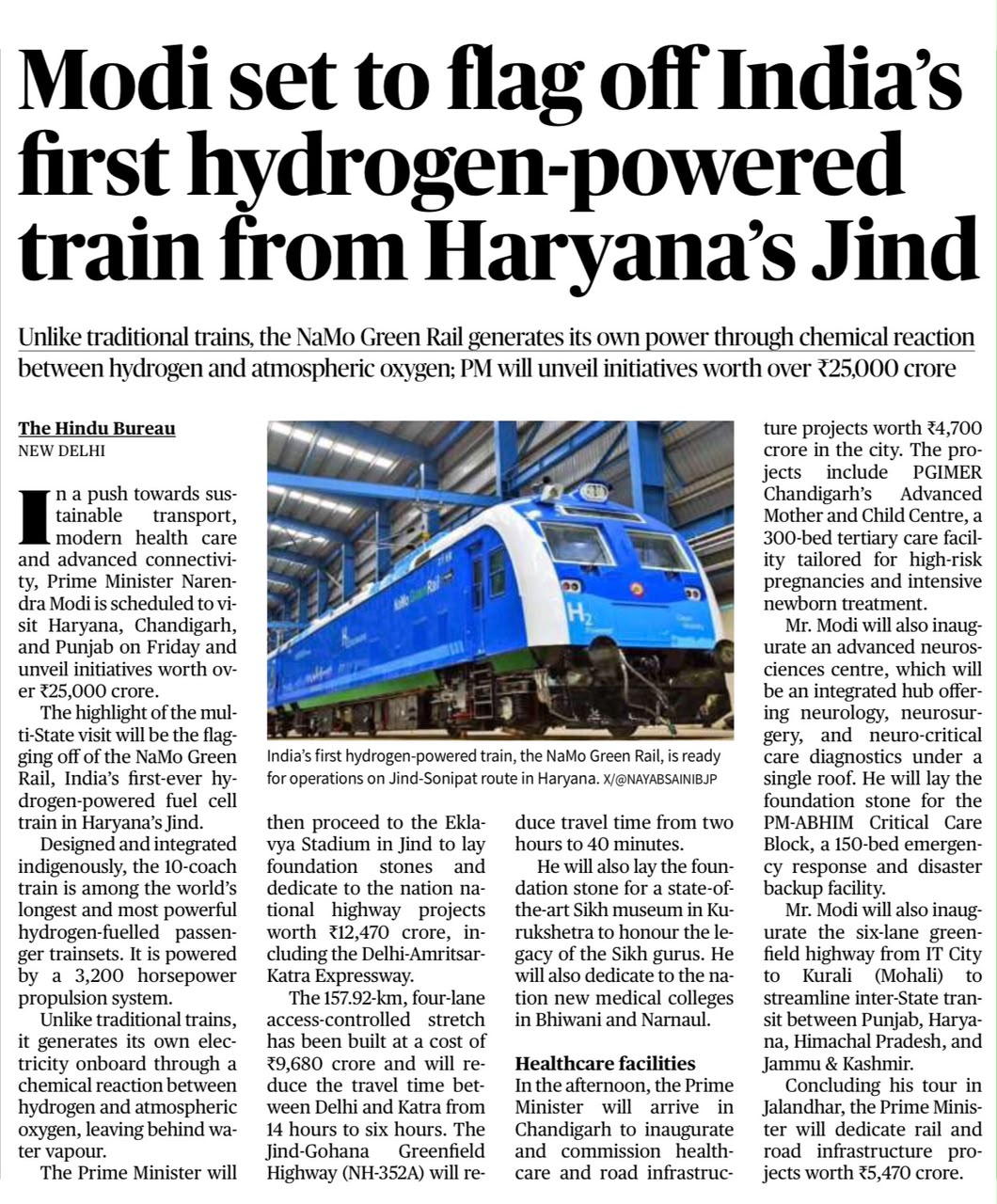
Context: India First Hydrogen Powered Train
India’s first hydrogen fuel-cell train, NaMo Green Rail, will be flagged off from Jind, Haryana.
The indigenous 10-coach, 3,200 HP train generates electricity onboard using hydrogen, with water vapour as its only direct emission.
How a Hydrogen Fuel-Cell Train Works
Hydrogen stored in onboard tanks combines with atmospheric oxygen inside a fuel cell.
The electrochemical reaction produces:
- Electricity
- Heat
- Water
The electricity powers the traction motors.
Excess energy is stored in batteries.
The only direct emission is water vapour, meaning there are no direct carbon dioxide emissions during train operation.
Why Is It Different?
1. Produces Electricity Onboard
Unlike conventional electric trains, it does not depend only on overhead electric wires.
2. Useful for Non-Electrified Routes
Hydrogen trains can be useful on railway routes where full electrification is difficult or expensive.
3. Cleaner Alternative to Diesel
It can replace diesel locomotives on certain routes and reduce fossil-fuel dependence.
Significance
1. Green Rail Transport
It supports cleaner railway mobility and reduces transport-sector emissions.
2. National Green Hydrogen Mission
The project supports India’s broader hydrogen economy push.
3. Reduced Fossil-Fuel Dependence
Hydrogen-powered transport can reduce dependence on diesel and imported fossil fuels.
4. Climate Goals
It supports India’s clean energy transition and decarbonisation of public transport.
Key Takeaway
Hydrogen-powered trains can become an important clean transport option, especially for non-electrified routes, if hydrogen production, storage and supply infrastructure are strengthened.