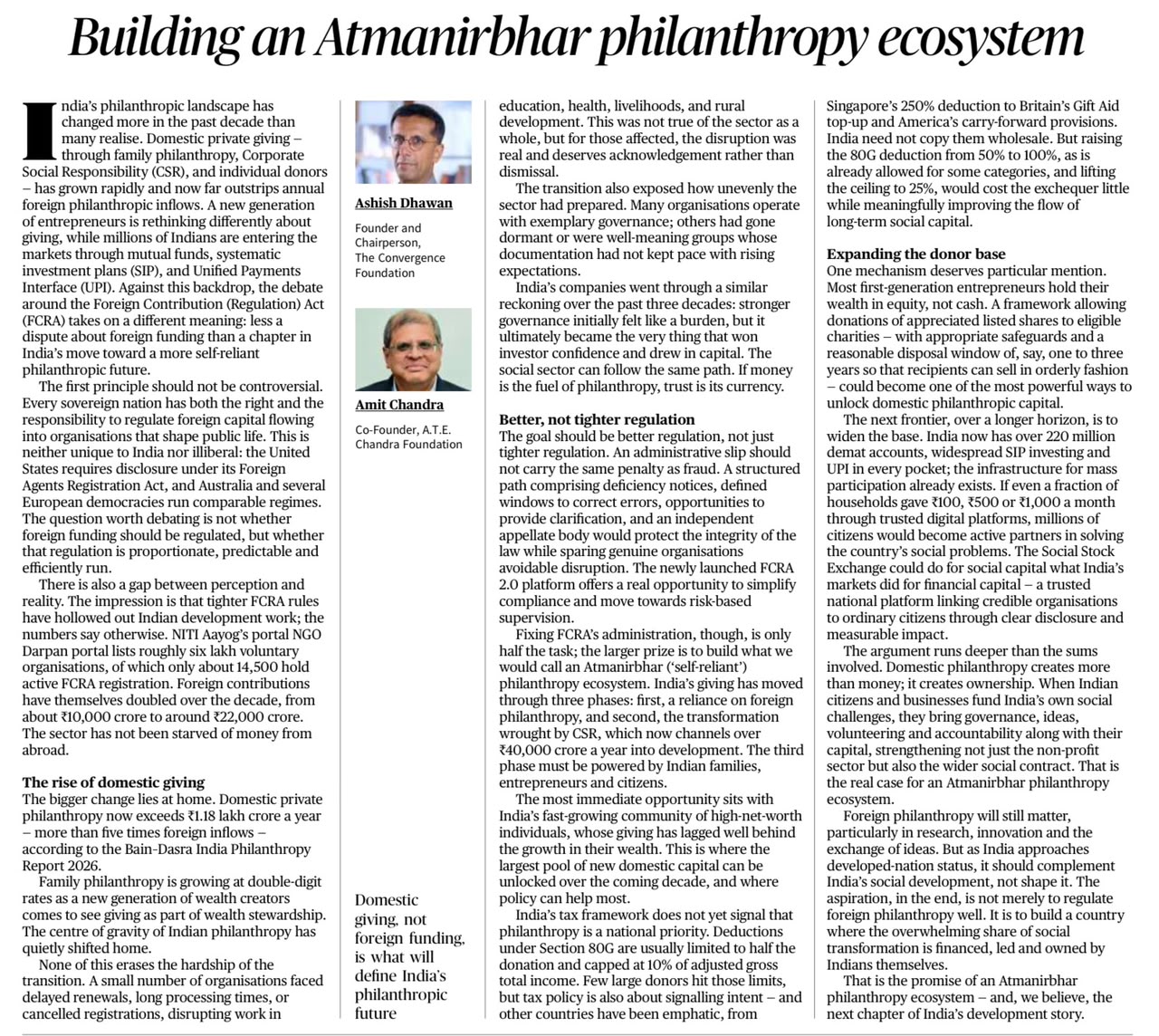
Context: India philanthropy ecosystem
India is moving towards a more self-reliant philanthropic ecosystem.
Domestic giving is becoming the dominant source of social sector funding, while the policy challenge is to maintain transparency, accountability and national security.
Sources of Philanthropy in India
India’s philanthropy ecosystem includes:
- Corporate Social Responsibility
- Family and individual philanthropy
- Community and religious giving
- Foreign philanthropic contributions
- Digital giving platforms
Relevant Laws
Foreign Contribution Regulation Act, 2010
Regulates acceptance and use of foreign contributions by individuals, NGOs and associations.
Its purpose is to ensure transparency and safeguard national interests.
Companies Act, 2013 — Section 135
Mandates CSR spending by eligible companies on specified social development activities.
Income Tax Act, 1961 — Section 80G
Provides tax deductions for donations made to eligible charitable institutions.
Important Data
- Domestic private philanthropy: ₹1.18 lakh crore annually
- Foreign philanthropic inflows: around ₹22,000 crore annually
- CSR spending: over ₹40,000 crore annually
- Around 6 lakh NGOs are registered on NGO Darpan
- Only around 14,500 NGOs have active FCRA registration
Key Points
Domestic philanthropy is now a major pillar of India’s social sector funding and reduces dependence on foreign contributions.
India needs a balanced framework that protects national security but also allows credible civil society organisations to work effectively.
Compliance should be:
- Predictable
- Proportionate
- Transparent
Domestic philanthropy can be strengthened through better tax incentives, digital giving, donations of appreciated assets and greater citizen participation.
Key Takeaway
Atmanirbhar philanthropy means building a domestic, transparent and accountable funding ecosystem that supports social development without excessive dependence on foreign money.