Context: India US Rare Earth Deal
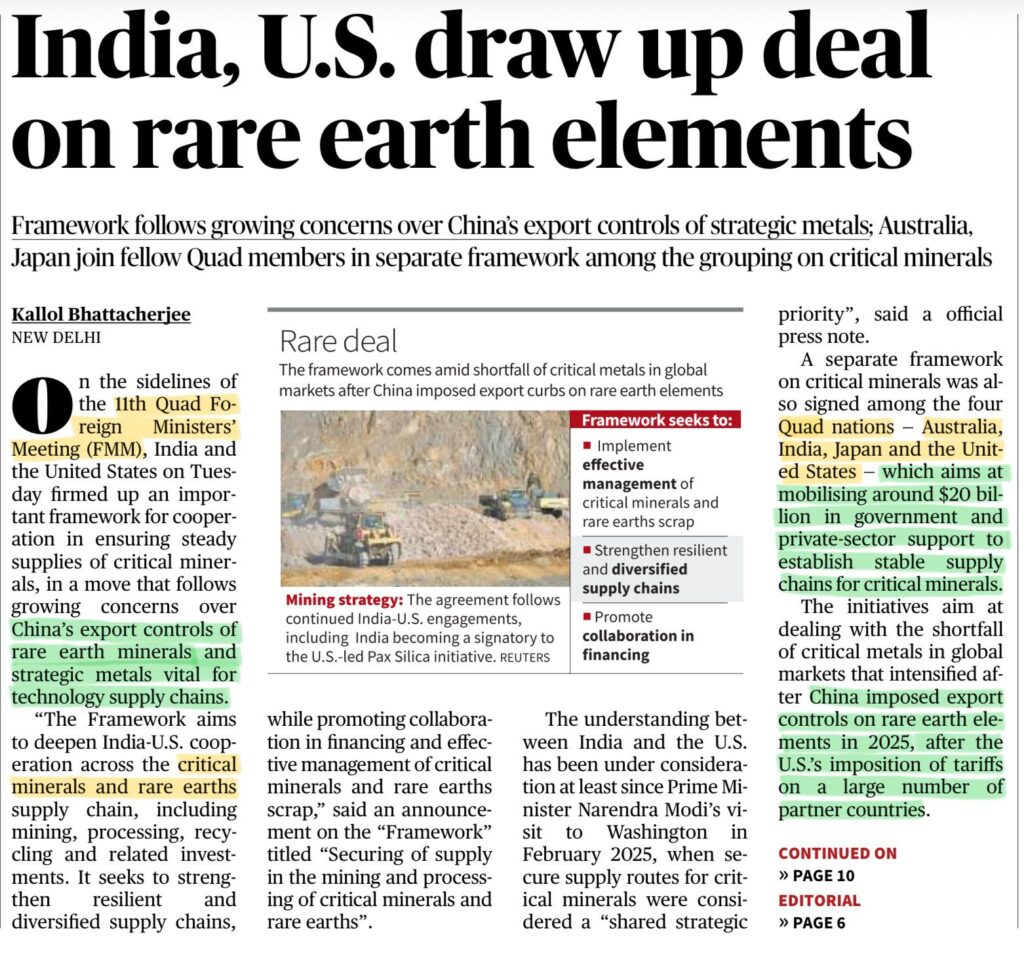
At the 11th Quad Foreign Ministers’ Meeting, India and the U.S. signed a new framework on critical minerals and rare earth supply chains amid global concerns over China’s export controls on strategic metals and rare earth elements.
Basics
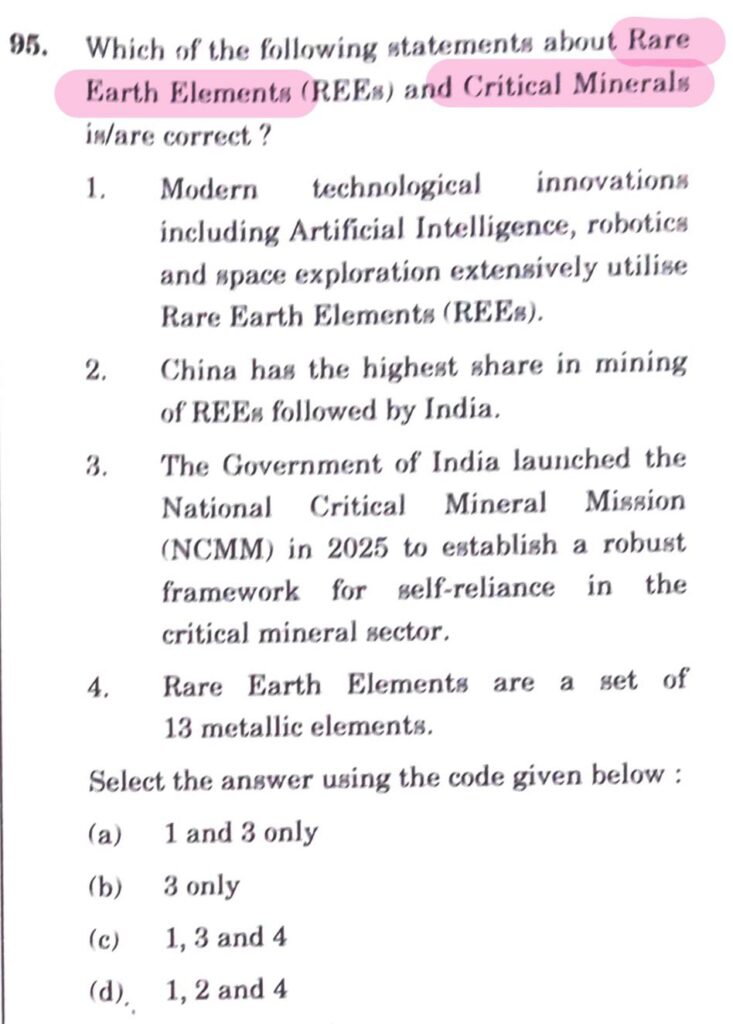
Rare Earth Elements (REEs):
- Group of 17 strategic metals used in:
- EVs and batteries
- Semiconductors and electronics
- Defence systems and missiles
- Wind turbines and magnets
Critical minerals:
- Lithium
- Cobalt
- Nickel
- Graphite
- Copper
- Rare earths
These are essential for clean energy, high-tech manufacturing and strategic industries.
Key Initiatives Announced
India–U.S. Critical Minerals Framework
- Cooperation in mining, processing, recycling, rare earth scrap management and financing.
- Aim: secure and diversified supply chains.
Quad Critical Minerals Initiative
- India, U.S., Japan and Australia launched a separate framework.
- Seeks nearly $20 billion public-private investment in stable critical mineral supply chains.
Pax Silica Initiative
- India joined the U.S.-led initiative focused on secure semiconductor and mineral supply chains.
Why This Became Important?
- China dominates global rare earth processing and supply chains.
- China imposed export controls on several rare earth elements and strategic metals in 2025.
- This increased fears of supply disruptions in technology, defence and clean energy sectors.
India’s Position
- China has the largest rare earth reserves globally.
- Brazil has the second-largest reserves.
- India has the third-largest rare earth reserves.