Context:
India’s next major energy-transition challenge is industrial heat electrification.
This means shifting suitable industrial heat processes from fossil fuels to clean electricity. The goal is to achieve decarbonisation, energy security and competitive manufacturing.
What Is Industrial Heat Electrification?
Industrial heat electrification means using electricity instead of fossil fuels to generate heat for industrial processes.
Many industries use heat for:
- Drying
- Heating
- Steam generation
- Processing
- Chemical operations
- Food processing
- Textile processing
- Manufacturing operations
Traditionally, this heat comes from coal, oil, gas or biomass.
Electrification shifts suitable processes towards clean electricity, especially renewable electricity.
Why Industrial Heat Electrification Matters
Decarbonisation
Low- and medium-temperature industrial heat offers significant scope for electrification.
Globally, such applications account for about 70% of industrial energy consumption.
This makes industrial heat a major area for reducing emissions.
Renewable Energy Opportunity
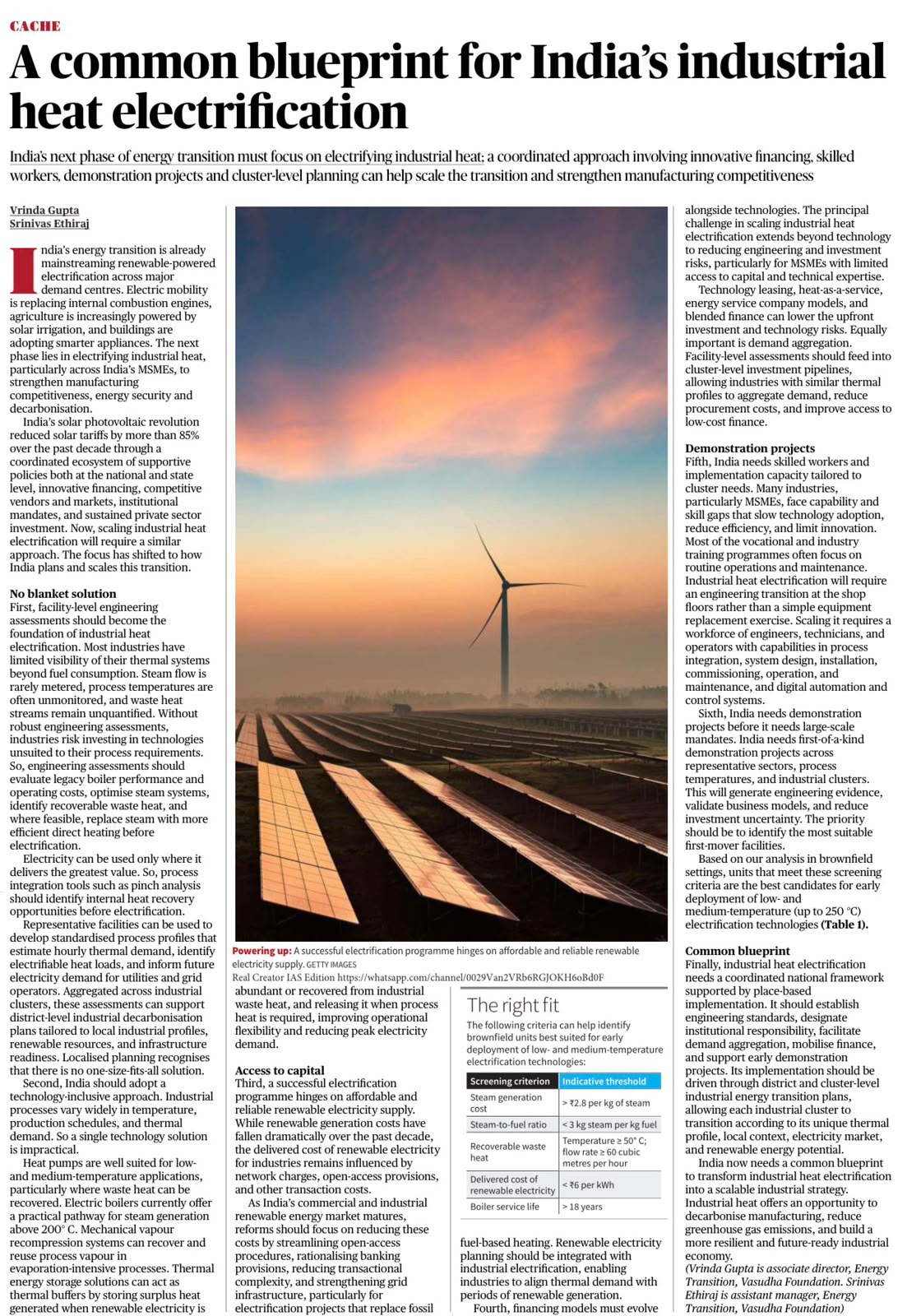
India’s renewable electricity base is expanding.
This creates scope to shift industrial heat demand towards clean electricity.
If renewable electricity is combined with storage and efficient heating technologies, industrial emissions can be reduced.
Competitiveness
Electrification can reduce dependence on fossil fuels.
It can also reduce exposure to fuel-price volatility.
This supports low-carbon manufacturing and helps Indian industries remain competitive in global markets where carbon standards are becoming stricter.
Common Blueprint
Right Technology, Right Temperature
India needs facility-level assessments before electrification.
Each industry should examine:
- Required temperature
- Heat demand
- Waste-heat recovery potential
- Existing equipment
- Process suitability
- Cost of conversion
Heat pumps are especially useful for low- and medium-temperature processes.
Affordable Finance
High upfront cost is a major barrier, especially for MSMEs.
Therefore, India needs:
- Heat-as-a-Service models
- Technology leasing
- Blended finance
- Cluster-level procurement
- Concessional loans
These can reduce investment risk and help smaller units adopt new technologies.
Demonstration and Skills
Pilot projects are needed across industrial clusters.
These pilots can validate technologies, show real cost savings and reduce investor hesitation.
India also needs skilled workers for:
- Installation
- Commissioning
- Maintenance
- Digital controls
- Energy management
Policy Link
The Perform, Achieve and Trade Scheme is already an important energy-efficiency mechanism.
In 2025, PAT covered 1,333 energy-intensive industrial units, representing 55% of industrial energy consumption.
It reported energy savings of 25.78 million tonnes of oil equivalent.
The next step is to complement PAT’s energy-efficiency focus with industrial heat electrification.
Way Forward
India should create cluster-level plans to aggregate demand and reduce procurement and finance costs.
Renewable electricity, storage and waste-heat recovery should be combined where technically viable.
MSMEs should be prioritised because they often face higher finance and technology barriers.
Low- and medium-temperature processes should be targeted first because they have stronger near-term electrification potential.
Key Takeaway
Industrial heat electrification can become the next major step in India’s clean-energy transition. It can reduce emissions, improve energy security and strengthen low-carbon manufacturing, especially if MSMEs get finance, technology and skills support.