
Context: INS Aridaman Nuclear Submarine
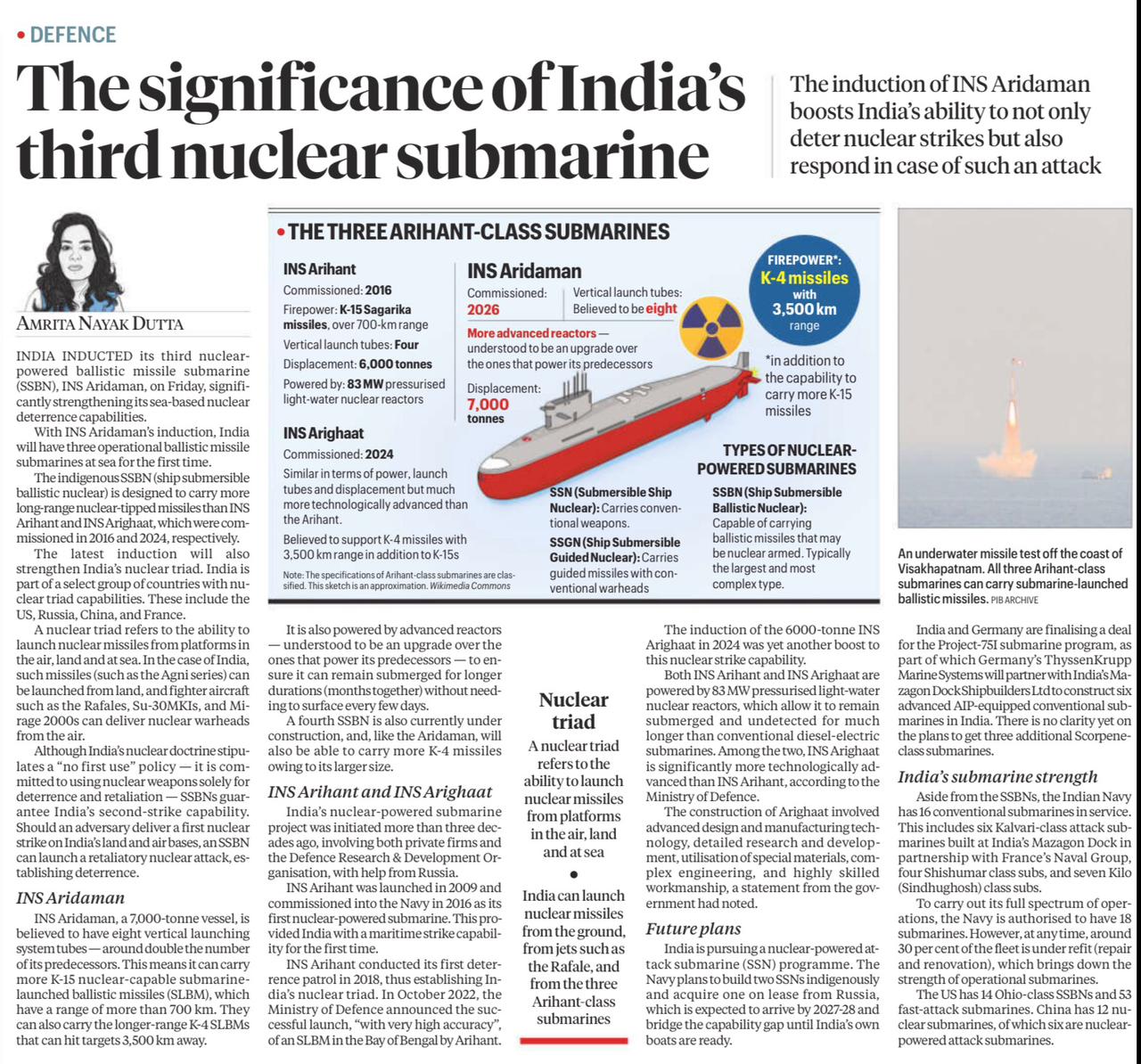
India inducted INS Aridaman (~7000 tonnes), strengthening the sea-based leg of nuclear deterrence and assured second-strike capability.
Key Points
- Platform Role
• Nuclear-powered submarine carrying ballistic missiles with nuclear warheads
• Can remain underwater for months → difficult to detect
• Ensures retaliation even after first strike - Capability Expansion (India)
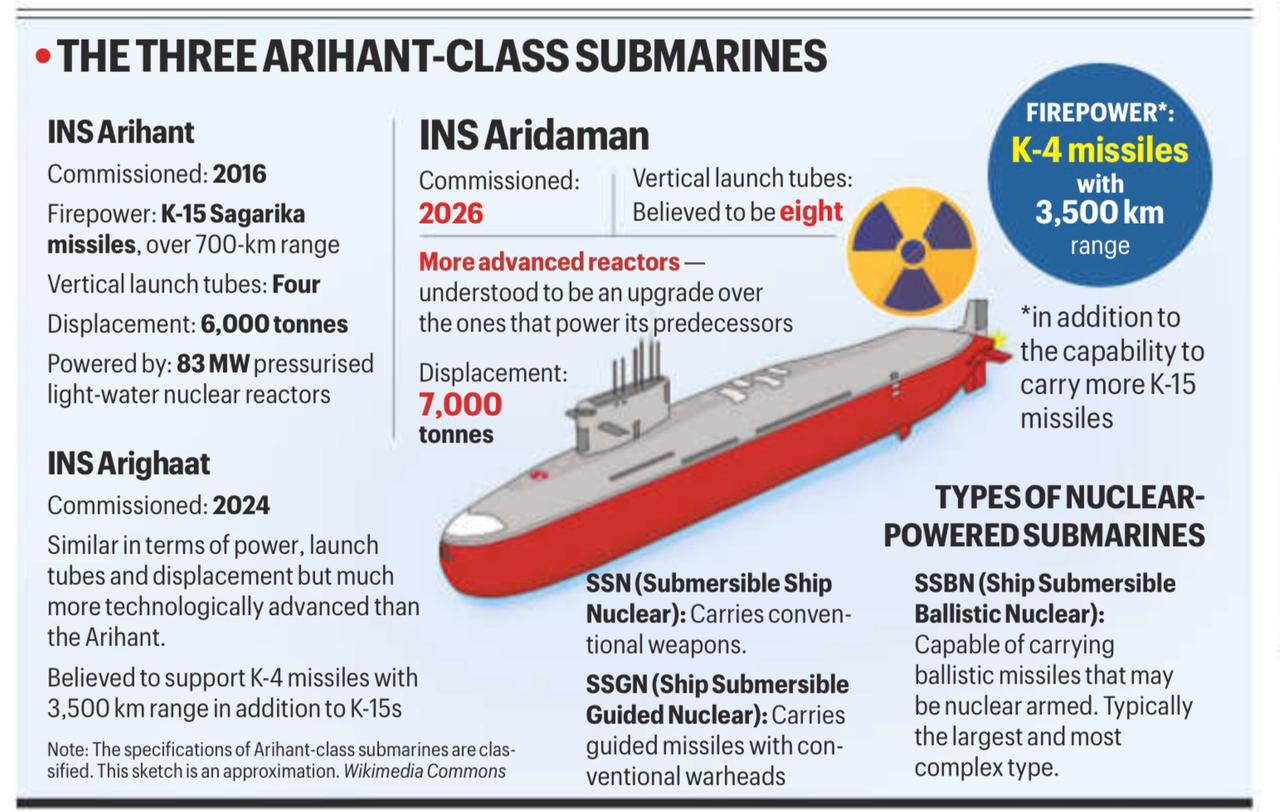
• INS Arihant (2016) → 4 launch tubes
• INS Arighaat (2024) → improved systems
• INS Aridaman (2026) → ~7000 tonnes, 8 launch tubes
• Result → higher missile load + longer endurance + better survivability - Missile Capability
• K-15 Sagarika → ~700–750 km
• K-4 → ~3500 km
• Both are submarine-launched ballistic missiles carrying nuclear warheads - Range Advantage
• K-15 required submarines to move closer to enemy coast
• K-4 enables strikes from deep sea zones
• Result → lower detection risk + safer deployment
Strategic Impact
• Sea-based platform = most survivable leg of nuclear triad
• More missiles per patrol + longer underwater stay
• Ensures credible second-strike capability







