
Context: Interoperable Criminal Justice System
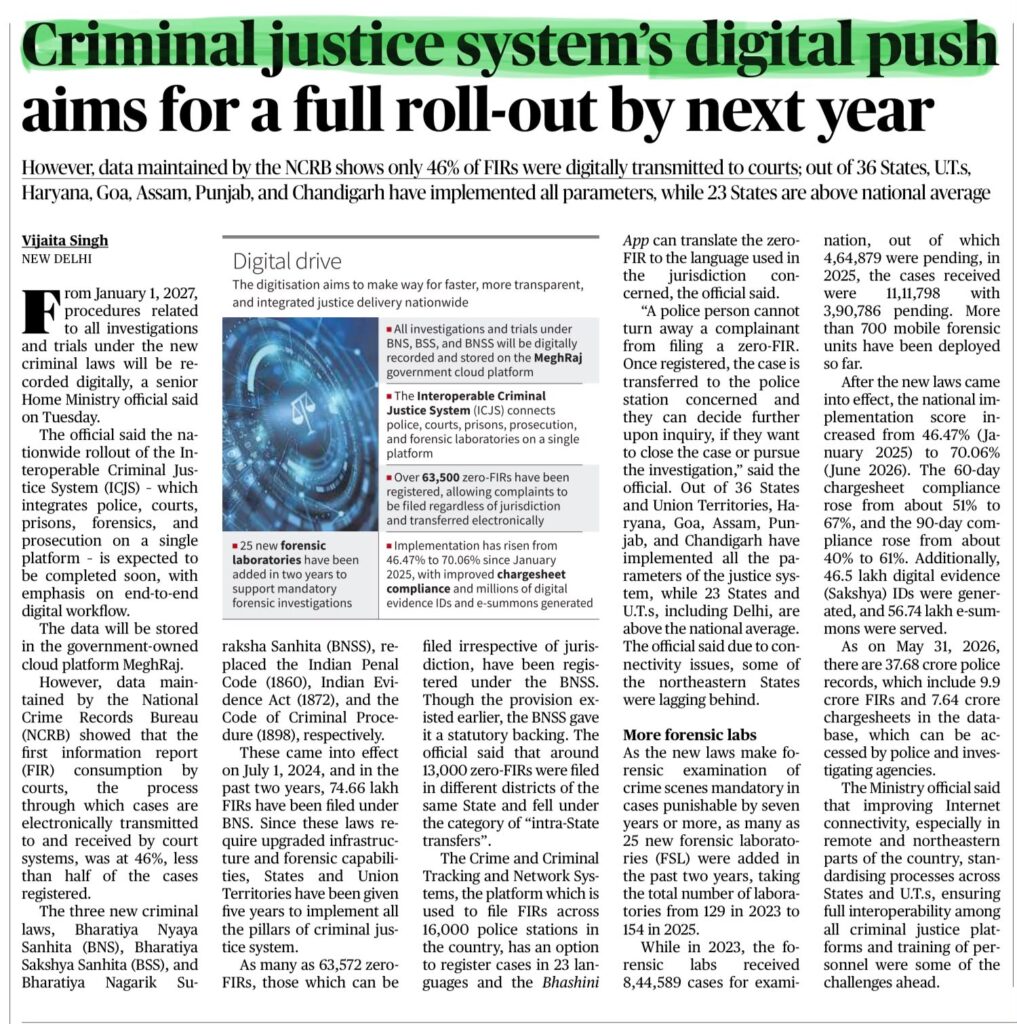
The Union Home Ministry will roll out the Interoperable Criminal Justice System nationwide from 1 January 2027, enabling end-to-end digital investigation and trial under the new criminal laws.
Interoperable Criminal Justice System
ICJS is a digital platform that integrates major pillars of the criminal justice system.
Institutions Integrated
- Police
- Courts
- Prisons
- Prosecution
- Forensic Science Laboratories
Key Features
Digital Records
The system will include:
- Digital FIRs
- Chargesheets
- Case diaries
- Digital evidence
- Sakshya ID
- e-Summons
Cloud Storage
Records will be stored on MeghRaj Cloud.
Citizen-Friendly Features
- Zero FIR support
- Bhashini support for 23 Indian languages
- Digital case tracking
- Faster access to legal processes
Implementation Status
- Implementation increased from 46.47% in January 2025 to 70.06% in June 2026.
- 37.68 crore police records digitised.
- 9.9 crore FIRs digitised.
- 7.64 crore chargesheets digitised.
Significance
1. Faster Justice Delivery
Digital integration reduces paperwork and delays.
2. Better Coordination
Police, courts, prisons, prosecutors and forensic labs can work on a connected platform.
3. Transparency
Digital records improve traceability and reduce manipulation.
4. Forensic-led Investigation
Integration with forensic laboratories supports evidence-based investigation.
5. Citizen Access
Language support and digital systems can make criminal justice more accessible.
Challenges
- Digital infrastructure gaps across States.
- Cybersecurity risks.
- Data privacy concerns.
- Capacity building of police and judicial staff.
- Uneven implementation across States.
- Digital divide among citizens.
- Risk of errors in digitised criminal records.
Way Forward
- Strengthen cybersecurity architecture.
- Ensure data protection and access control.
- Train police, prosecutors and court staff.
- Improve digital infrastructure in smaller districts.
- Standardise implementation across States.
- Build citizen grievance and correction mechanisms.
- Ensure digital systems do not exclude vulnerable groups.
Key Takeaway
ICJS can make the criminal justice system faster, paperless and more transparent, but its success depends on cybersecurity, uniform State-level implementation and capacity building.








it’s beneficial UPSC Examination.
Short and precise notes help us to cover current affairs in less time.