Context: Odisha Coastal Erosion Measures
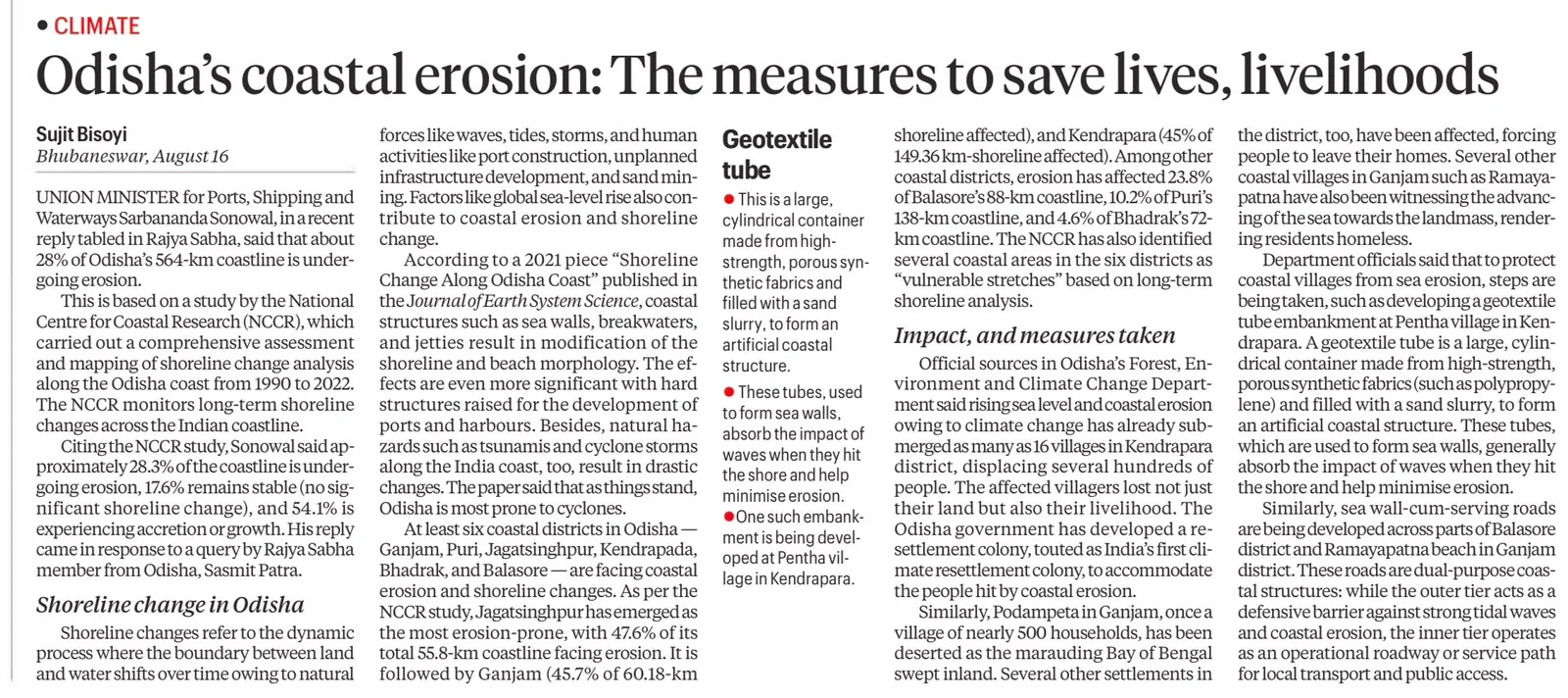
About 28% of Odisha’s 564-km coastline is undergoing erosion, according to the National Centre for Coastal Research (NCCR) assessment of shoreline changes during 1990–2022. Coastal erosion is increasingly threatening land, settlements, livelihoods and infrastructure, requiring both protective and adaptive measures.
1. Coastal Erosion
Coastal erosion is the gradual loss or retreat of coastal land as the shoreline shifts landward.
It results from both natural and human factors — waves, tides, storms and cyclones, sea-level rise, port construction, coastal infrastructure and sand mining.
Odisha is particularly vulnerable because of its long, cyclone-prone coastline and exposure to the Bay of Bengal.
2. Extent of the Problem in Odisha
28.3% of Odisha’s coastline is undergoing erosion.
17.6% is stable.
54.1% is experiencing accretion.
Jagatsinghpur is the most erosion-prone, with 47.6% of its 55.8-km coastline affected.
Ganjam has 45.7% of 60.18 km affected.
Kendrapara has 45% of 149.36 km affected.
Erosion is also reported in:
- Balasore — 23.8%
- Puri — 10.2%
- Bhadrak — 4.6%
3. Why It Is Increasing
Climate change: Sea-level rise increases coastal vulnerability.
Extreme events: Cyclones, storm surges and high waves accelerate shoreline retreat.
Human interventions: Ports, seawalls, breakwaters and jetties can alter natural sediment movement.
Unsustainable activities: Sand mining and unplanned coastal development disturb coastal morphology.
4. Impact & Odisha’s Response
Erosion causes loss of land, houses and livelihoods, forcing coastal communities to relocate.
Climate-resettlement colonies: Odisha has developed a rehabilitation model for communities displaced by coastal erosion.
Geotextile tube embankments: High-strength porous synthetic tubes filled with sand slurry act as artificial coastal barriers and absorb wave energy.
Sea-wall-cum-service roads: Being developed in vulnerable areas; the outer structure protects against storm surges and erosion, while the inner section provides road connectivity.
5. Sustainable Approach
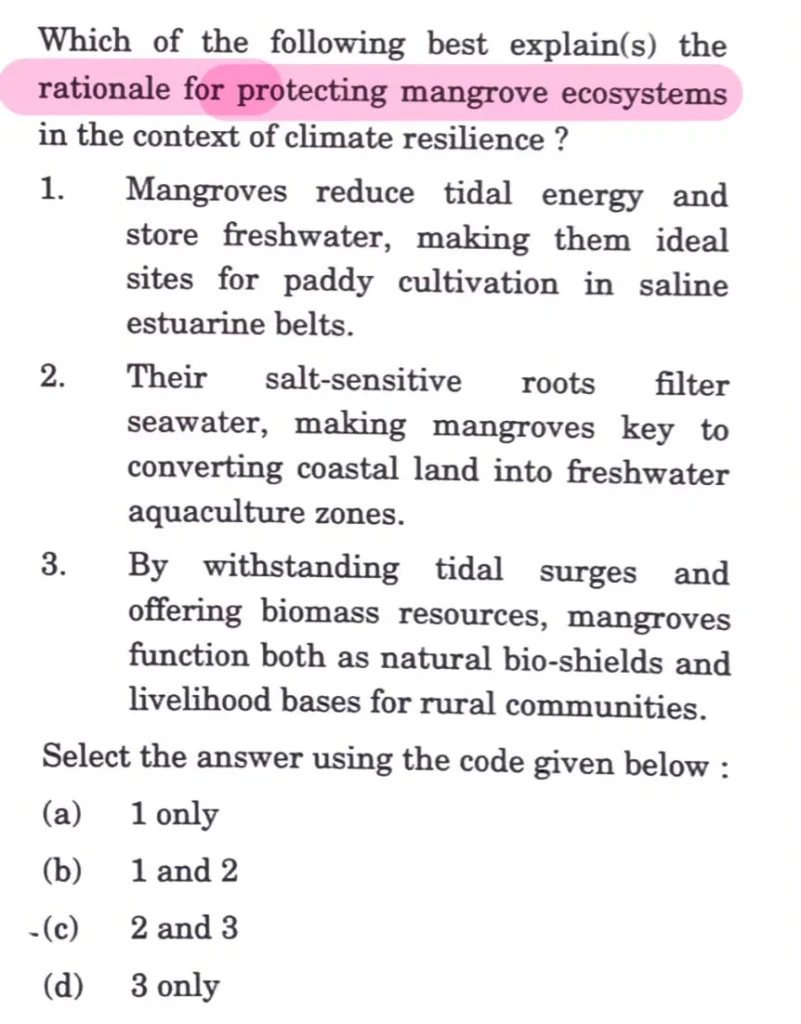
Coastal protection should combine engineering solutions with ecosystem-based measures such as mangrove restoration, dune protection and regulated coastal development.
Coastal Regulation Zone norms and scientific shoreline mapping should guide infrastructure development.
Shift from only “protecting the coast” to “protecting coastal communities” through early warning, resilient infrastructure, planned relocation and livelihood rehabilitation.