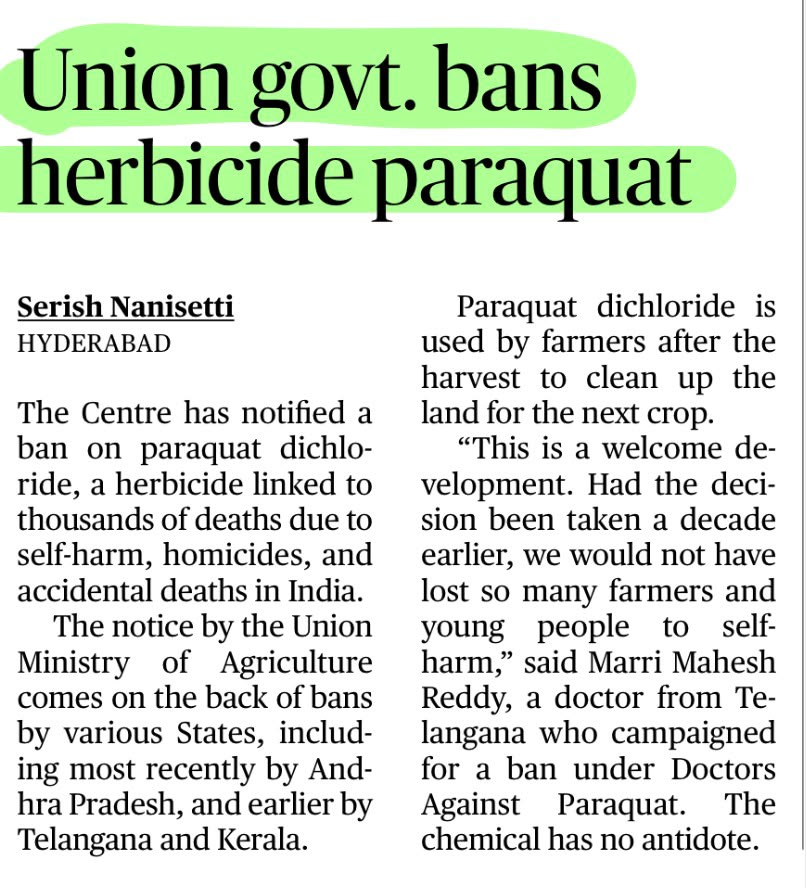
Context: Paraquat herbicide ban India
The Centre has banned Paraquat Dichloride, a highly toxic herbicide linked to suicides, accidental poisoning and occupational deaths.
Several States had already taken similar action earlier.
Paraquat
Paraquat is a non-selective contact herbicide used to kill weeds before sowing the next crop.
Contact Herbicide
A contact herbicide kills only the plant parts it directly touches.
It is not transported throughout the plant, unlike systemic herbicides.
Why Was Paraquat Banned?
- Highly toxic.
- No antidote.
- High fatality on poisoning.
- Linked to suicides.
- Linked to accidental poisoning.
- Linked to occupational deaths among farmers and farm workers.
Significance of the Ban
- Reduces poisoning-related deaths.
- Protects farmers and farm workers.
- Promotes safer weed-management practices.
- Encourages regulation of hazardous pesticides.
- Strengthens public health protection.
- Supports safer agricultural practices.
Agriculture and Public Health Link
The ban shows that pesticide regulation is not only an agricultural issue. It is also connected with:
- Farmer safety
- Rural public health
- Occupational health
- Suicide prevention
- Environmental safety
Way Forward
- Promote safer alternatives.
- Train farmers in safe weed management.
- Strengthen pesticide regulation.
- Improve labelling and awareness.
- Encourage integrated weed management.
- Monitor illegal sale and stockpiling.
Key Takeaway
The Paraquat ban is a public health and farmer-safety measure aimed at reducing avoidable poisoning deaths and encouraging safer agricultural practices.