Context: RBI surplus transfer FY26
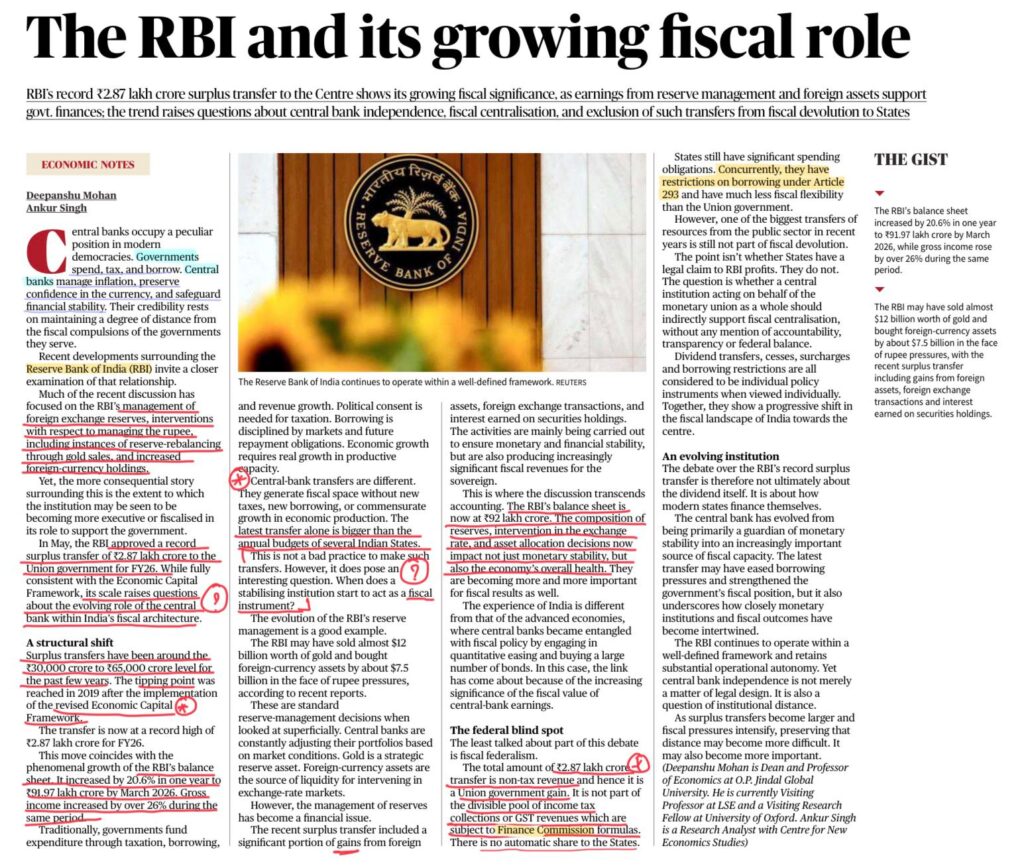
The Reserve Bank of India transferred a record ₹2.87 lakh crore surplus to the Union Government for FY26. This triggered debate on RBI’s growing fiscal significance, fiscal federalism and central bank independence.
RBI Surplus Transfer
RBI surplus transfer means the RBI’s excess profit is transferred to the Union Government after maintaining reserves and risk buffers.
Legal Basis
Section 47, RBI Act, 1934
- Provides for transfer of RBI surplus profits to the Central Government after making necessary provisions.
Economic Capital Framework
Based on
- Bimal Jalan Committee, 2019
Purpose
The Economic Capital Framework decides how much capital RBI should retain against future risks.
The remaining profit is transferred to the Government.
Why Was FY26 Surplus Unusually High?
- Higher earnings from foreign exchange reserves.
- Gains from foreign exchange interventions.
- Gains from reserve rebalancing.
- Higher interest income from government securities.
Core Issues Raised
1. RBI’s Monetary Role vs Fiscal Role
RBI’s core mandate includes:
- Inflation control
- Monetary policy
- Financial stability
- Currency management
- Forex reserve management
However, record surplus transfers are making RBI an increasingly important source of fiscal resources for the Centre.
2. Fiscal Federalism Concern
RBI surplus is non-tax revenue.
It is not part of the divisible pool shared with States.
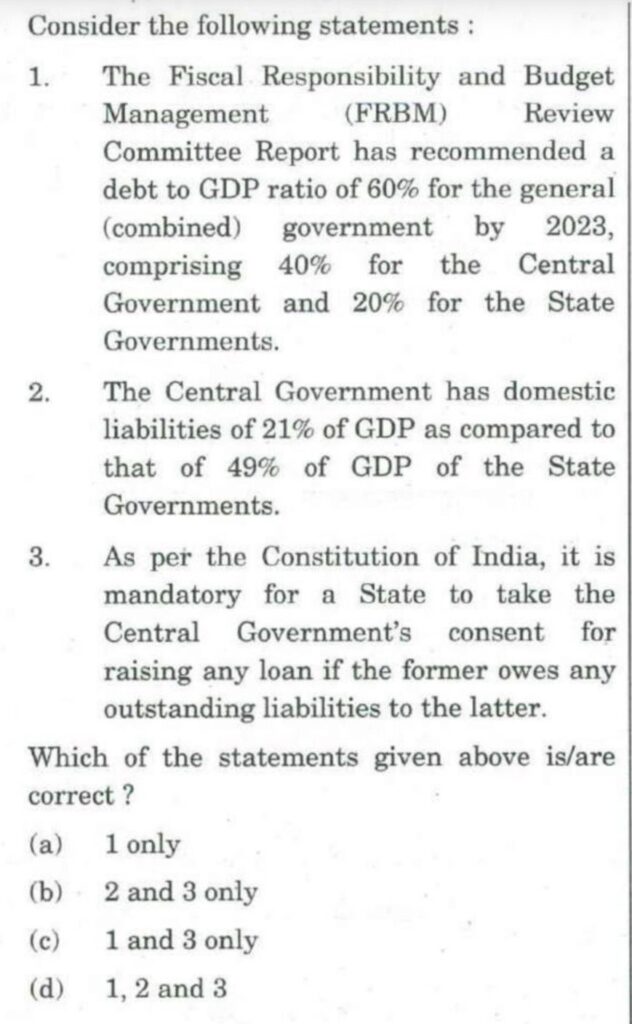
States also face borrowing constraints under Article 293, where Centre’s consent is required in certain cases.
This creates concerns of growing fiscal centralisation.
3. Central Bank Independence
A central bank should take decisions based on:
- Inflation
- Financial stability
- Economic conditions
It should not be driven by government financing requirements.
The concern is not that RBI has lost independence, but that growing reliance on RBI profits could blur the line between RBI’s monetary objectives and the Centre’s fiscal needs.
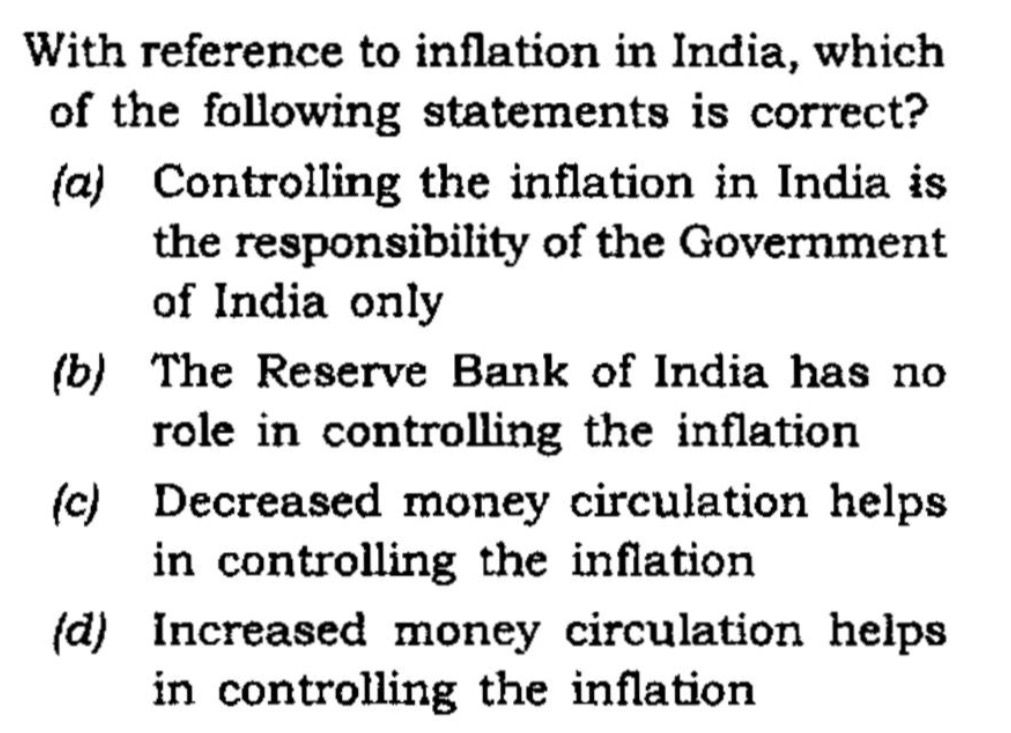
PYQ Link
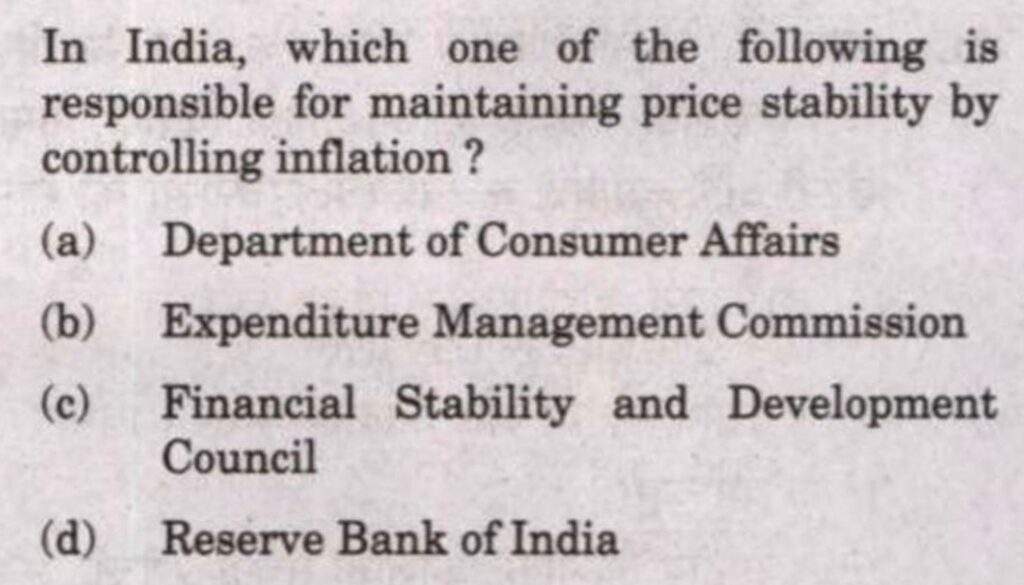
RBI is responsible for maintaining price stability by controlling inflation.
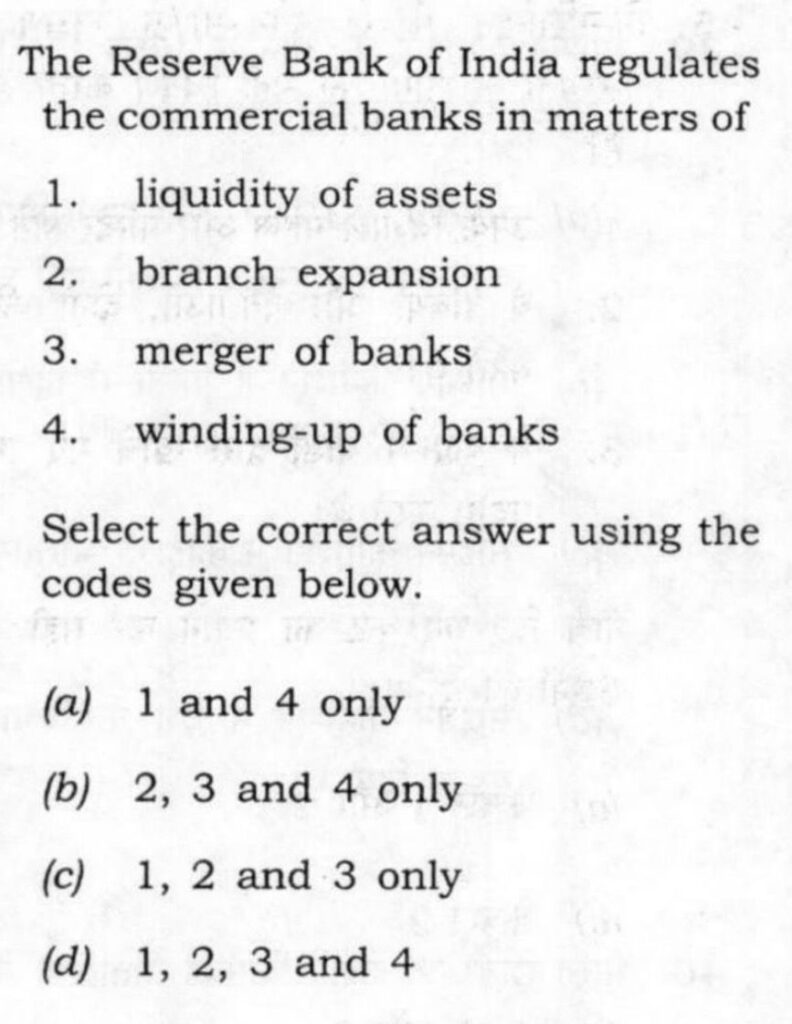
RBI also regulates commercial banks in matters such as:
- Liquidity of assets
- Branch expansion
- Merger of banks
- Winding-up of banks