Context:
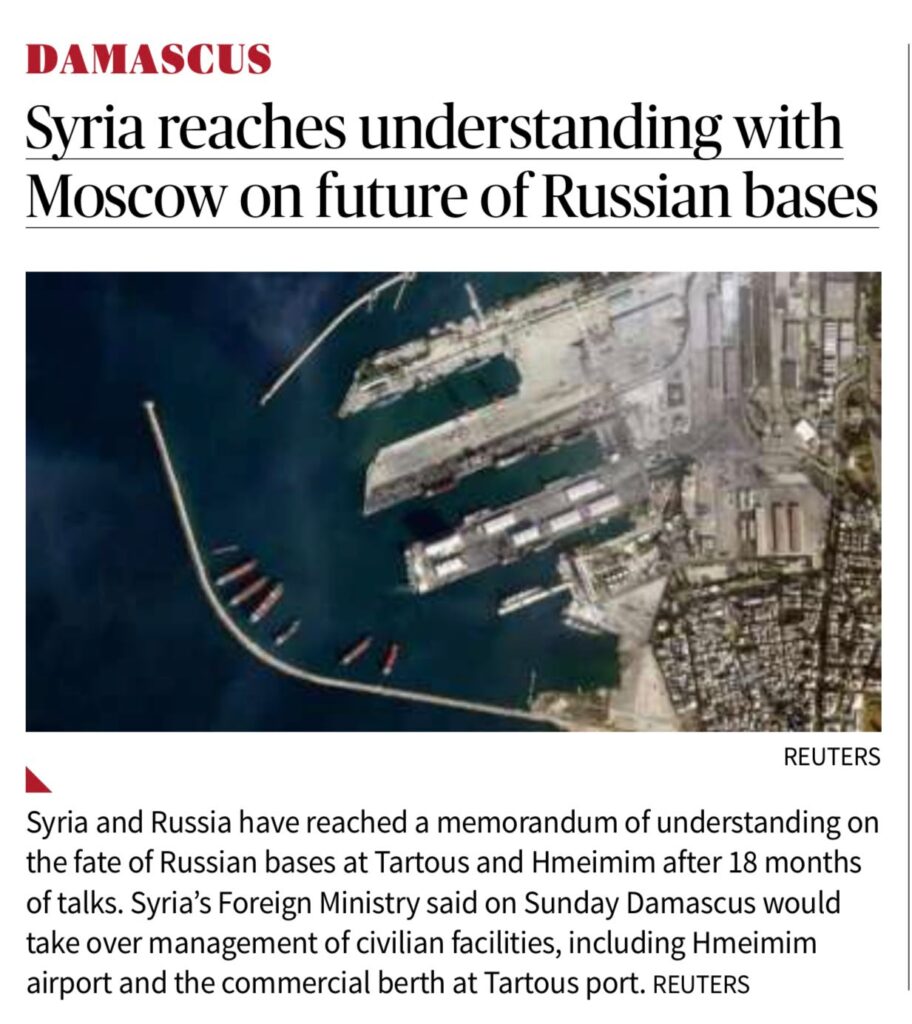
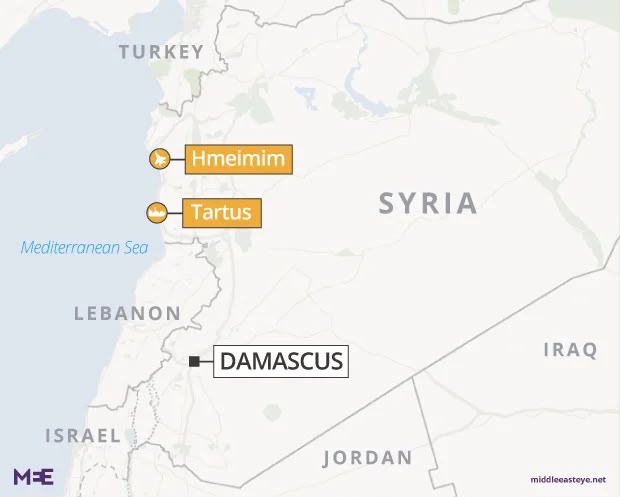
Syria and Russia have reached an MoU after 18 months of negotiations to reorganise Russia’s military presence at Tartus and Hmeimim.
This marks a shift in the long-standing Russia–Syria security relationship.
Current Development
Syria will take over civilian facilities, including:
- Hmeimim Airport
- Commercial fourth berth at Tartus
The military facilities will be reconfigured as joint Russian-Syrian training and qualification centres.
This means they will not continue in exactly their previous form as Russian military bases.
Tartus Naval Facility
Tartus is Russia’s key naval and logistics foothold in the Mediterranean.
The facility dates back to the Soviet era.
It was expanded under a 2017 agreement, giving Russia long-term access.
Tartus is important because it gives Russia access beyond the Black Sea.
Hmeimim Air Base
Hmeimim Air Base is located near Latakia in Syria.
It became the principal base for Russian air operations after Moscow intervened in the Syrian civil war in 2015 to support Bashar al-Assad.
Russia formalised its long-term presence through a 49-year arrangement in 2017.
Why These Bases Matter to Russia
Mediterranean Access
Tartus provides Russia with a strategic naval foothold in the Mediterranean.
This is especially important because Russia’s Black Sea access is geographically and politically constrained.
Power Projection
Hmeimim helped Russia conduct air operations in Syria.
It also strengthened Moscow’s influence across West Asia and the Eastern Mediterranean.
Africa and Wider Reach
Together, Tartus and Hmeimim have served as logistical nodes for Russia’s broader regional military presence.
They have supported Russia’s reach into West Asia, the Mediterranean and parts of Africa.
Strategic Significance
The MoU shows that Syria is trying to regain more control over civilian facilities.
At the same time, Russia is trying to preserve strategic access through a modified arrangement.
The move reflects changing power equations in West Asia and the evolving Russia–Syria relationship.
India Link
For India, the development is relevant because Russia remains a major strategic partner.
Changes in Russia’s West Asian presence can affect regional geopolitics, energy security and India’s wider diplomatic calculations in West Asia.
Key Takeaway
Tartus and Hmeimim are central to Russia’s Mediterranean and West Asian military reach. The new Syria–Russia understanding does not completely remove Russian influence, but reorganises it into a more joint and reconfigured presence.