Context: Urban Indian schools lead pollution
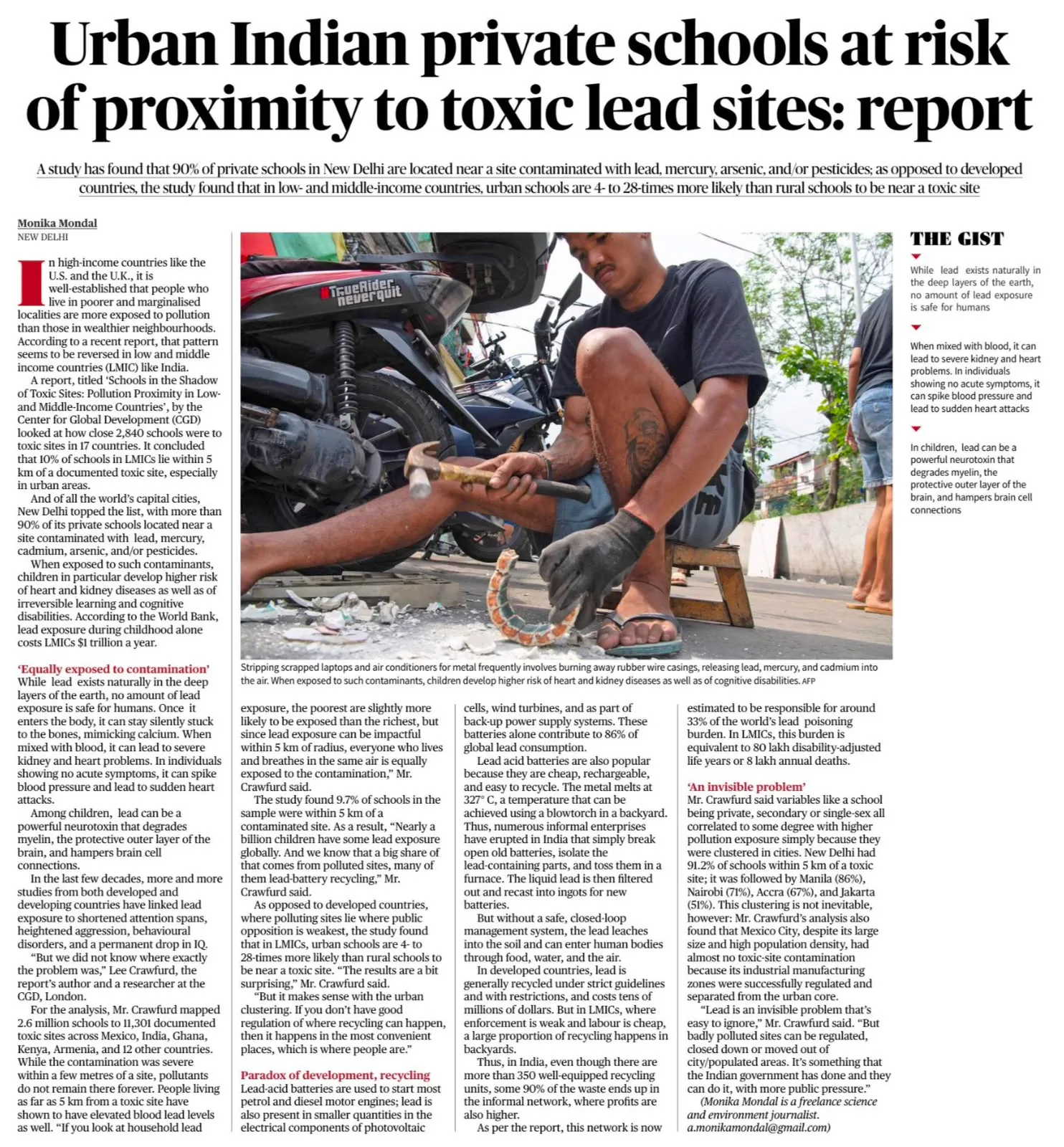
A Centre for Global Development report has found that many schools in low- and middle-income countries are located close to toxic sites containing lead and other hazardous pollutants.
In India, the concern is especially serious for New Delhi, where over 90% of private schools were found to be located near contaminated sites. This raises major public health concerns for children.
Lead
Lead is a toxic heavy metal naturally found in the Earth’s crust.
No level of lead exposure is considered safe, especially for children.
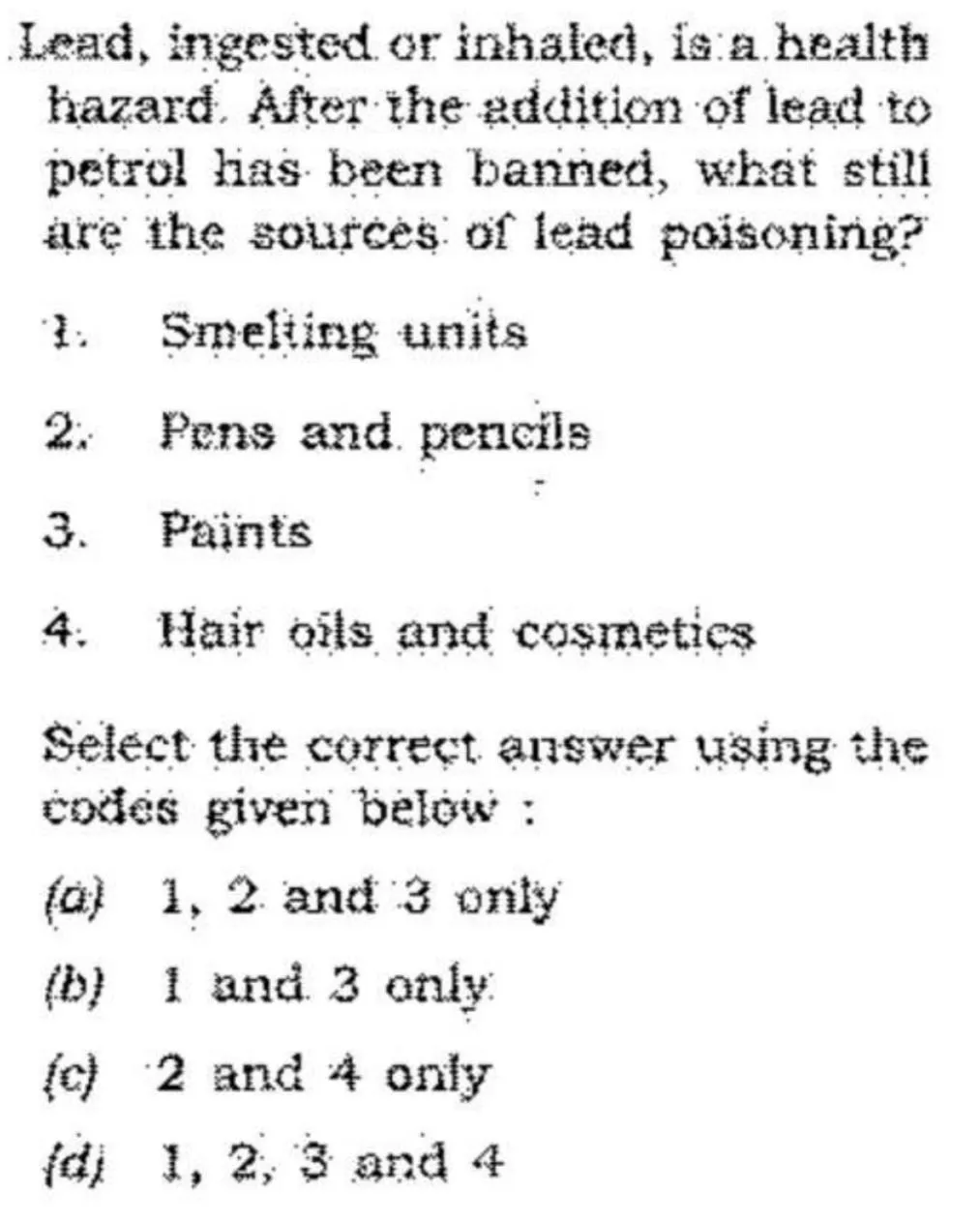
Lead exposure may happen through:
- Contaminated soil
- Polluted air
- Contaminated water
- Industrial waste
- Lead-acid battery recycling
- E-waste processing
- Metal smelting
- Industrial emissions
Why Lead Is Dangerous
Lead can enter the body through inhalation or ingestion.
Once inside the body, it can affect multiple organs and systems.
In children, lead is especially harmful because their brains and nervous systems are still developing.
Health Impacts
Lead exposure can cause:
- Brain and nervous system damage
- Reduced IQ
- Learning disabilities
- Behavioural disorders
- Kidney problems
- Cardiovascular diseases
- Developmental delays
Key Findings of the Report
The study covered around 26 lakh schools and 11,301 toxic sites across 17 countries.
Around 10% of schools in low- and middle-income countries are located within 5 km of a toxic site.
New Delhi recorded the highest exposure, with more than 90% of private schools near contaminated locations.
Urban schools in low- and middle-income countries are 4–28 times more likely than rural schools to be near toxic sites.
Why This Matters
Children spend long hours in schools.
If schools are located near toxic industrial or waste sites, exposure risk becomes continuous and long-term.
This also shows the failure of urban planning, land-use regulation and environmental monitoring.
Way Forward
India needs stricter hazardous waste and e-waste management.
Informal battery recycling and metal processing units must be regulated.
Urban planning should prevent schools from being located near toxic sites.
Environmental monitoring around schools should be strengthened.
Health screening for children in high-risk areas should also be considered.
Key Takeaway
Lead pollution is not only an environmental issue. It is a public health and child development concern. Schools must be protected from toxic exposure through better planning, regulation and monitoring.