Source: Prime Minister’s Independence Day Address | Tags: 17 August 2026, GS3
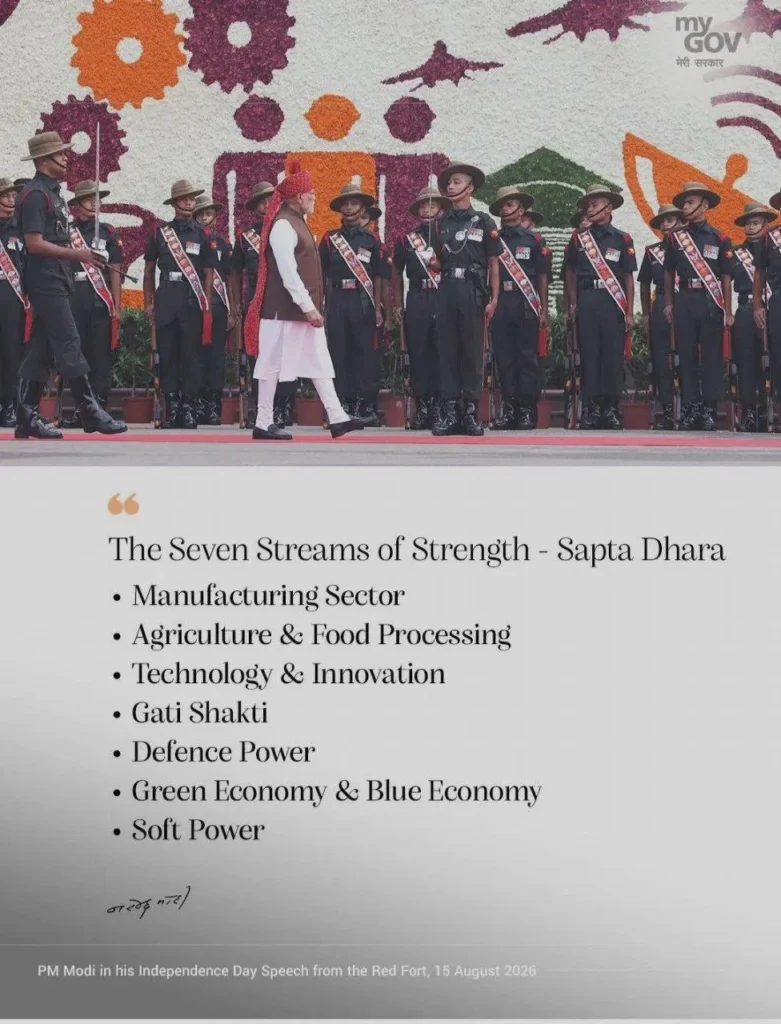
Context: Saptadhara for Viksit Bharat Saptadhara, highlighted in the Prime Minister’s Independence Day 2026 address, presents seven interconnected drivers of India’s transformation into a developed, self-reliant, technologically advanced and sustainable economy.
1. Manufacturing Power — From “Make in India” to “Make for the World”
Scale + quality + cost competitiveness → jobs, exports, import substitution and global value-chain integration.
2. Agricultural & Food-Processing Power — From Production to Value Addition
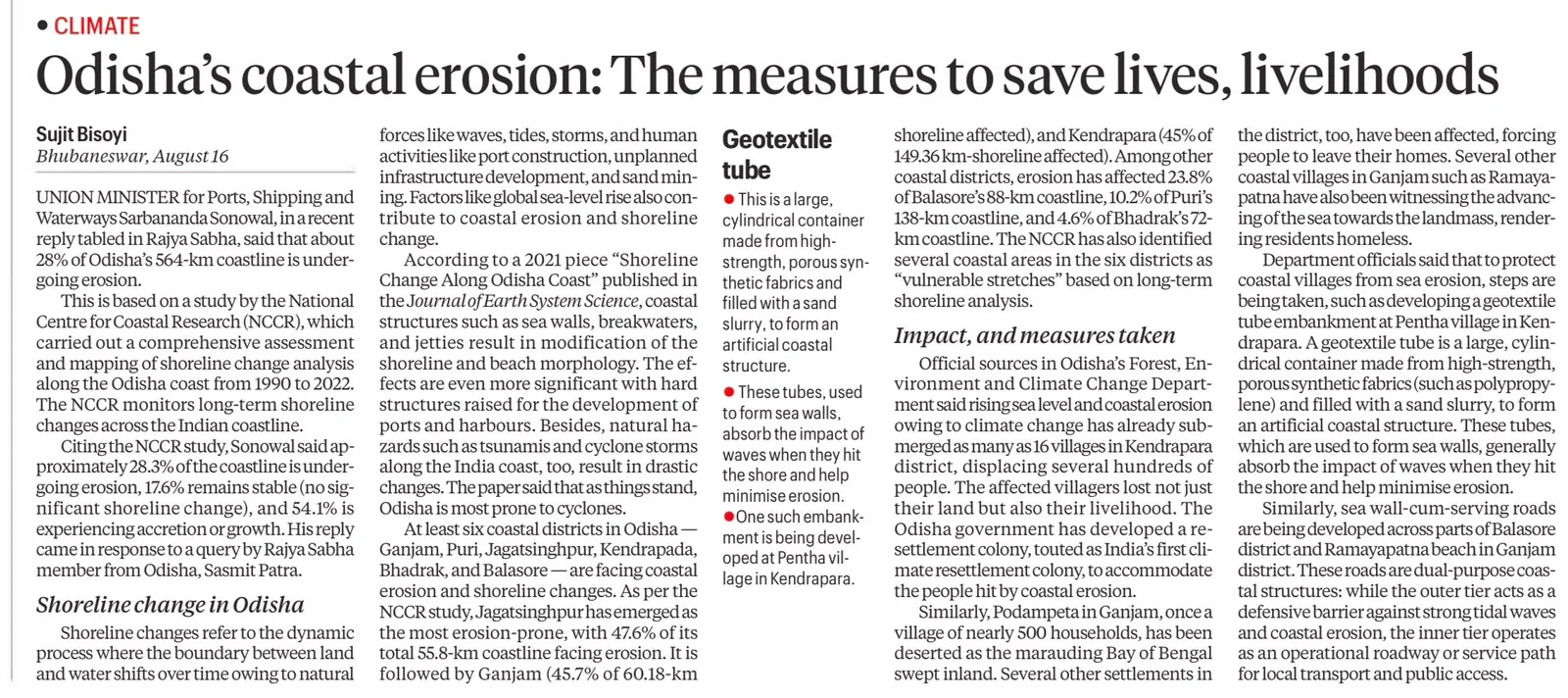
Context: Odisha Coastal Erosion Measures About 28% of Odisha’s 564-km coastline is undergoing erosion, according to the National Centre for Coastal Research (NCCR) assessment of shoreline changes during 1990–2022. Coastal erosion is increasingly threatening land, settlements, livelihoods and infrastructure, requiring both protective and adaptive measures.
1. Coastal Erosion
Coastal erosion is the gradual loss or retreat of coastal land as the shoreline shifts landward.
It results from both natural and human factors — waves, tides, storms and cyclones, sea-level rise, port construction, coastal infrastructure and sand mining.
Odisha is particularly vulnerable because of its long, cyclone-prone coastline and exposure to the Bay of Bengal.
2. Extent of the Problem in Odisha
28.3% of Odisha’s coastline is undergoing erosion.
17.6% is stable.
54.1% is experiencing accretion.
Jagatsinghpur is the most erosion-prone, with 47.6% of its 55.8-km coastline affected.
Extreme events: Cyclones, storm surges and high waves accelerate shoreline retreat.
Human interventions: Ports, seawalls, breakwaters and jetties can alter natural sediment movement.
Unsustainable activities: Sand mining and unplanned coastal development disturb coastal morphology.
4. Impact & Odisha’s Response
Erosion causes loss of land, houses and livelihoods, forcing coastal communities to relocate.
Climate-resettlement colonies: Odisha has developed a rehabilitation model for communities displaced by coastal erosion.
Geotextile tube embankments: High-strength porous synthetic tubes filled with sand slurry act as artificial coastal barriers and absorb wave energy.
Sea-wall-cum-service roads: Being developed in vulnerable areas; the outer structure protects against storm surges and erosion, while the inner section provides road connectivity.
5. Sustainable Approach
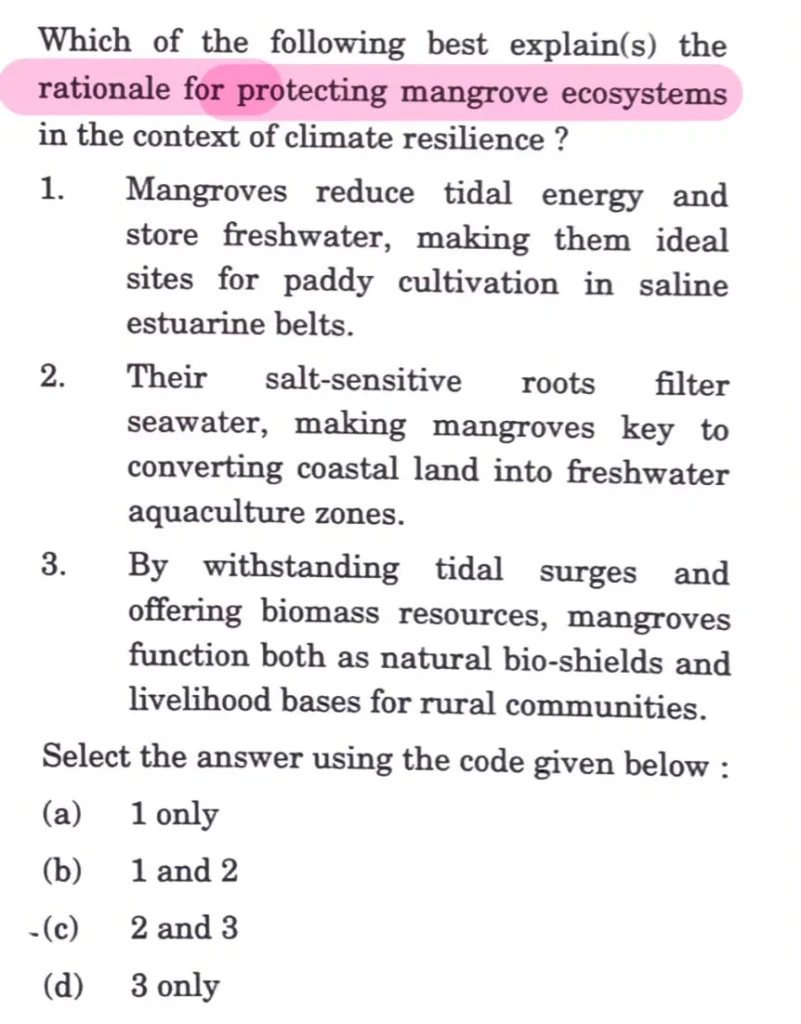
Coastal protection should combine engineering solutions with ecosystem-based measures such as mangrove restoration, dune protection and regulated coastal development.
Coastal Regulation Zone norms and scientific shoreline mapping should guide infrastructure development.
Shift from only “protecting the coast” to “protecting coastal communities” through early warning, resilient infrastructure, planned relocation and livelihood rehabilitation.
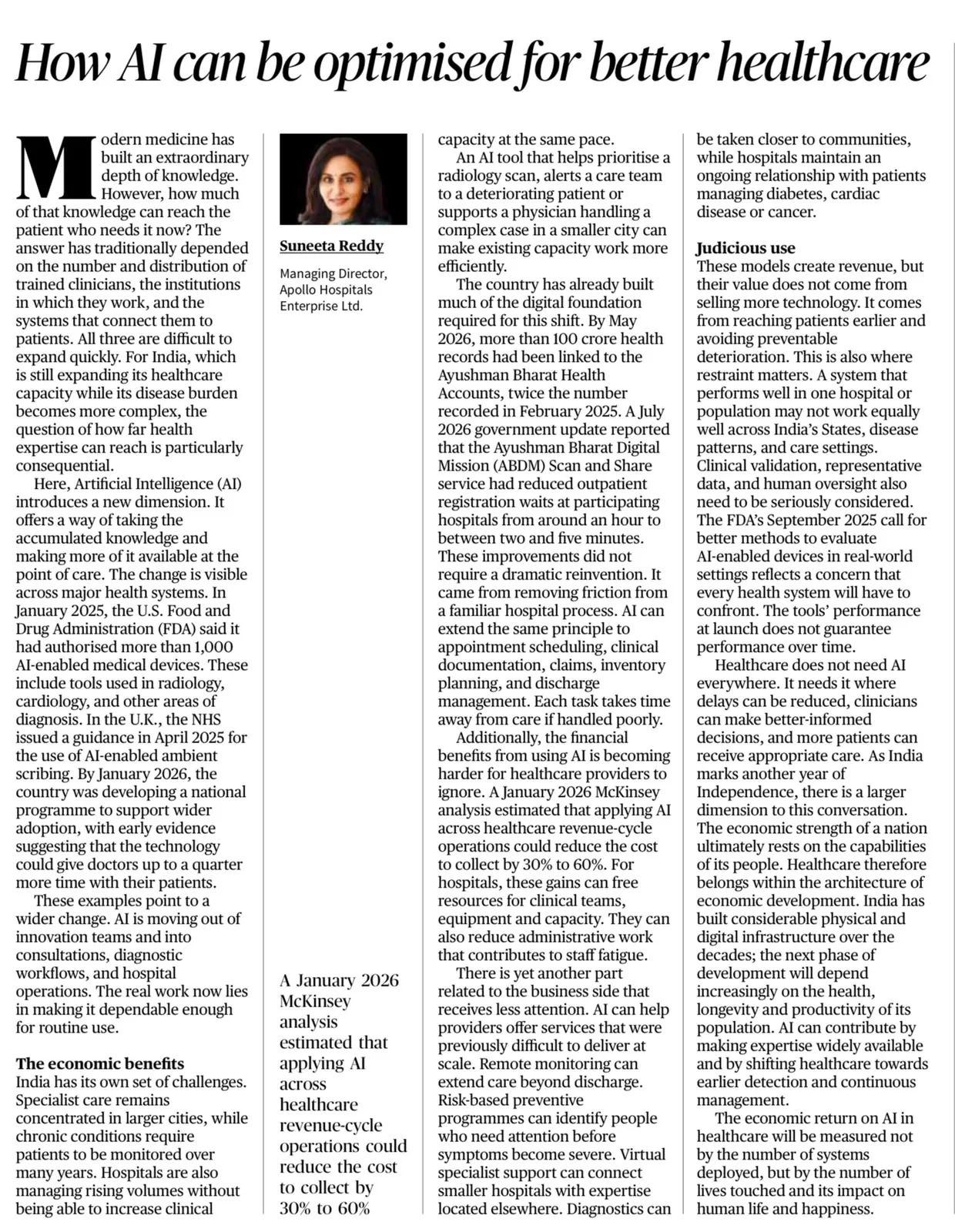
Context: AI Optimisation in Healthcare India’s healthcare challenge is increasingly one of access, specialist availability and continuity of care. Artificial Intelligence can act as a capacity multiplier by extending medical expertise, enabling earlier diagnosis and reducing the administrative burden on healthcare professionals.
1. AI as a Healthcare Capacity Multiplier
Clinical decision support: AI can assist in medical imaging, diagnosis and risk assessment, particularly where specialist doctors are scarce.
Early detection: Predictive tools can identify patients at risk of deterioration → shift from reactive treatment to preventive intervention.
Remote & continuous care: AI-enabled monitoring and virtual specialist support can extend healthcare beyond hospitals, particularly for chronic diseases.
Administrative efficiency: AI can automate documentation, appointments, claims, inventory and hospital workflows, allowing doctors and nurses to devote more time to patients.
2. India’s Digital Foundation
Ayushman Bharat Digital Mission: By May 2026, more than 100 crore health records had been linked to Ayushman Bharat Health Accounts, creating a large digital-health foundation for AI applications.
Scan and Share: Digital registration reduced outpatient registration time in participating hospitals from around one hour to 2–5 minutes, demonstrating how digital tools can improve health-system efficiency.
Economic potential: A 2026 McKinsey analysis estimated that AI applications in healthcare revenue-cycle operations could reduce collection costs by 30–60%.
3. What AI Can Deliver
Wider access: Specialist-level assistance can reach smaller towns and underserved regions without requiring every location to have a full specialist workforce.
Better resource utilisation: AI can optimise hospital capacity, workforce, equipment and supply chains.
Personalised care: Patient data and predictive analytics can support more targeted treatment and continuous monitoring.
Systemic shift: Healthcare can move from “treating illness” → “predicting, preventing and managing illness.”
4. Key Challenges
Data bias: AI trained on non-representative datasets can produce inaccurate or unequal outcomes across populations.
Real-world reliability: A model validated in one hospital or population may not perform equally well elsewhere.
Human oversight: AI should augment rather than replace clinical judgement, particularly for high-risk medical decisions.
Privacy & cybersecurity: Large-scale health-data use increases risks of breaches, misuse and unauthorised access.
Accountability: Clear responsibility is needed when an AI-assisted decision causes harm.
5. Way Forward
Adopt a “judicious AI” approach — deploy AI where it produces demonstrable clinical value.
Build representative, high-quality health datasets and interoperable digital systems.
Mandate clinical validation, real-world testing and continuous monitoring.
Strengthen privacy, cybersecurity, transparency and accountability.
Retain human-in-the-loop decision-making for consequential medical decisions.
EDITORIAL TO MAINS ANSWER | DAY 8
10 Marks | 150 Words
Q. Artificial Intelligence can act as a capacity multiplier for India’s healthcare system, but its benefits depend on responsible and judicious deployment. Discuss.
प्रश्न. आर्टिफिशियल इंटेलिजेंस भारत की स्वास्थ्य सेवा प्रणाली की क्षमता को बढ़ानेमेंसहायक हो सकता है, लेकिन इसके लाभ इसकेजिम्मेदार और विवेकपूर्णउपयोग पर निर्भर करतेहैं। चर्चाकीजिए।
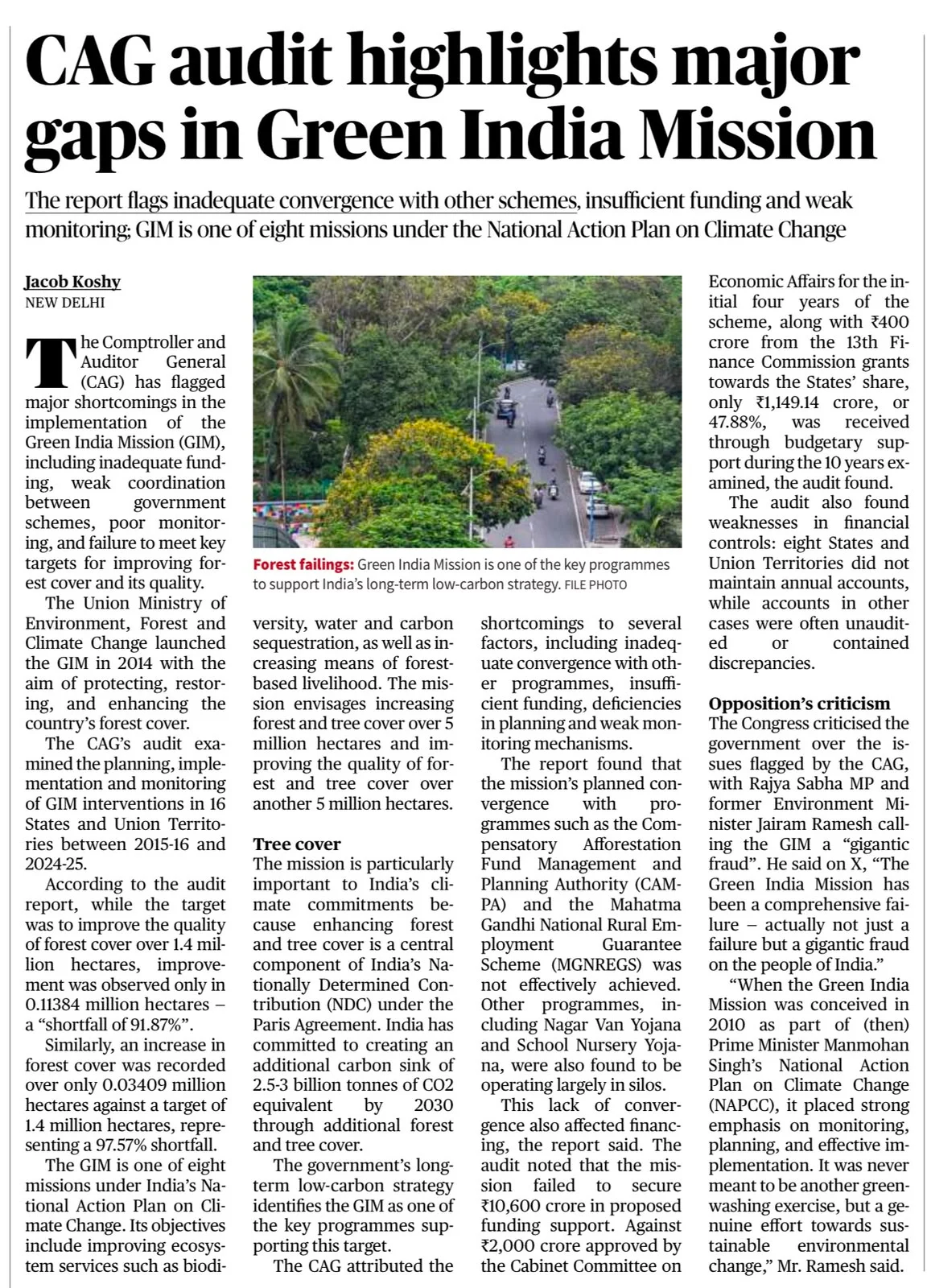
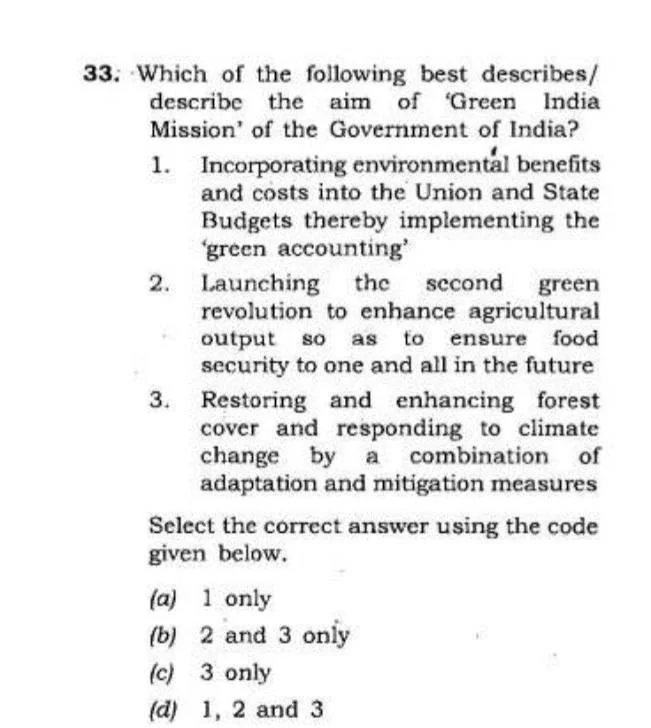
Context: Green India Mission Implementation The Comptroller and Auditor General has highlighted major gaps in the implementation of the Green India Mission, including severe shortfalls in forest-cover targets, inadequate funding, weak convergence and poor monitoring.
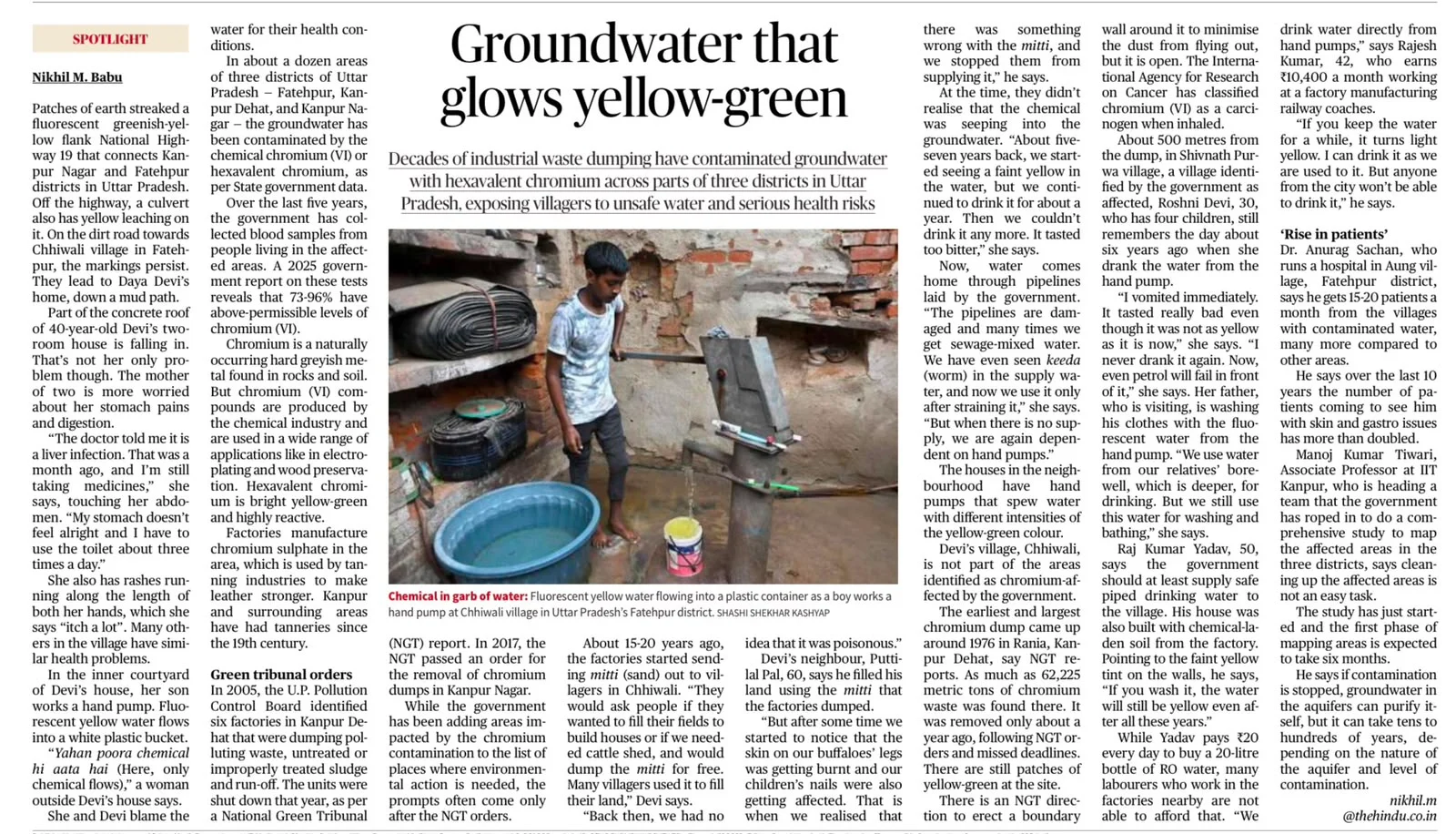
Context: Hexavalent Chromium Groundwater Pollution Groundwater in parts of Kanpur Nagar, Kanpur Dehat and Fatehpur has been contaminated by hexavalent chromium [Cr(VI)], linked to decades of improper disposal of industrial waste. The issue highlights how legacy industrial pollution can persist in soil and aquifers and eventually enter the human body.
1. How Chromium Contaminates Groundwater
Industrial source: Chromium-containing waste from industries such as leather tanning and electroplating is dumped or inadequately treated.
Leaching: Rainwater carries soluble chromium from contaminated waste/soil into the ground → soil contamination → aquifer contamination.
Persistence: Once Cr(VI) reaches groundwater, it can migrate with groundwater flow, making contamination difficult and expensive to reverse.
Human exposure: Communities dependent on contaminated groundwater may ingest or otherwise come into contact with chromium → groundwater becomes a direct exposure pathway.
2. Why Cr(VI) Is a Serious Contaminant
Highly toxic: Cr(VI) is substantially more toxic than the relatively less harmful trivalent chromium [Cr(III)].
Carcinogenic: The International Agency for Research on Cancer classifies chromium(VI) compounds as carcinogenic when inhaled.
Bio-health concern: A 2025 government assessment cited in the article found elevated Cr(VI) levels in the blood of 73–96% of sampled people in affected areas.
3. Why Contamination Becomes a Long-Term Crisis
Legacy pollution: Old industrial waste can continue releasing chromium even after the original industrial activity has stopped.
Groundwater dependence: Where alternative safe-water sources are inadequate, people remain exposed.
Remediation difficulty: Unlike surface pollution, contaminated aquifers are invisible, spatially extensive and technically difficult to clean.
Governance gap: Delayed removal of hazardous waste and weak enforcement allow the contamination pathway to continue.
4. Tackling Groundwater Contamination
Prevent at source: Enforce hazardous-waste treatment and disposal standards; apply the Polluter Pays Principle.
Contain & remediate: Identify contamination hotspots, isolate/remove legacy waste and use site-specific groundwater remediation.
Protect communities: Provide reliable safe piped drinking water and health screening in affected areas.
Monitor aquifers: Continuous groundwater-quality monitoring using GIS, sampling networks and periodic health surveillance.
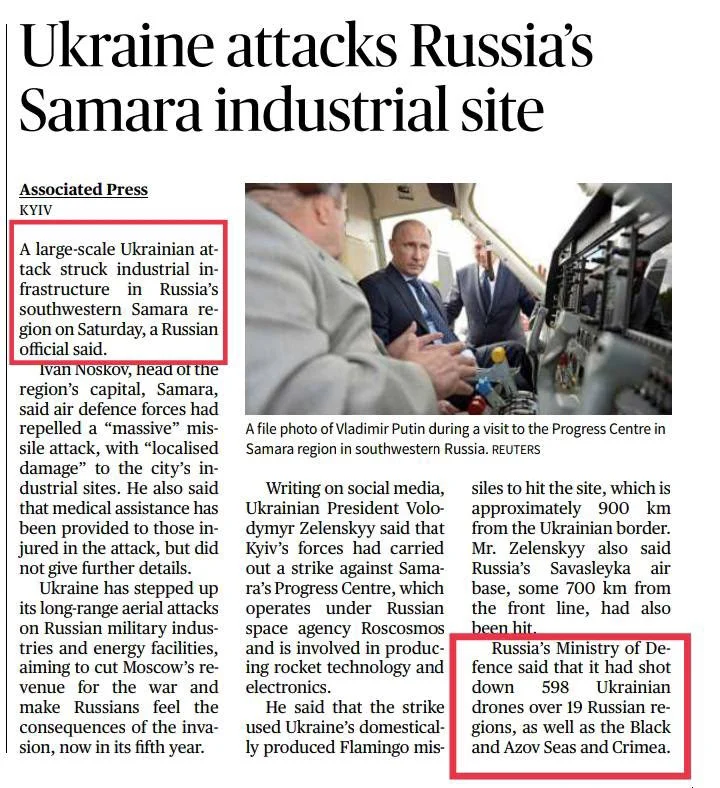
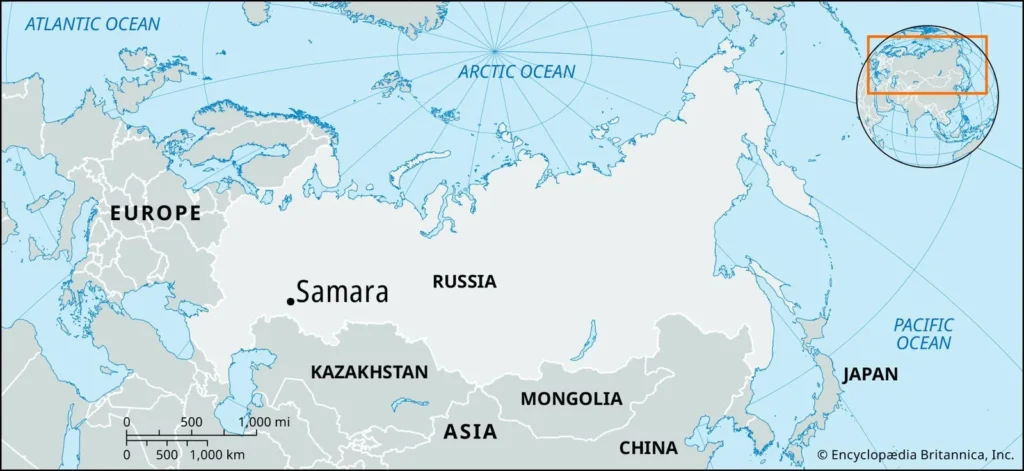
Context: Ukraine Russia Strategic Geography The Russia–Ukraine war has increasingly extended beyond the immediate battlefield, with long-range missiles and drones allowing both sides to target strategic infrastructure deep inside enemy territory. The recent Ukrainian strikes bring attention to the geography and strategic importance of Samara and the wider Volga region, as well as Savasleyka in Nizhny Novgorod.
Recent Strike
A large-scale Ukrainian attack struck industrial infrastructure in Russia’s southern Samara region.
Russian defence forces said they repelled a massive missile attack, with localised damage to the city’s industrial sites.
Ukrainian President Volodymyr Zelenskyy said Ukrainian forces carried out a strike against Samara’s Progress Centre.
The article notes that the Progress Centre operates under Russian space agency Roscosmos and is involved in producing rocket technology and electronics.
Zelenskyy said the strike used Ukraine’s domestically produced Flamingo missiles to hit the site, approximately 900 km from the Ukrainian border.
Russia’s Ministry of Defence said it had shot down 598 Ukrainian drones over 19 Russian regions, as well as the Black and Azov Seas and Crimea.
Samara — Russia
Location: Southeastern part of European Russia, on the middle Volga, near the confluence of the Volga and Samara rivers. Samara Oblast also lies relatively close to Kazakhstan.
Geographical importance: Located along the Volga transport corridor, connecting Russia’s interior with the Caspian region.
Strategic importance: A major industrial and aerospace centre; the Progress Rocket and Space Centre, under Roscosmos, is based here.
Savasleyka — Nizhny Novgorod
The article mentions that Russia’s Savasleyka air base had also been hit.
It is located around 700 km from the front line.
Map Link
The map in the file places Samara in southeastern European Russia, near Kazakhstan and along the wider Volga region.
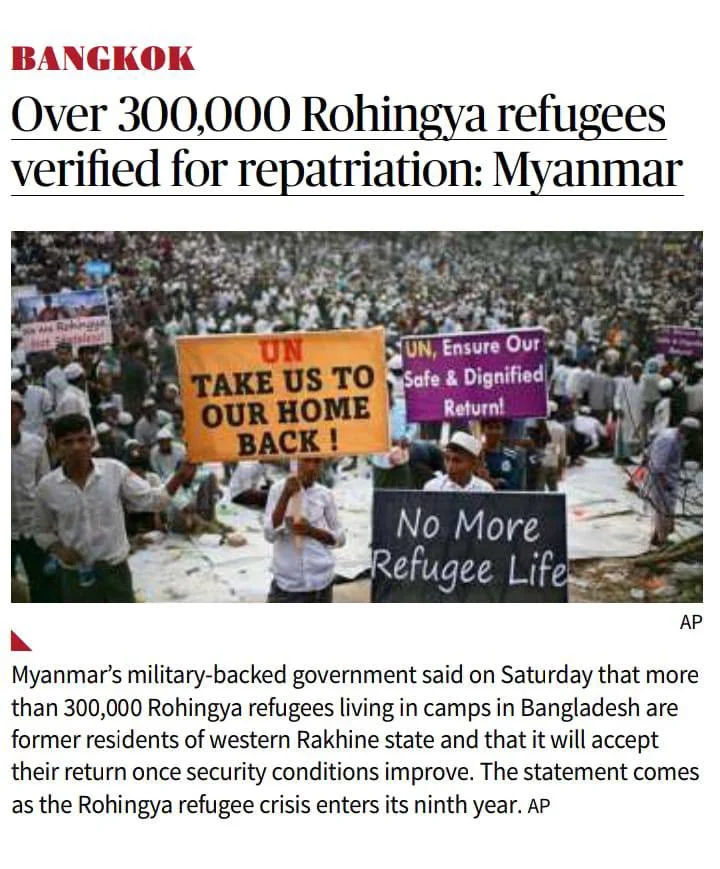
Context: Rohingya Repatriation from Bangladesh Myanmar’s military-backed government said that more than 300,000 Rohingya refugees living in camps in Bangladesh are former residents of western Rakhine State and that it will accept their return once security conditions improve.
The statement comes as the Rohingya refugee crisis enters its ninth year.
Rohingya Refugee Crisis
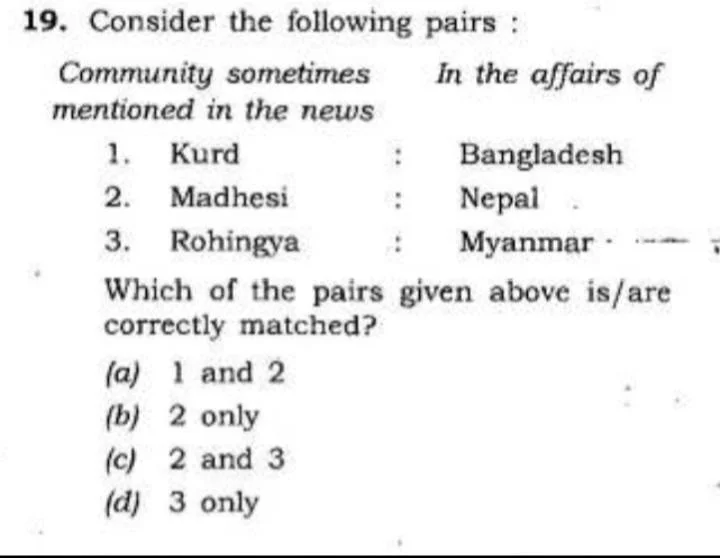
The Rohingya are associated with Myanmar, especially western Rakhine State.
Large numbers of Rohingya refugees have been living in Bangladesh camps after fleeing violence and insecurity in Myanmar.
The latest development relates to verification for possible repatriation.
Repatriation Issue
Myanmar has stated that more than 300,000 Rohingya refugees have been verified as former residents of western Rakhine State.
Myanmar has said it will accept their return once security conditions improve.
Key Concern
Repatriation must be safe, voluntary and dignified.
The newspaper image shows refugee demands such as:
“Take us to our home back”
“Ensure our safe & dignified return”
“No more refugee life”
Rohingya repatriation from Bangladesh
Rohingya repatriation from Bangladesh
A Platform OF The Students For The Students By The Students