23 Feb 2026 | Daily Current Affairs

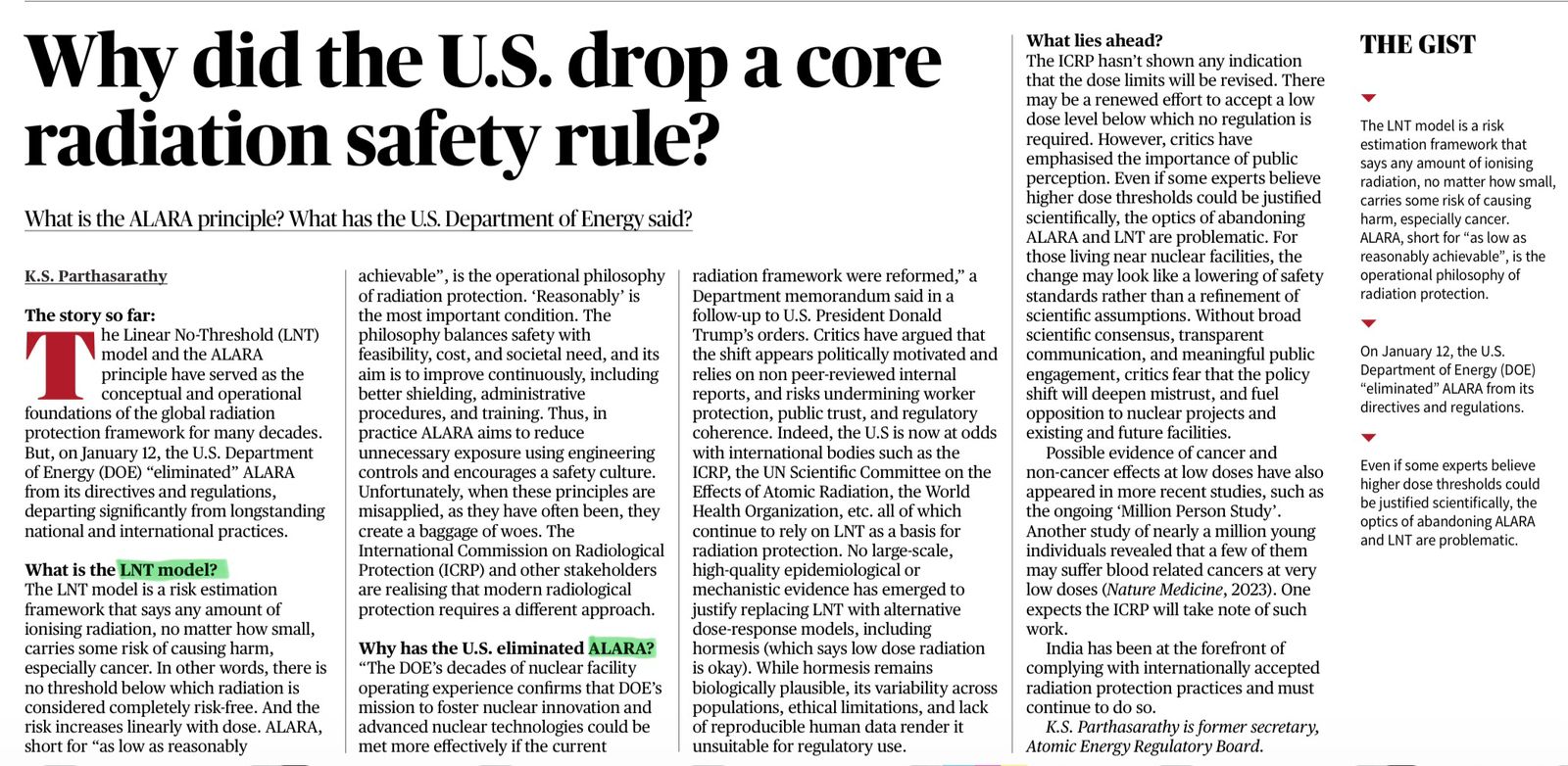
LNT Model and ALARA Principle in Radiation Safety Debate | UPSC GS3

Context

The U.S. Department of Energy removed the ALARA radiation-safety rule, raising concerns because ALARA and LNT have guided global radiation safety.

1. What is the LNT model?

LNT = Linear No-Threshold model

Simple meaning:
• Any amount of ionising radiation—even smallest dose—can increase cancer risk.
• No safe minimum limit.
• Risk increases linearly with exposure.

Used globally for radiation exposure limits in nuclear plants, workers, medical use.

2. What is ALARA?

ALARA = As Low As Reasonably Achievable

Simple meaning:
• Keep radiation exposure as low as possible using shielding, monitoring, engineering controls.
• Balance safety with cost and feasibility.
• Operational safety principle used with LNT.

3. Why did the U.S. remove ALARA?

DOE said:
• Modern nuclear tech can work more efficiently if strict ALARA framework is relaxed.
• ALARA often misapplied causing regulatory burdens.
New Delhi Declaration at AI Impact Summit: Inclusive AI Governance | UPSC GS2

Context

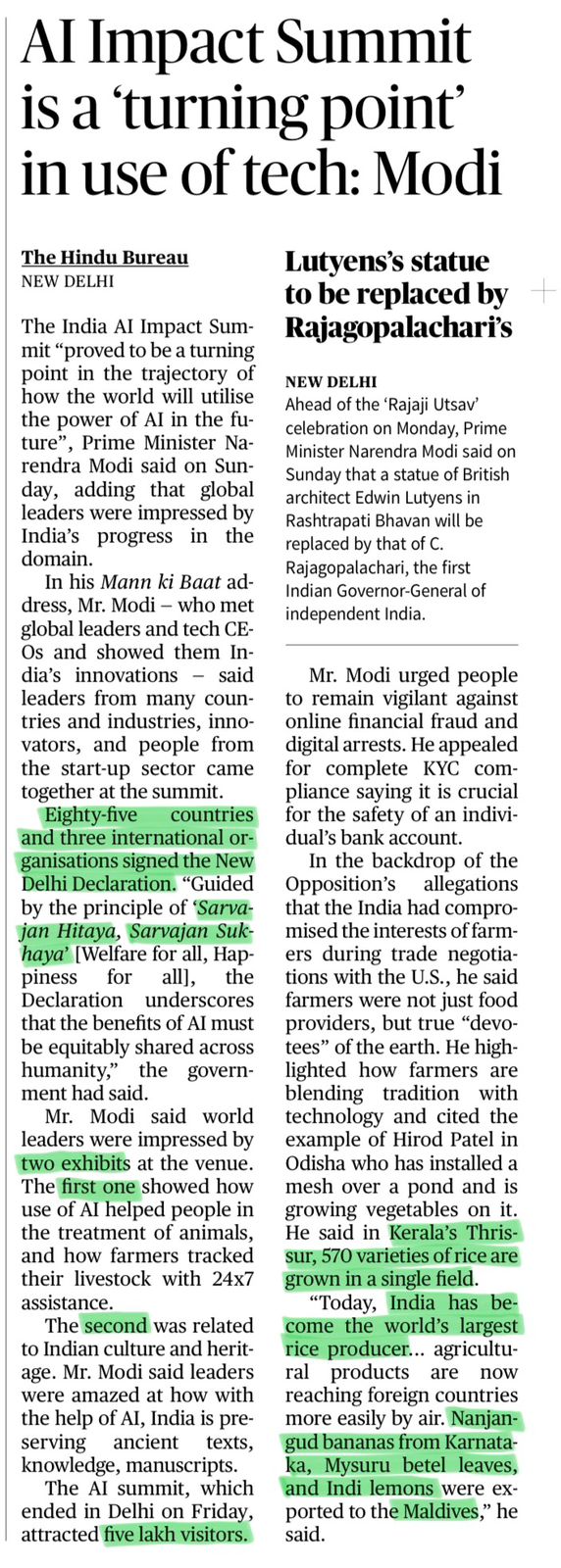
India hosted the AI Impact Summit in New Delhi; PM highlighted global recognition of India’s tech progress.

AI Impact Summit

• Over 85 countries and three international organisations signed the New Delhi Declaration.
• Declaration emphasises equitable access to AI benefits for all humanity.
• Summit drew five lakh visitors showcasing India’s AI innovations.

Two major exhibits

  1. Agriculture & livestock — AI use in animal treatment, livestock tracking, farmer support.
  2. Culture & heritage — Using AI to preserve ancient manuscripts and cultural knowledge.

New Delhi Declaration

• Based on idea of “Sarvajan Hitaya, Sarvajan Sukhaya.”
• Calls for inclusive, safe, globally shared AI development.
• Ensures AI benefits reach all sections, not just advanced economies.

Other Important Points

• Edwin Lutyens’s statue in Rashtrapati Bhavan will be replaced by that of C. Rajagopalachari.
• PM urged vigilance against online financial fraud and completion of KYC.
• India agricultural highlights:
• Thrissur: 570 rice varieties in one field.
• India now world’s largest rice producer.
• Exports: Nanjangud bananas, Mysuru betel leaves, Indi lemons to Maldives.

India–US Interim Trade Agreement Agriculture Impact on Cotton, Maize & Apples | UPSC GS3

Context

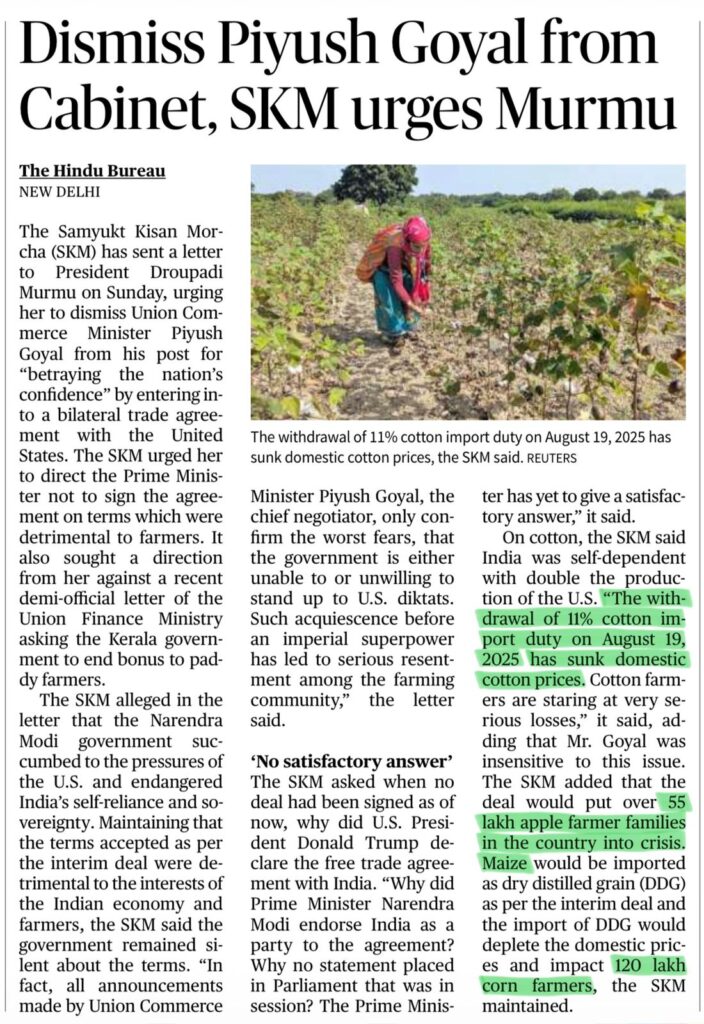
The Samyukt Kisan Morcha (SKM) alleged the India–U.S. interim trade agreement harms farmers by reducing import duties and exposing Indian agriculture to cheaper foreign produce.

Key Agricultural Concerns

1) Cotton
• 11% cotton import duty withdrawn (Aug 19, 2025) → surge in cheap U.S. cotton imports.
• Domestic cotton prices crashed, hurting 55 lakh cotton-farming families.

2) Maize
• Interim deal allows import of DDG (dried distillers grain) from the U.S.
• Large DDG inflow would depress maize prices, impacting 120 lakh corn farmers.

3) Apples
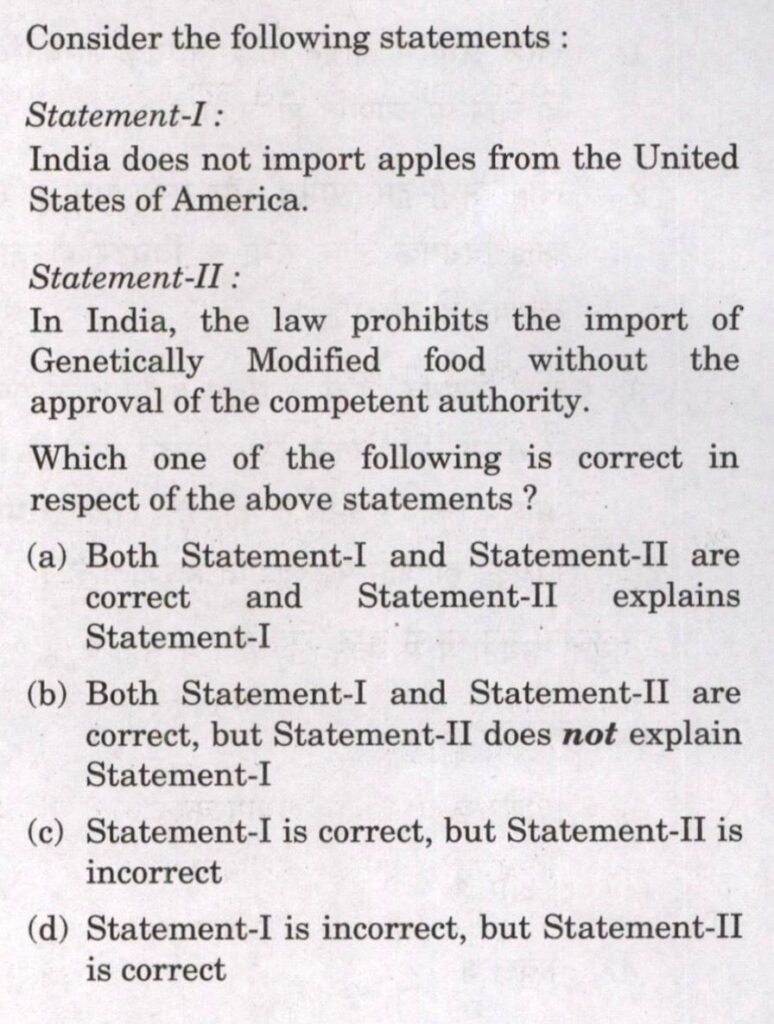
• Lowered import duties and relaxed terms under the deal have led to increased U.S. apple imports.
• This has put price pressure on domestic apple growers, especially in Himachal Pradesh & Kashmir.

PYQ – 2024, Ans – D

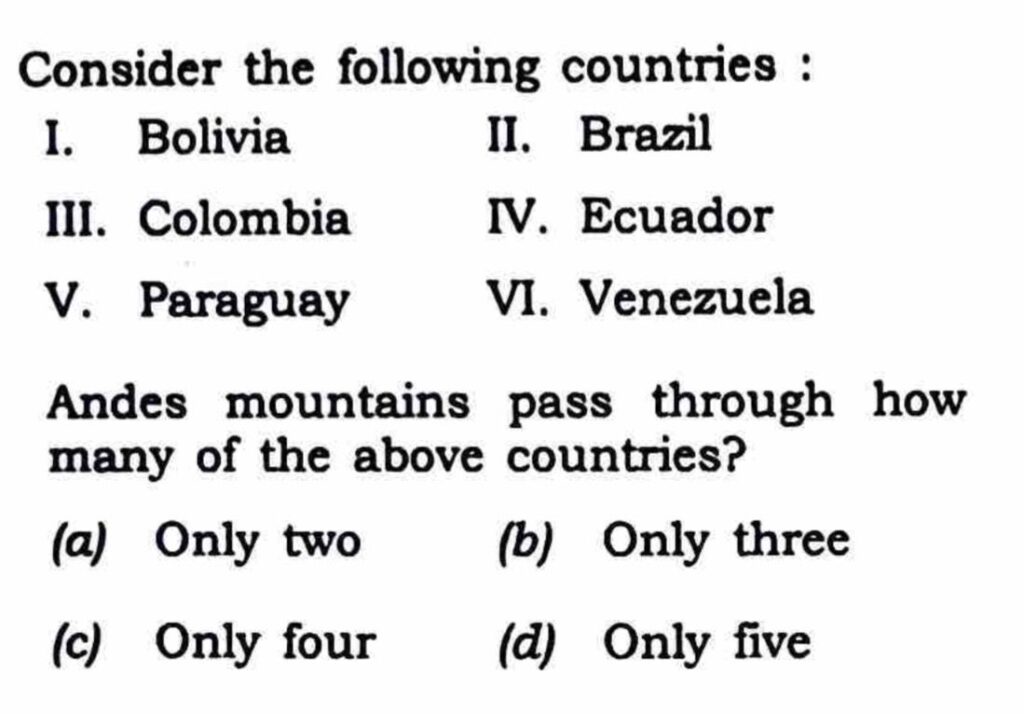
India–Brazil Visit Outcomes: Defence, Trade, Space & UNSC Reform | UPSC GS2

Context

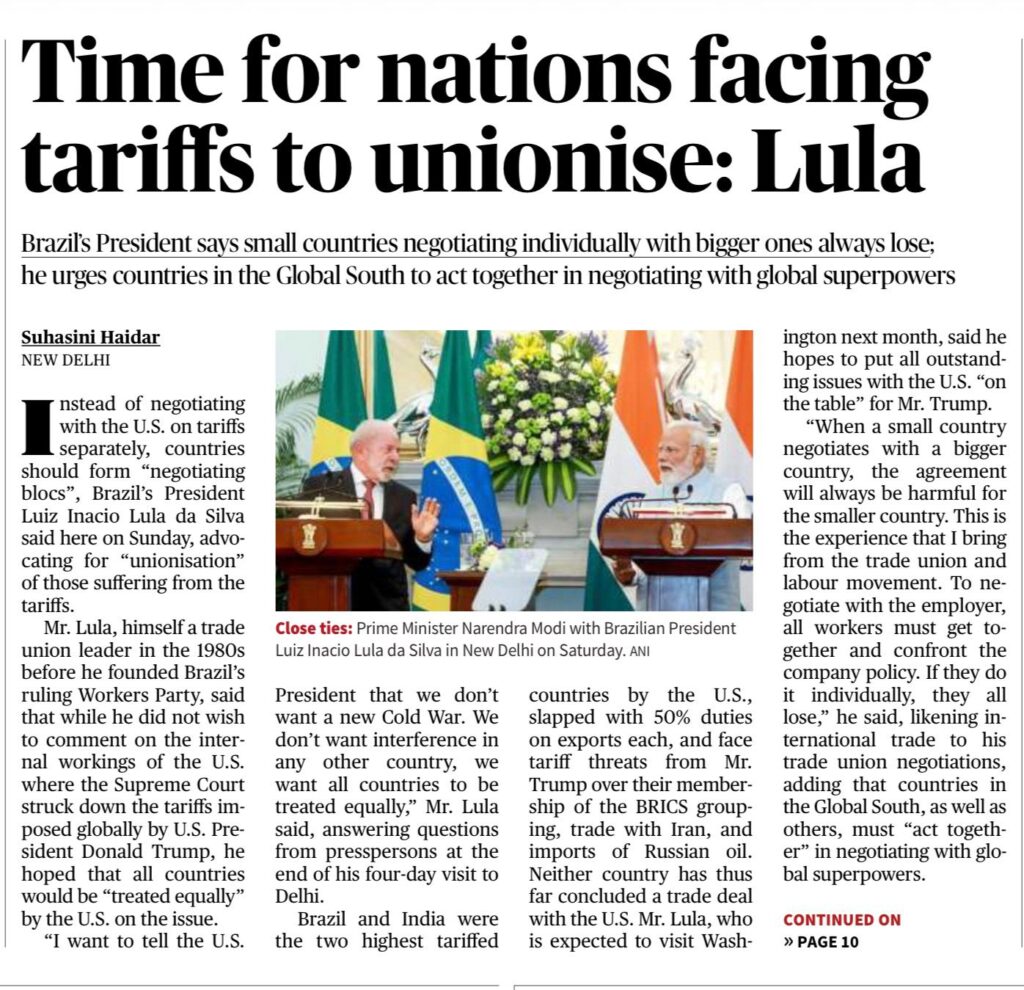
Brazilian President Lula da Silva is on a four-day state visit to India to deepen strategic cooperation ahead of major multilateral engagements.

Key Outcomes of the Visit

1) Defence & Strategic
• Agreement to cooperate on defence production, joint R&D, and military technology (including naval systems).
• Push to expand trade in defence platforms like transport aircraft and artillery systems.

2) Space & Technology
• MoU on satellite collaboration, data sharing, and joint work under ISRO–Brazil space partnership.
• Discussion on cooperation in semiconductors, AI, and digital public infrastructure.

3) Trade & Economy
• India–Brazil commitment to raise bilateral trade.
• Work to expedite India–Mercosur PTA expansion for reduced tariffs.

4) Energy & Environment
• Collaboration on biofuels, green hydrogen, and ethanol blending (Brazil is a global leader).
• Support for Global Biofuels Alliance (GBA), where Brazil is a founding member.

5) Global Governance
• Joint call for UNSC reform, backing each other’s bids for permanent membership.
• Coordination within G20, BRICS, and IBSA.

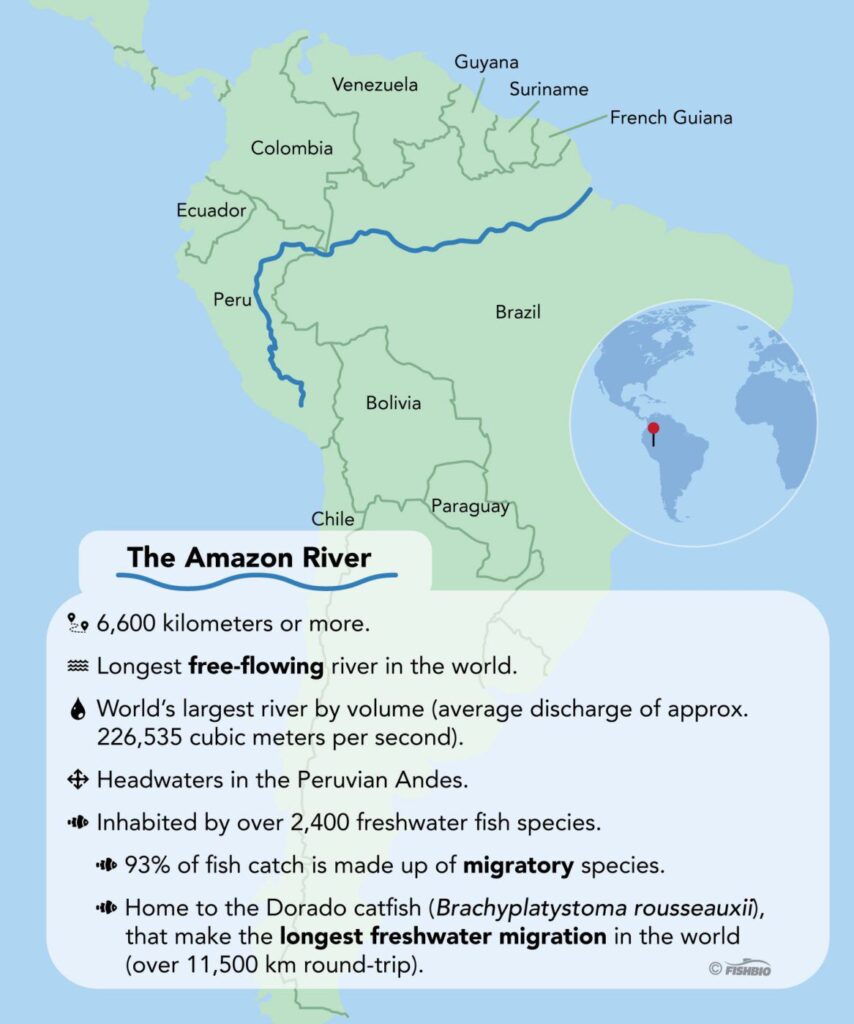
(Graphic on page 5 highlights Amazon River facts but is contextual geography, not core to bilateral outcomes.)

PYQ – 2025, Ans – C

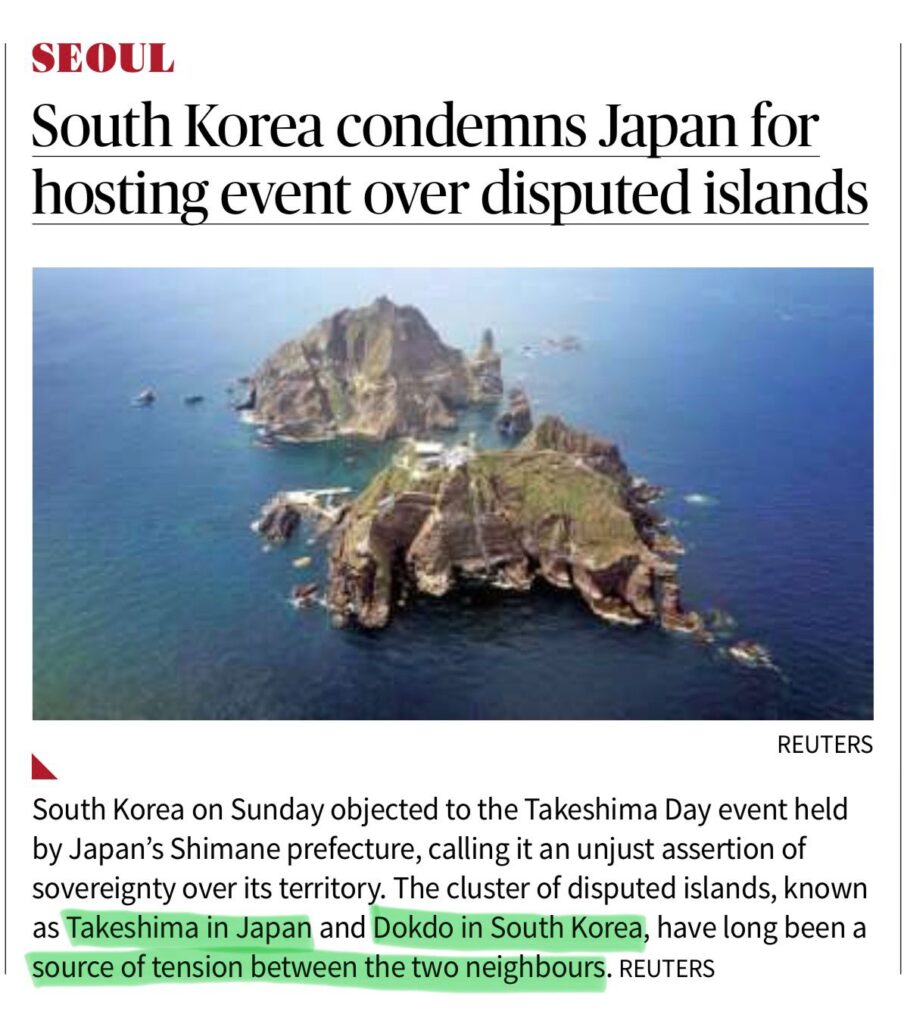
Takeshima/Dokdo Dispute: South Korea Protests Japan’s Takeshima Day | UPSC GS2

Context

South Korea objected to Japan hosting “Takeshima Day,” calling it an unjust assertion of sovereignty over disputed islands.

Dokdo/Takeshima Dispute

• Issue: Japan held “Takeshima Day”; South Korea condemned it as an unjust claim.
• Names: Dokdo (South Korea) / Takeshima (Japan).
• Who controls it? South Korea exercises effective administrative control.
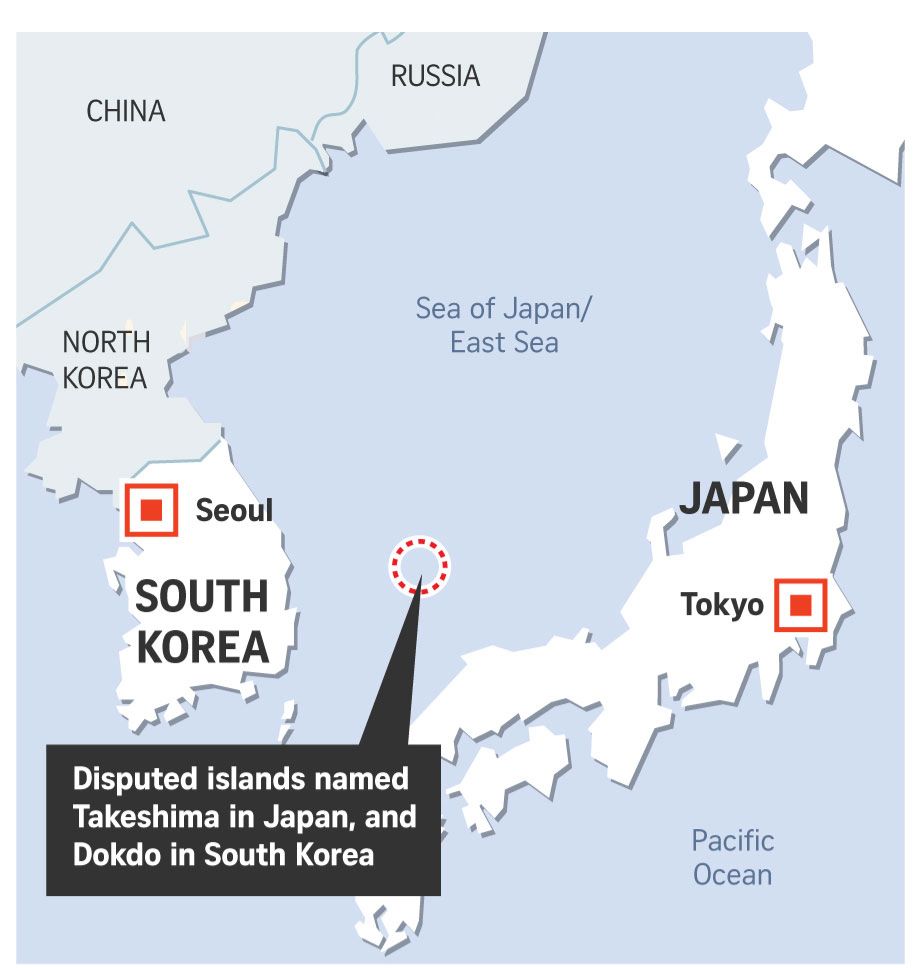
• Location: Small rocky islets in the Sea of Japan (East Sea) between Japan & South Korea.
• Why dispute? Sovereignty claims, nationalism, historical grievances.

(Map on page 2 shows the islands between Japan and South Korea highlighting their strategic location.)

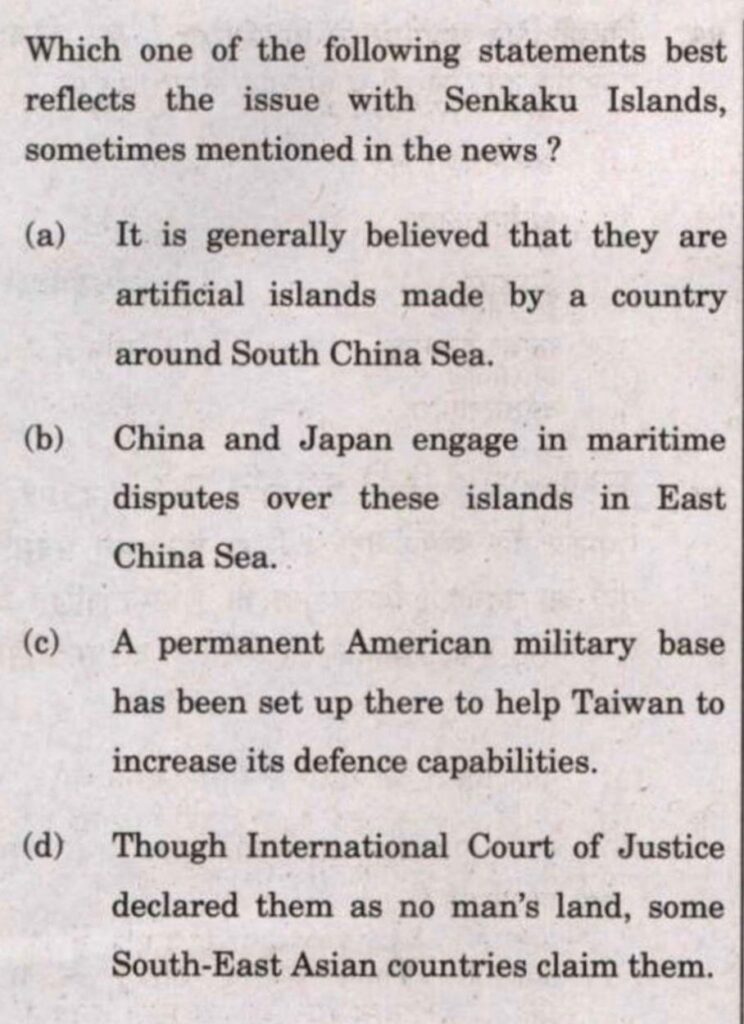
PYQ – 2022, Ans – B
About the UPSC Civil Services Examination (UPSC CSE)

The UPSC Civil Services Examination (CSE) is one of the most competitive and esteemed examinations in India, conducted by the Union Public Service Commission to recruit officers for services such as the Indian Administrative Service (IAS), Indian Police Service (IPS), Indian Foreign Service (IFS), and others. The exam comprises three stages — Prelims, Mains, and the Personality Test (Interview) — designed to test a candidate’s knowledge, aptitude, decision-making, and leadership skills.


How to Prepare Effectively for UPSC CSE

Cracking the UPSC CSE requires a deep understanding of the syllabus, consistent revision, structured answer writing, and smart test-taking strategies. The Prelims test analytical and conceptual clarity, the Mains focuses on critical thinking, articulation, and subject mastery, while the Interview assesses presence of mind, ethical judgment, and personality traits relevant to public service.

At UnderStand UPSC, we empower aspirants with a personalized and focused approach to each stage of the exam.


Why Choose UnderStand UPSC?

UnderStand UPSC is a mentorship-driven platform offering a clear, clutter-free strategy to tackle the Civil Services Examination. Our programs like Transform (for beginners and intermediate learners) and Conquer (for advanced mains preparation) provide structured study plans, syllabus-wise video content, interactive live sessions, and answer writing support.

We emphasize:

  • Concept clarity through topic-wise lectures

  • Test series designed around real UPSC standards

  • Personalized mentorship in small groups

  • Regular performance tracking and peer benchmarking

  • Doubt-clearing sessions, current affairs analysis, and monthly magazines


Join the UnderStand UPSC Learning Community

Our mission is to make UPSC preparation less overwhelming and more strategic. We combine mentorship, discipline, and academic rigor to help you clear CSE with confidence. Whether you’re preparing from Delhi, Mumbai, Bangalore, or a remote village — our online-first model ensures quality guidance reaches every corner of India.

Join the thousands of aspirants who trust UnderStand UPSC to guide their journey toward becoming civil servants.

Stay connected with us through our Telegram, YouTube, and Instagram channels for daily tips, strategies, and updates.

Copyright © 2026 USARAMBHA EDUCATION (UnderStand UPSC). All Rights Reserved.

Join the Success Journey!