Sagarmala 2.0 Maritime Transformation and Port Growth
Source: Indian Express (Explained) | Page 12 | Tags: 24 June 2026, GS3, Infrastructure, Ports, Shipping, Waterways
Context: Sagarmala 2.0 Maritime Transformation
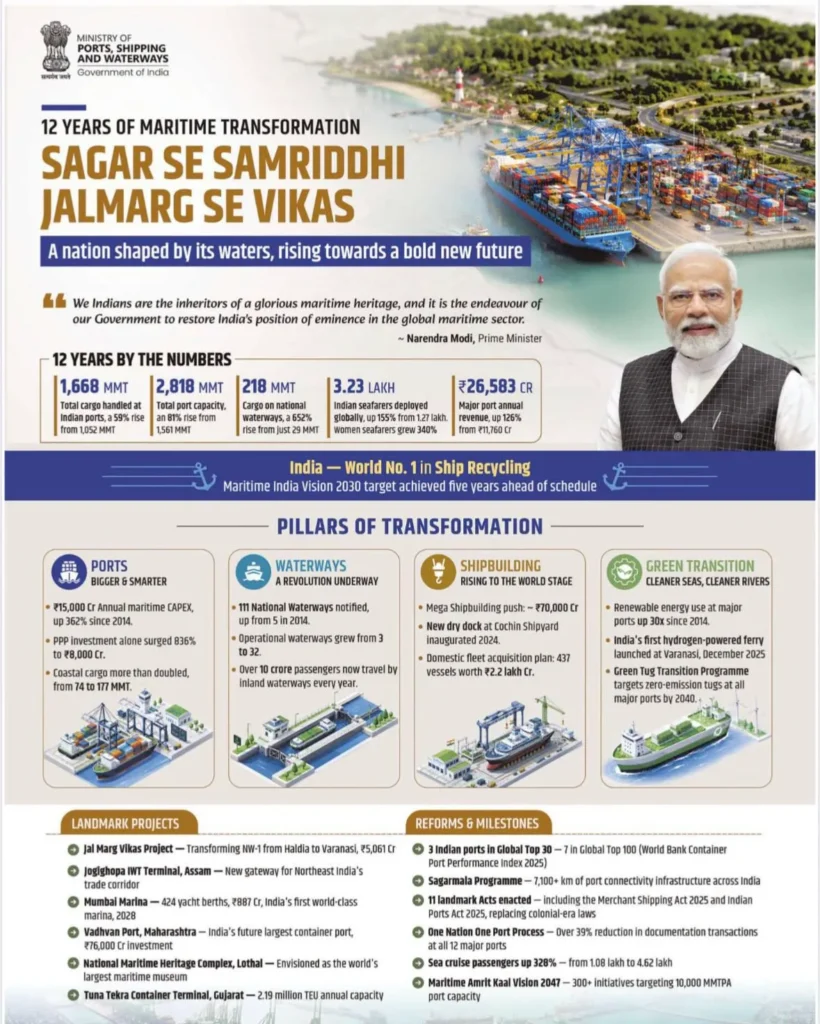
The Government highlighted a decade of maritime reforms and unveiled Sagarmala 2.0 to strengthen port-led growth, inland waterways, shipbuilding, logistics efficiency and green shipping under Viksit Bharat 2047.
Sagarmala Programme
Launch
- 2015
Ministry
- Ministry of Ports, Shipping and Waterways
Objective
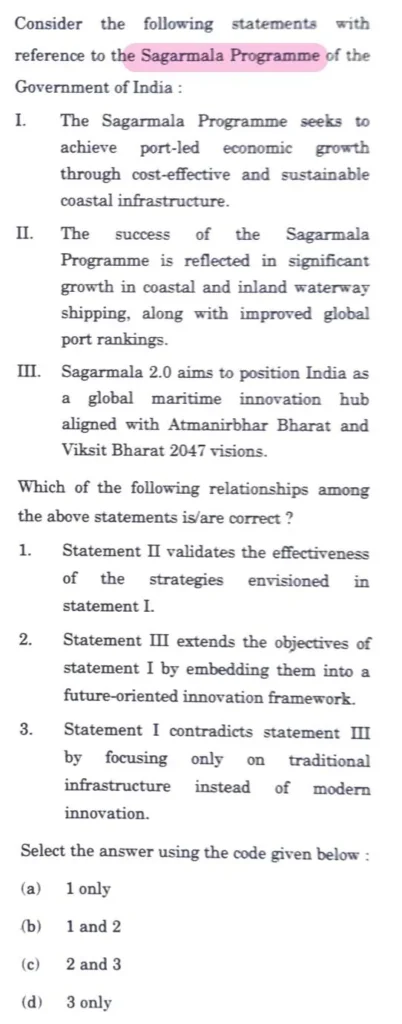
Port-led economic development through:
- Lower logistics costs
- Better port connectivity
- Improved trade competitiveness
- Coastal economic growth
Pillars of Sagarmala
- Port Modernisation
- Port Connectivity
- Port-led Industrialisation
- Coastal Community Development
Achievements
- Port capacity and cargo handling increased.
- National Waterways expanded from 5 to 111 under the National Waterways Act, 2016.
- Coastal and inland cargo movement surged.
- India became World No. 1 in ship recycling.
- Port efficiency and global competitiveness improved.
Sagarmala 2.0 Focus Areas
- Maritime Industrial Clusters
- Coastal Economic Zones
- Shipbuilding and Ship Repair Ecosystem
- Multimodal Logistics Hubs
- Green Shipping and Decarbonisation
- Maritime Innovation and Digital Ports
Important Projects
1. Jal Marg Vikas Project
- National Waterway-1 cargo corridor.
- Route: Haldia–Varanasi.
2. Jogighopa Inland Water Terminal
- Multimodal logistics hub on Brahmaputra.
3. Vadhavan Port
- Mega deep-sea container port in Maharashtra.
4. National Maritime Heritage Complex
- Located at Lothal.
- Maritime heritage and tourism hub.
5. Tuna-Tekra International Container Terminal
- Modern container transshipment facility.
Significance
- Reduces logistics cost.
- Strengthens inland waterways.
- Boosts port-led industrialisation.
- Supports shipbuilding and ship repair.
- Improves export competitiveness.
- Supports green transition in maritime sector.
- Builds India’s maritime capacity for Viksit Bharat 2047.