28 April 2026 | Daily Current Affairs

UAE Exit from OPEC: Causes, OPEC vs OPEC+ and Strait of Hormuz Crisis for UPSC

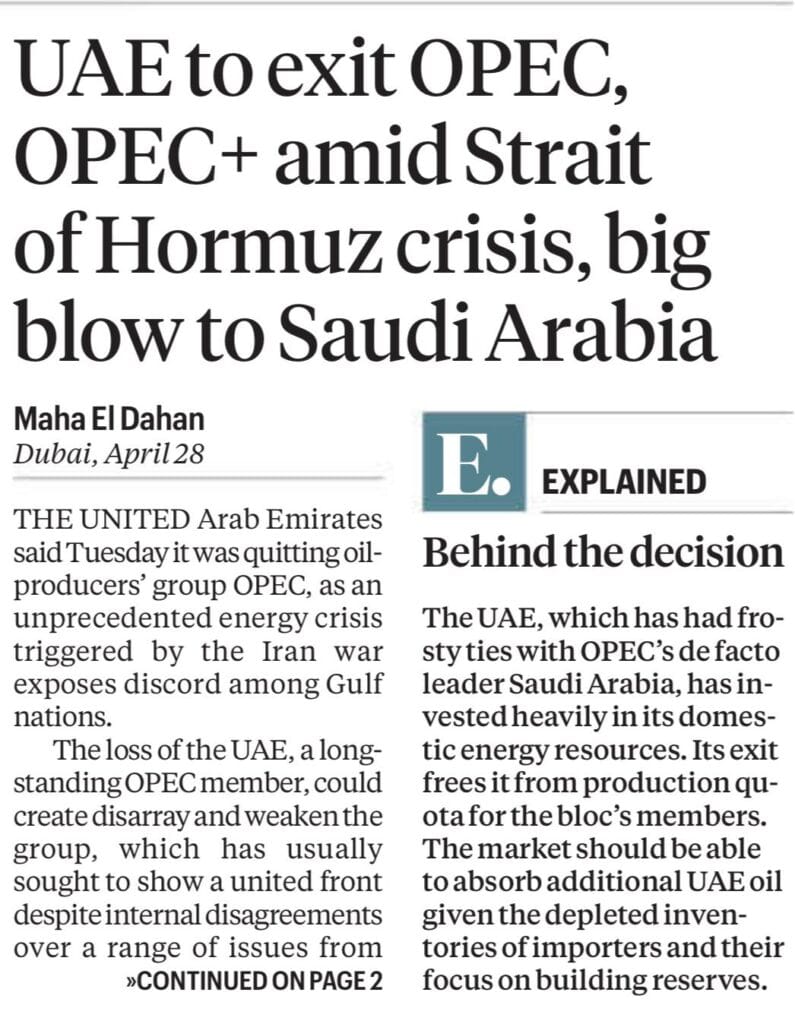
Context: UAE exit from OPEC

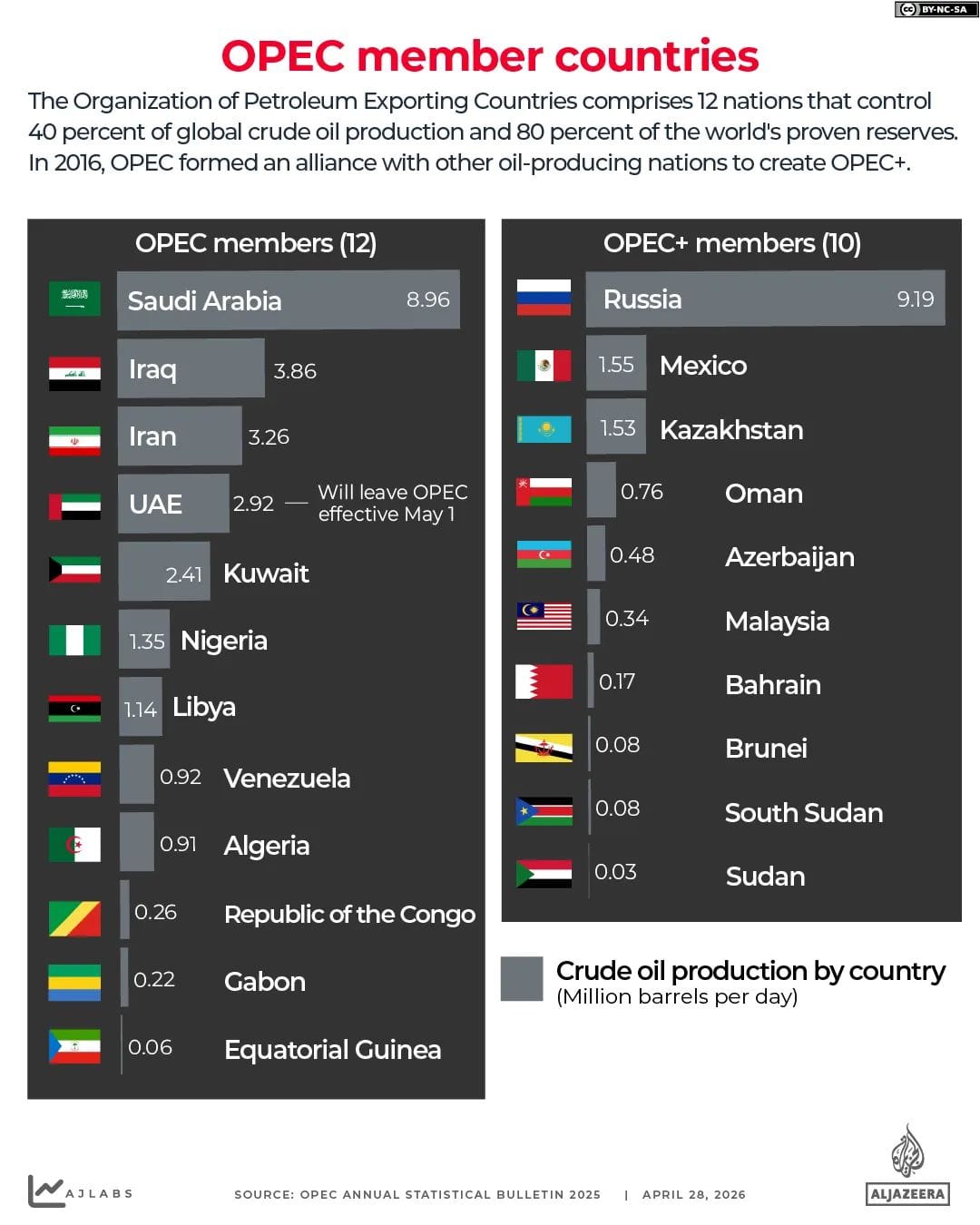
United Arab Emirates plans to exit OPEC / OPEC+ amid tensions around the Strait of Hormuz, indicating internal rifts and a shift toward independent oil policy.
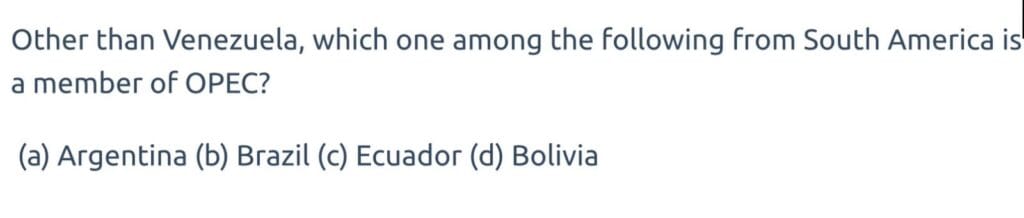
PYQ CSE – 2009, Ans – C

What is OPEC?

  • Founded: 1960
  • Headquarters: Vienna
  • Nature: Formal cartel controlling oil supply via quotas

Members (12)

Saudi Arabia, Iran, Iraq, Kuwait, UAE, Algeria, Libya, Nigeria, Gabon, Equatorial Guinea, Republic of the Congo, Venezuela

Countries that left

Qatar (2019), Ecuador (2020), Angola (2023), Indonesia (suspended)

What is OPEC+?

  • Formed: 2016
  • Nature: OPEC + non-OPEC producers (informal alliance)
  • Key member: Russia

Major members

Russia, Kazakhstan, Azerbaijan, Mexico, Oman, Bahrain, Brunei, Malaysia, South Sudan, Sudan

Why UAE is Exiting

  1. Production quotas restrict higher output
  2. Desire to maximise revenue in tight market
  3. Strategic autonomy from Saudi-led decisions
  4. Need for flexibility amid Iran–Hormuz tensions
  5. Dissatisfaction with internal coordination in OPEC
Industrial Output Growth Falls to 4.1%: IIP Data and Economic Implications for UPSC

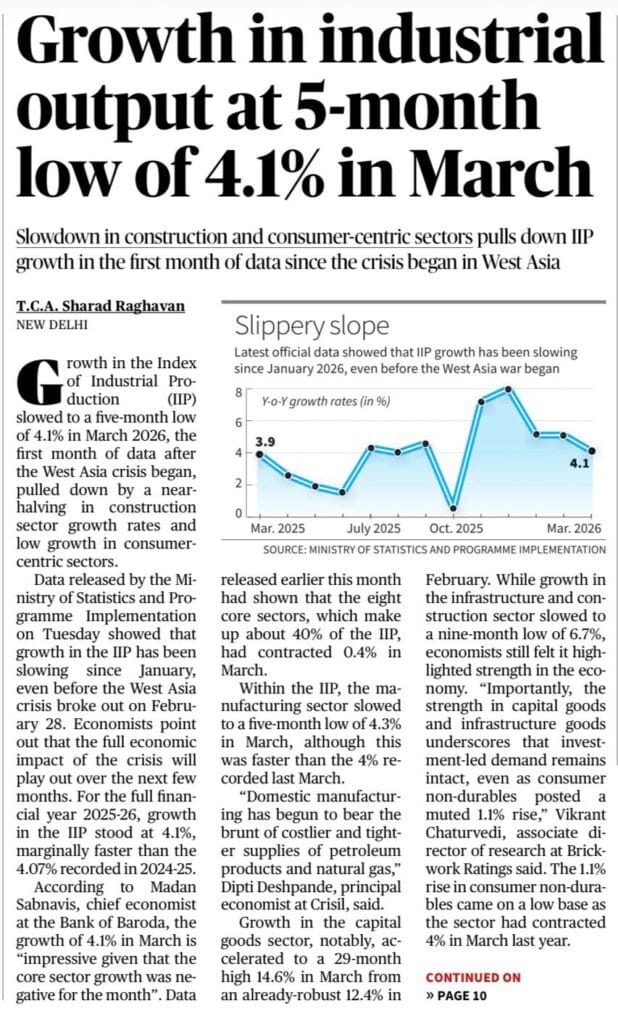
Context: Industrial Output Growth

India’s industrial output growth, measured by the Index of Industrial Production (IIP), slowed to 4.1% in March (5-month low), dragged by construction and consumer sectors, with the slowdown trend visible even before the West Asia crisis.

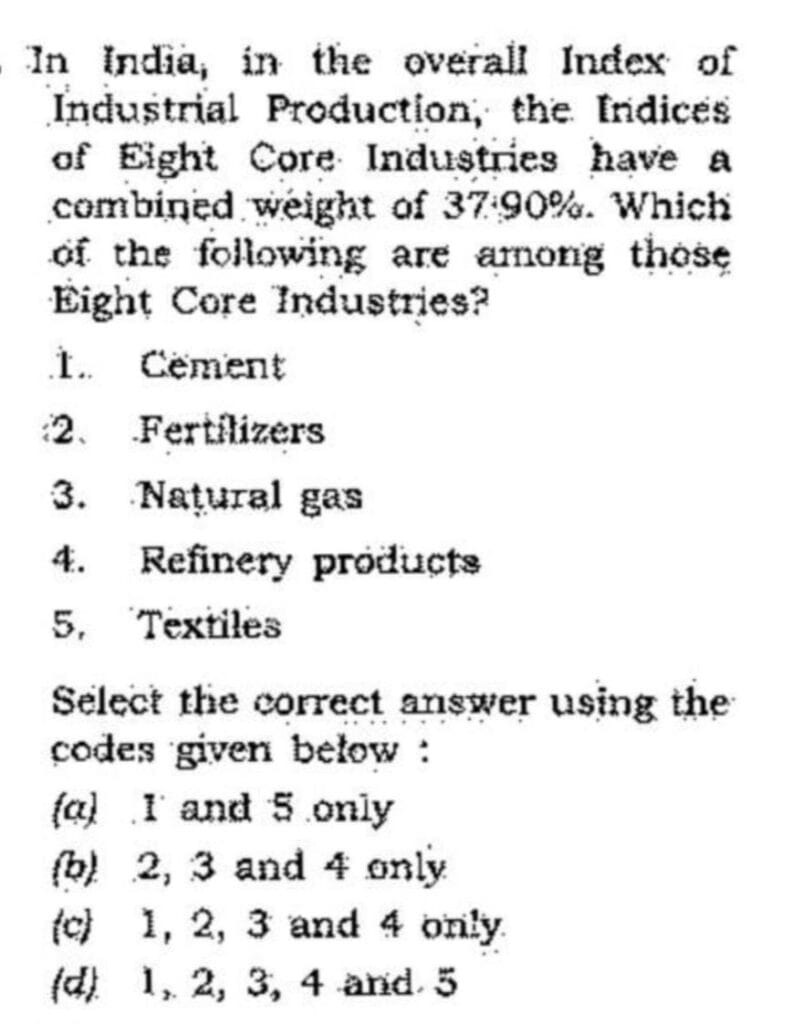
PYQ – 2016, Ans – C

IIP – Basics

Sectoral Weights

  • Manufacturing ~77.6%
  • Mining ~14.4%
  • Electricity ~7.9%

8 Core Industries (≈40.27% of IIP)

  • Compiled by: Office of the Economic Adviser, Ministry of Commerce & Industry

Weights

  • Refinery products – 28.04%
  • Electricity – 19.85%
  • Steel – 17.92%
  • Coal – 10.33%
  • Crude oil – 8.98%
  • Natural gas – 6.88%
  • Cement – 5.37%
  • Fertilisers – 2.63%

Indonesia B50 Biodiesel Impact on India: Palm Oil Prices and Food Inflation for UPSC

Context: Indonesia B50 Biodiesel

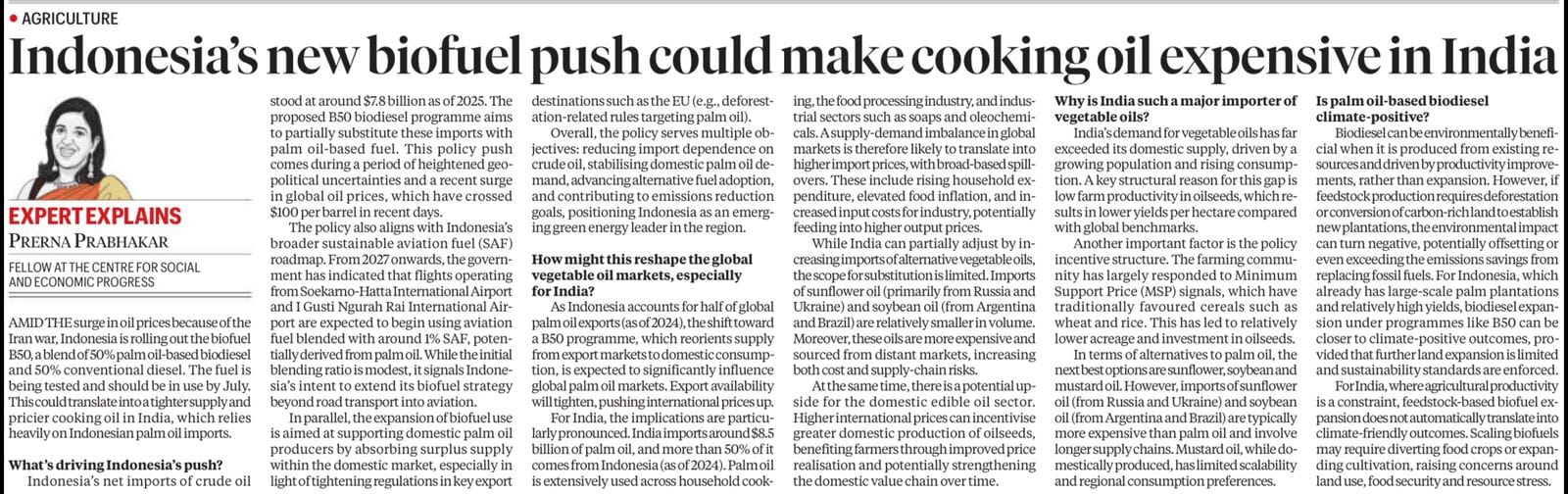
Indonesia is expanding its biofuel push by rolling out B50 biodiesel, which diverts palm oil toward fuel use. Since India depends heavily on imported palm oil, this move could raise cooking oil prices and fuel food inflation.

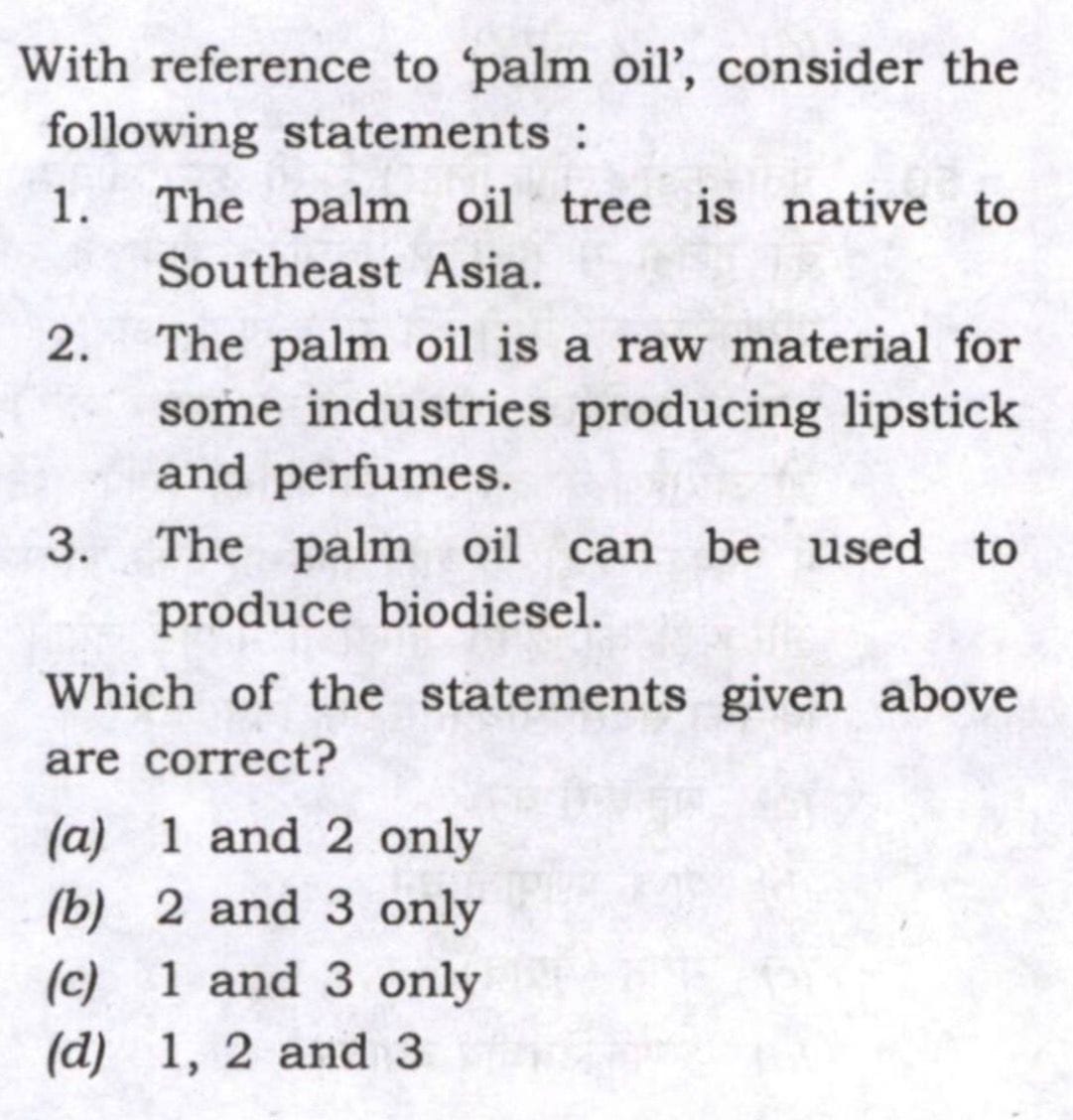
PYQ – 2021, Ans – B

Palm Oil: Key Data

Top Producers (Global): Indonesia – Malaysia – Thailand

India’s Top Import Sources: Indonesia – Malaysia – Thailand

Top Importers (Global): India – China – EU

Top Consumers (Global): Indonesia – India – China

What is Indonesia doing? (B50)

  • Indonesia is implementing B50 biodiesel
  • B50 = 50% biodiesel (from palm oil) + 50% diesel

Aim

→ Reduce crude oil imports
→ Boost domestic palm oil demand
→ Support energy security

How it impacts India

  • Less palm oil available for export → global supply tightens
  • Prices rise → costlier cooking oil in India
  • Leads to higher food inflation
  • Limited alternatives (soybean, sunflower) → higher import cost & risks
  • Long-term: may push India to increase domestic oilseed production

UNGA and Multilateralism Under Pressure: Board of Peace Debate Explained for UPSC

Context: UNGA and Multilateralism

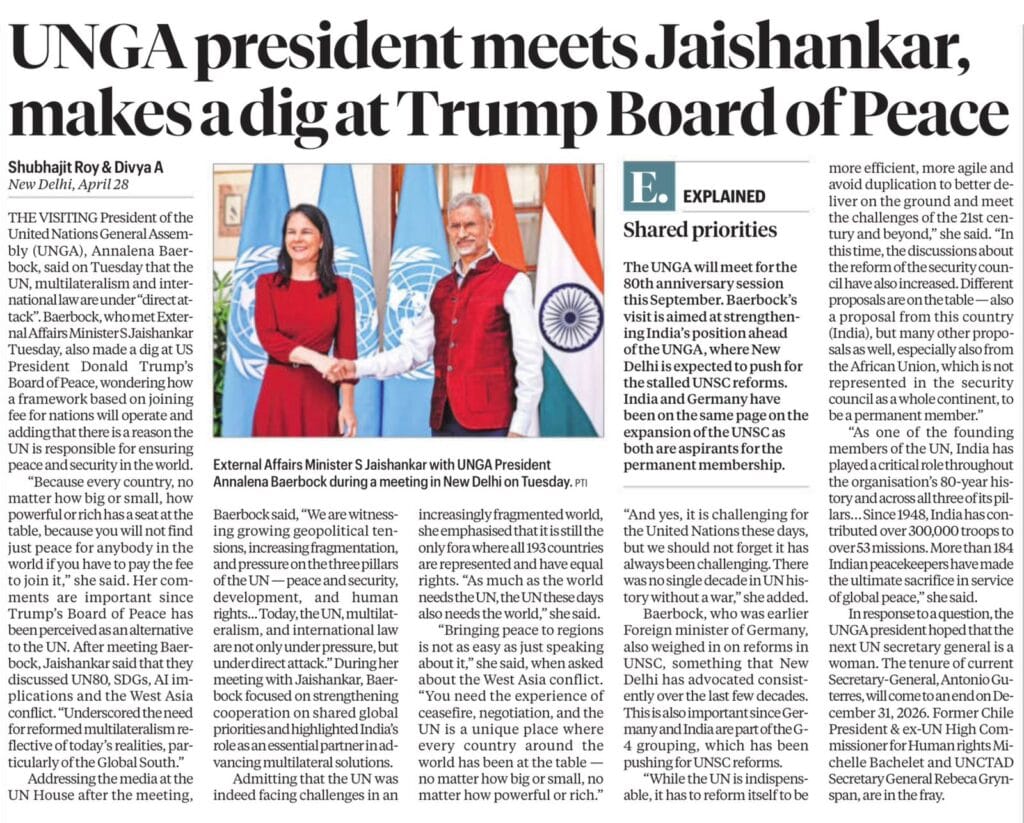
The President of the United Nations General Assembly, Annalena Baerbock, met India’s External Affairs Minister S. Jaishankar and highlighted that the UN and multilateralism are under pressure. She also criticised the idea of a “Board of Peace” proposed by Donald Trump, questioning its effectiveness compared to the UN framework.

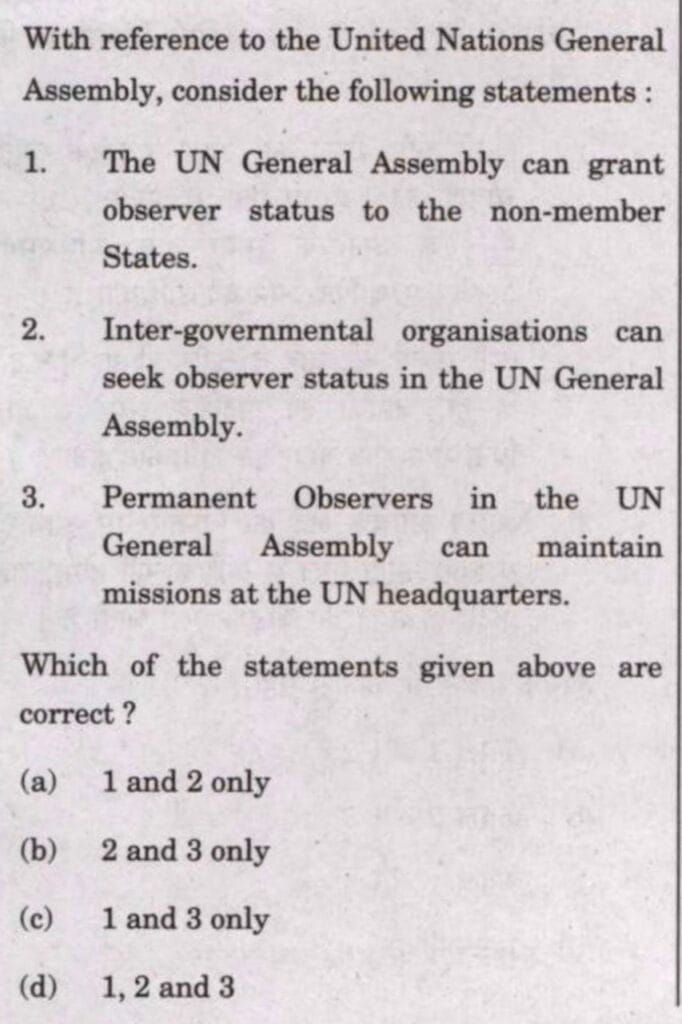
PYQ – 2022, Ans – D

What is “Board of Peace”?

  • A proposed alternative global peace mechanism associated with Donald Trump
  • Idea reportedly involves membership/participation based on contributions or fees
  • Envisioned as a body to handle global peace and conflict resolution outside the UN system

Key Concerns

  • Could exclude poorer nations (if fee-based)
  • Undermines inclusive multilateralism
  • Lacks legitimacy compared to established global institutions like the UN

United Nations General Assembly (UNGA)

  • One of the six principal organs of the United Nations
  • Universal membership: All 193 UN member states
  • Each country has one vote (equal representation)

Functions

  • Discuss global issues: peace, security, development, human rights
  • Approve UN budget
  • Elect members to other UN bodies (like UNSC non-permanent members)

Nature

  • Deliberative body (resolutions are generally non-binding)
  • Platform for multilateral dialogue and consensus-building

Ethical Issues in Governance: Odisha Case of Banking Access and Administrative Failure for UPSC

Context: Ethical Issues in Governance

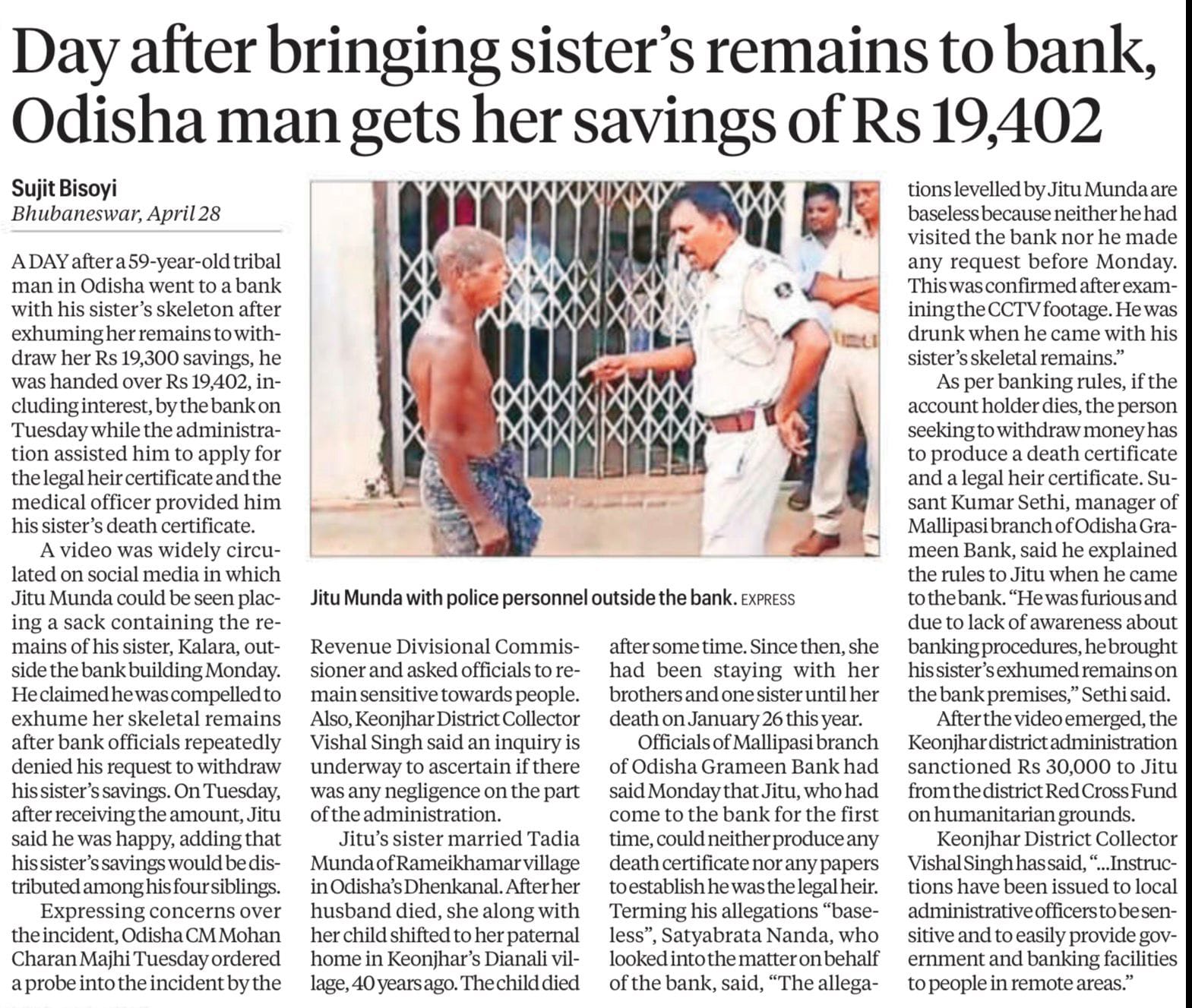
In Odisha, a tribal man (Jitu Munda) was denied access to his deceased sister’s bank savings due to absence of a death certificate and legal heir certificate. In desperation, he brought her skeletal remains to the bank. Only after public attention did authorities intervene, enabling release of ₹19,402 and providing additional relief.

Ethical Analysis

1. Failure of Empathy & Compassion

  • Public officials followed rules mechanically, ignoring human suffering
  • Violates principle of compassionate governance and human dignity

2. Lack of Equity & Social Justice

  • A vulnerable tribal citizen could not access basic services
  • Reflects exclusion of marginalised groups
  • Violates equity in public service delivery

3. Procedural Justice vs Substantive Justice

  • Focus remained on procedural compliance (documents)
  • Ignored substantive justice (rightful claim to savings)
  • Ethical governance demands balancing both

4. Failure of Accountability & Responsiveness

  • Action taken only after media/public pressure
  • Indicates weak responsiveness and delayed accountability

5. Information Asymmetry & Lack of Awareness

  • Citizen unaware of procedures
  • State failed in duty of care, awareness creation, and citizen facilitation

6. Last-mile Governance Failure

  • Breakdown in delivery at grassroots level
  • Shows gap between policy intent and implementation
About the UPSC Civil Services Examination (UPSC CSE)

The UPSC Civil Services Examination (CSE) is one of the most competitive and esteemed examinations in India, conducted by the Union Public Service Commission to recruit officers for services such as the Indian Administrative Service (IAS), Indian Police Service (IPS), Indian Foreign Service (IFS), and others. The exam comprises three stages — Prelims, Mains, and the Personality Test (Interview) — designed to test a candidate’s knowledge, aptitude, decision-making, and leadership skills.


How to Prepare Effectively for UPSC CSE

Cracking the UPSC CSE requires a deep understanding of the syllabus, consistent revision, structured answer writing, and smart test-taking strategies. The Prelims test analytical and conceptual clarity, the Mains focuses on critical thinking, articulation, and subject mastery, while the Interview assesses presence of mind, ethical judgment, and personality traits relevant to public service.

At UnderStand UPSC, we empower aspirants with a personalized and focused approach to each stage of the exam.


Why Choose UnderStand UPSC?

UnderStand UPSC is a mentorship-driven platform offering a clear, clutter-free strategy to tackle the Civil Services Examination. Our programs like Transform (for beginners and intermediate learners) and Conquer (for advanced mains preparation) provide structured study plans, syllabus-wise video content, interactive live sessions, and answer writing support.

We emphasize:

  • Concept clarity through topic-wise lectures

  • Test series designed around real UPSC standards

  • Personalized mentorship in small groups

  • Regular performance tracking and peer benchmarking

  • Doubt-clearing sessions, current affairs analysis, and monthly magazines


Join the UnderStand UPSC Learning Community

Our mission is to make UPSC preparation less overwhelming and more strategic. We combine mentorship, discipline, and academic rigor to help you clear CSE with confidence. Whether you’re preparing from Delhi, Mumbai, Bangalore, or a remote village — our online-first model ensures quality guidance reaches every corner of India.

Join the thousands of aspirants who trust UnderStand UPSC to guide their journey toward becoming civil servants.

Stay connected with us through our Telegram, YouTube, and Instagram channels for daily tips, strategies, and updates.

Copyright © 2026 USARAMBHA EDUCATION (UnderStand UPSC). All Rights Reserved.

Join the Success Journey!


Fill the form and our Team will reach out to you soon


Fill the form and our Team will reach out to you soon