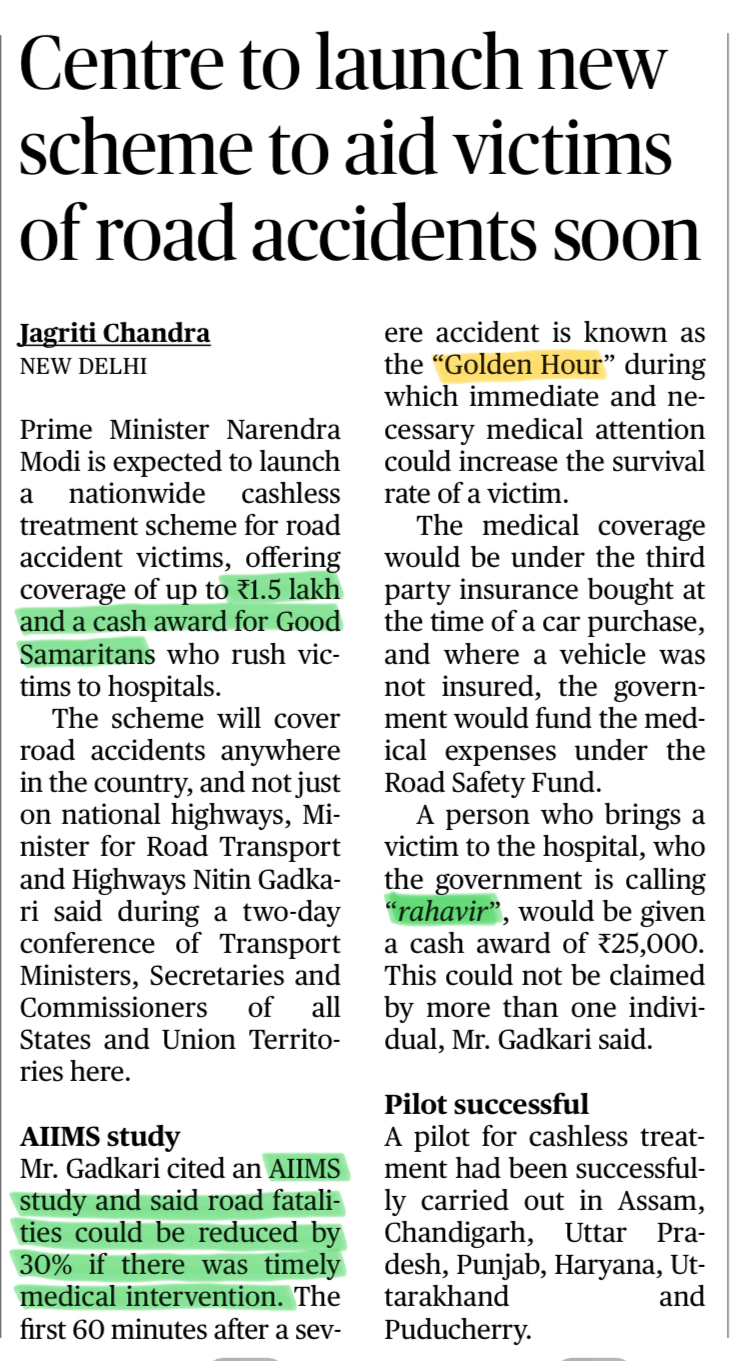
Context Nationwide cashless treatment scheme for road accident victims, providing up to ₹1.5 lakh for hospital care during the “golden hour” anywhere in India.
• Government will also give a cash reward of about ₹25,000 to Good Samaritans or Rahavirs who take victims to hospital • AIIMS study cited that timely medical intervention under such a scheme can cut road fatalities by around 30%
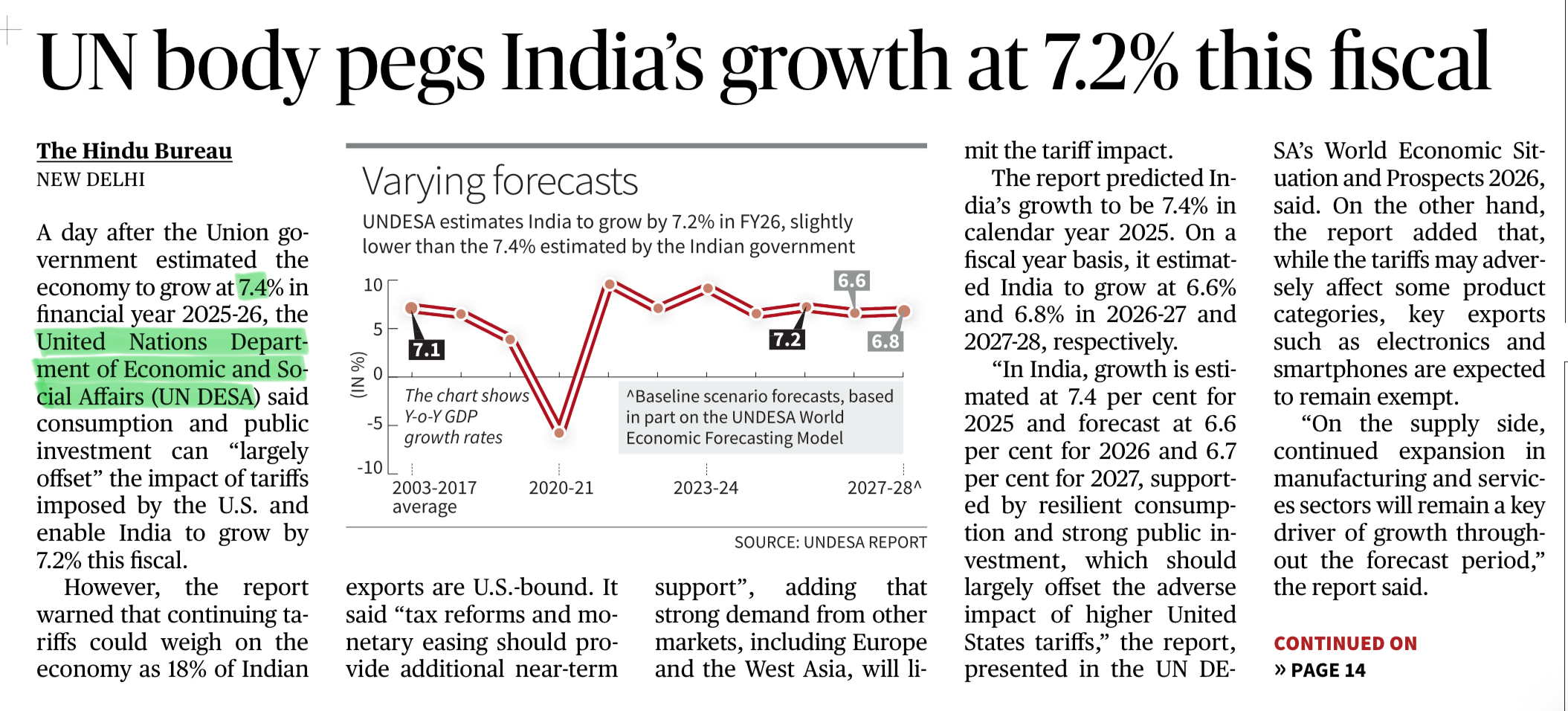
Context The United Nations’ Department of Economic and Social Affairs (UNDESA) projects India’s GDP growth at 7.2% in FY 2025–26, slightly below the Government of India’s estimate of 7.4%. Growth is supported by strong consumption and public investment, offsetting global tariff-related risks.
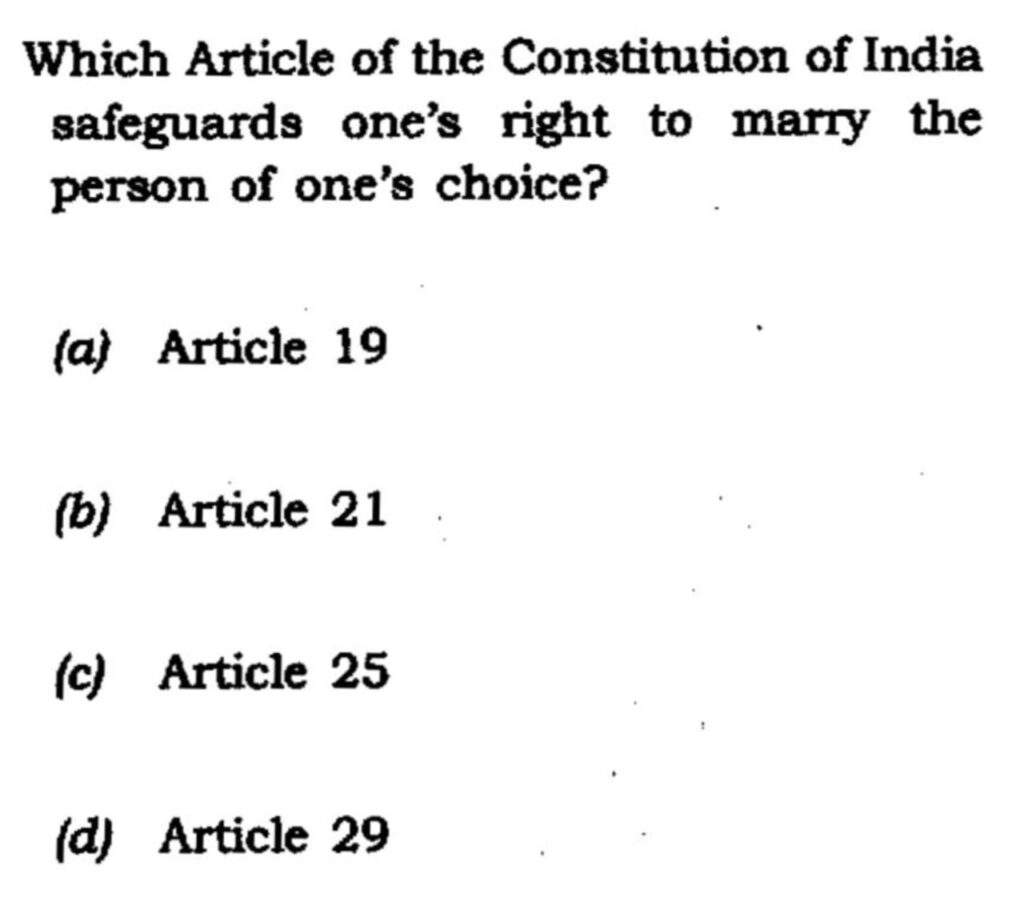
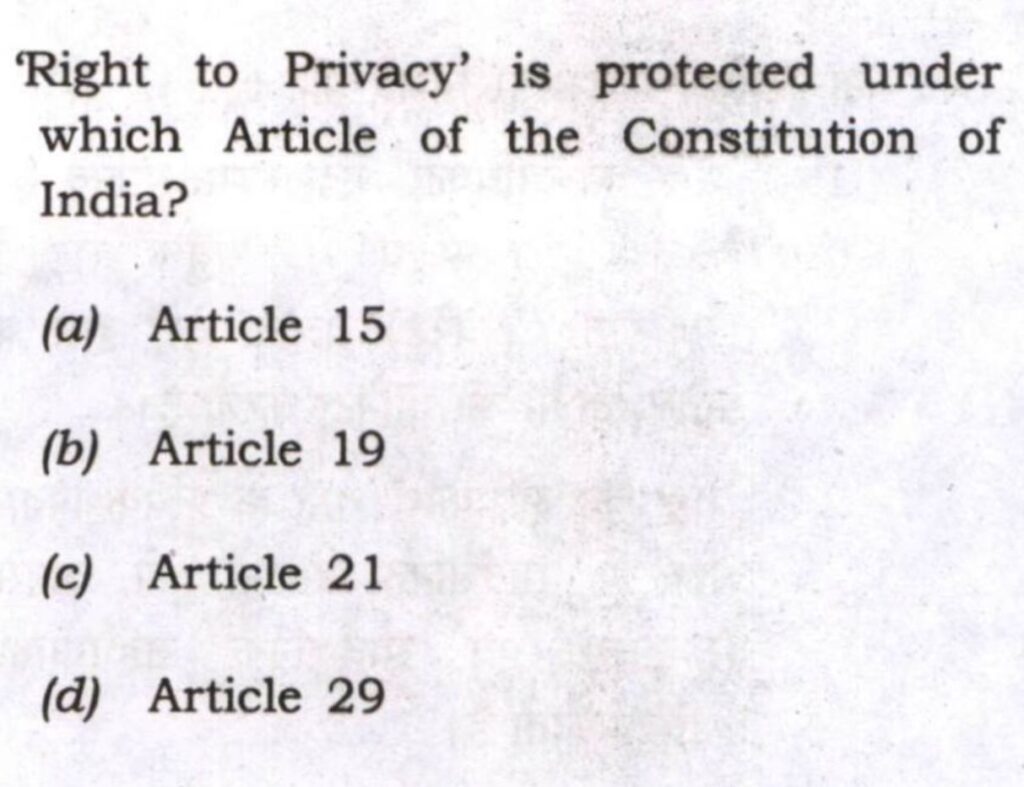
HC Observation Reproductive choice and bodily autonomy of a woman are integral to Article 21, and forcing continuation of pregnancy violates personal liberty.
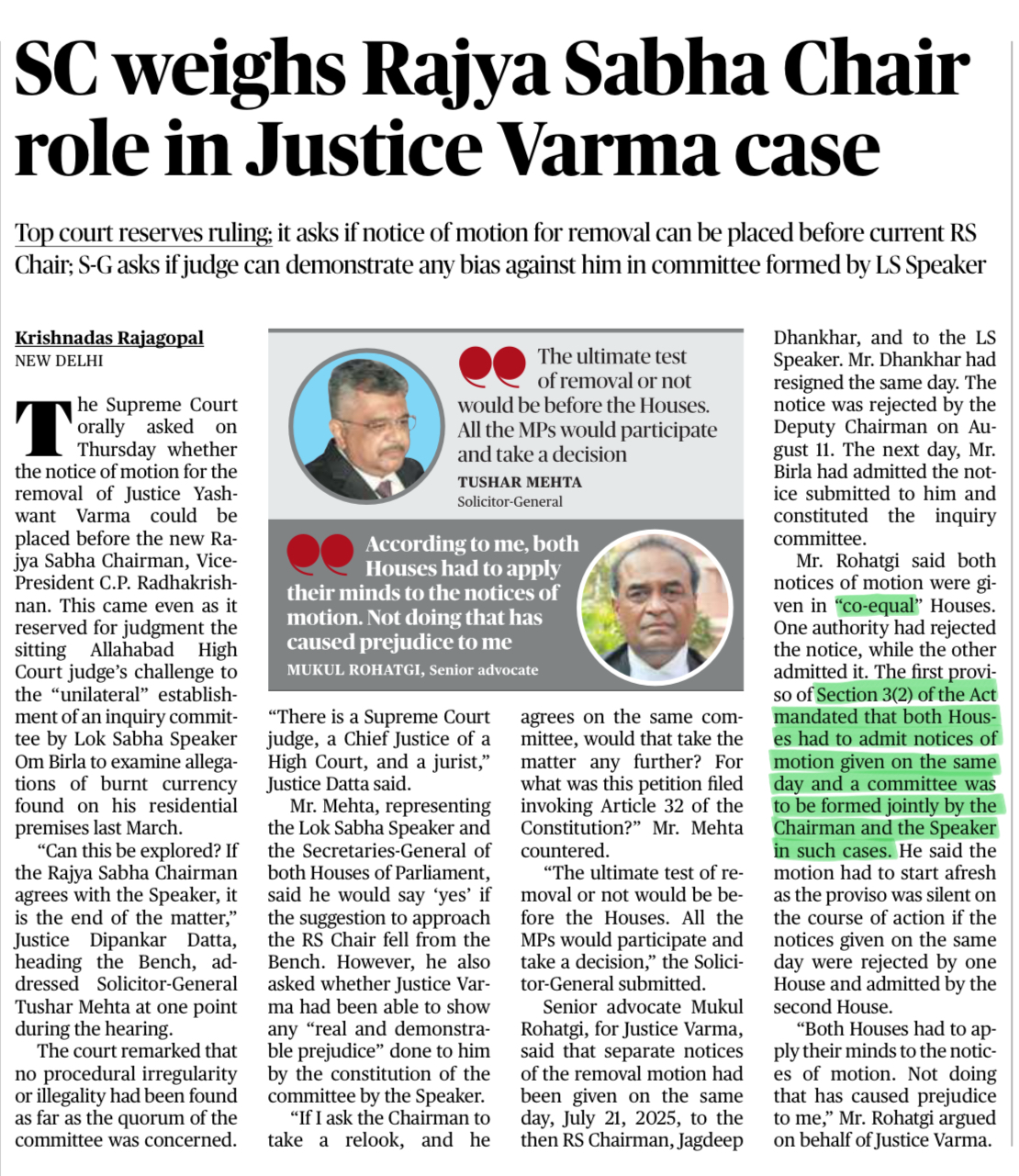
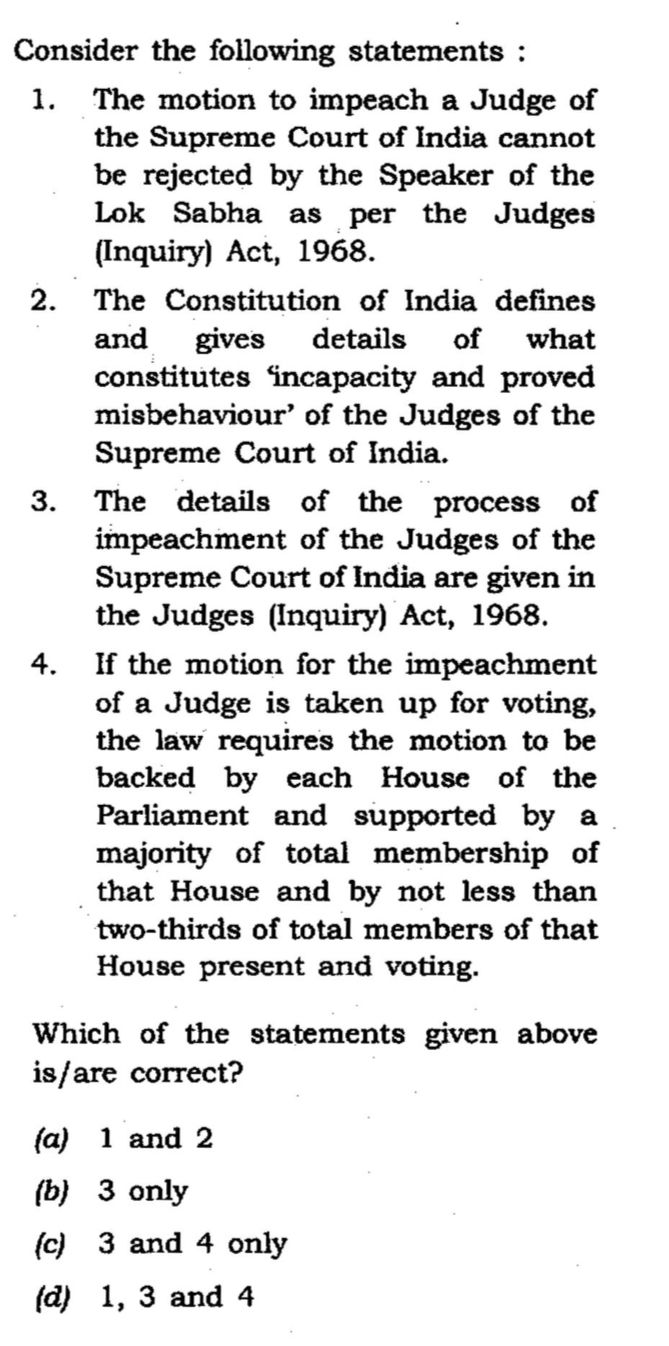
Context The Supreme Court is examining whether the new Rajya Sabha Chairman has a role in admitting a motion for removal of a High Court judge, in the case of Justice Yashwant Varma (Allahabad HC), and whether the procedure followed was constitutionally valid.
Core Issues Involved
Issue 1: Procedure for removal of a High Court judge • Whether notice of motion for removal can be placed before a newly appointed Rajya Sabha Chairman • Whether both Houses must act together when notices are given on the same day
Issue 2: Role of Presiding Officers • Whether Lok SabhaSpeaker alone can constitute an inquiry committee • Or whether RS Chairman and LS Speaker must act jointly
This case is NOT about a new Chairman only It is about constitutional procedure and institutional balance
Constitutional and Legal Provisions (Prelims-critical)
Article 124(4) – Removal of Judges • Applies to Supreme Court judges • Removal by special majority of Parliament • Proven misbehaviour or incapacity
Article 217(1)(b) – Removal of High Court Judges • Removal in the same manner as Supreme Court judges • Hence, Article 124(4) procedure applies to High Court judges also
Judges (Inquiry) Act, 1968 – Section 3 • When a motion for removal is admitted, an Inquiry Committee must be formed • If notices are given in both Houses on the same day, the committee must be formed jointly by the Lok Sabha Speaker and the Rajya Sabha ChairmanKey phrase used by the Supreme Court Both Houses are “co-equal”
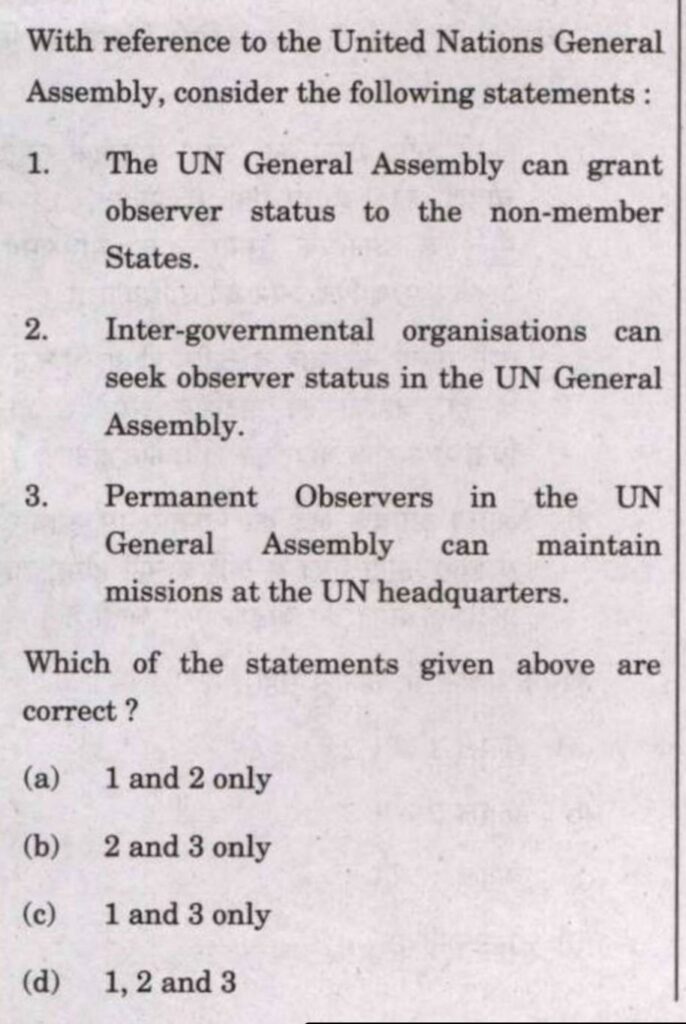
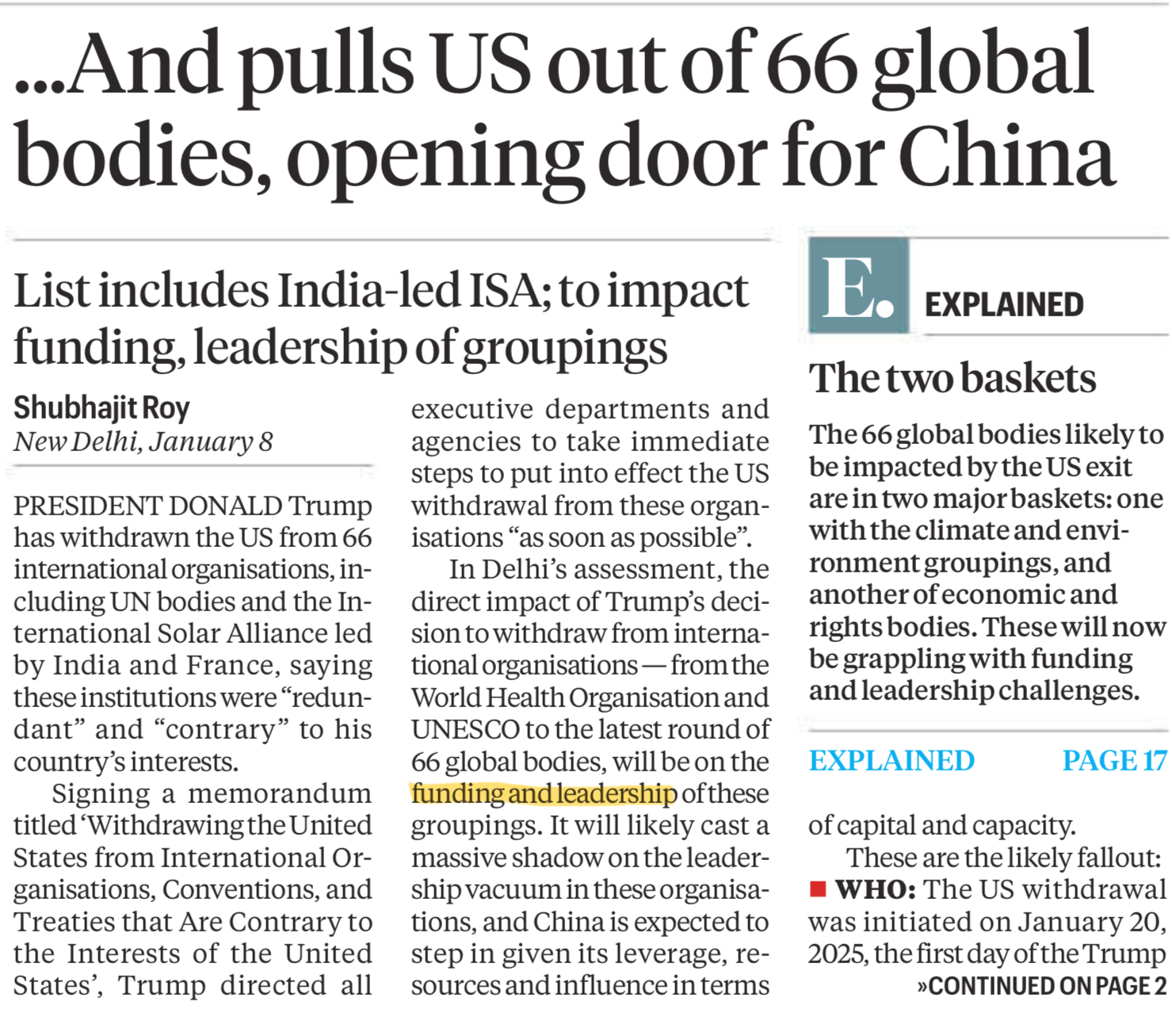
Context • President Trump signed a memorandum on January 7, 2026, to withdraw from 66 organisations, including 31 UN and 35 non-UN bodies
Core Reason • Administration views them as redundant • Contrary to U.S. sovereignty • Promoters of globalist or woke agendas
Key Timeline for Prelims • January 20, 2025: Initial withdrawal from WHO and Paris Agreement • Early 2025: Exit from UNESCO, UNHRC, and defunding of UNRWA • January 7, 2026: Final memo to exit 66 bodies including ISA and UNFCCC • January 22, 2026: WHO withdrawal becomes fully legal
Important Climate and Environment Bodies • UNFCCC • IPCC • International Solar Alliance (ISA) • IRENA • IUCN • IPBES
Important Economic and Trade Bodies • UNCTAD • OECD Global Tax Deal • International Trade Centre
Human Rights and Social Bodies • UN Women • UNFPA • UN-Habitat • UN Democracy FundSecurity and Law Bodies • International Law Commission • Global Counterterrorism Forum • ReCAAP
US withdrawal from global bodies
A Platform OF The Students For The Students By The Students
About the UPSC Civil Services Examination (UPSC CSE)
The UPSC Civil Services Examination (CSE) is one of the most competitive and esteemed examinations in India, conducted by the Union Public Service Commission to recruit officers for services such as the Indian Administrative Service (IAS), Indian Police Service (IPS), Indian Foreign Service (IFS), and others. The exam comprises three stages — Prelims, Mains, and the Personality Test (Interview) — designed to test a candidate’s knowledge, aptitude, decision-making, and leadership skills.
How to Prepare Effectively for UPSC CSE
Cracking the UPSC CSE requires a deep understanding of the syllabus, consistent revision, structured answer writing, and smart test-taking strategies. The Prelims test analytical and conceptual clarity, the Mains focuses on critical thinking, articulation, and subject mastery, while the Interview assesses presence of mind, ethical judgment, and personality traits relevant to public service.
At UnderStand UPSC, we empower aspirants with a personalized and focused approach to each stage of the exam.
Why Choose UnderStand UPSC?
UnderStand UPSC is a mentorship-driven platform offering a clear, clutter-free strategy to tackle the Civil Services Examination. Our programs like Transform (for beginners and intermediate learners) and Conquer (for advanced mains preparation) provide structured study plans, syllabus-wise video content, interactive live sessions, and answer writing support.
We emphasize:
Concept clarity through topic-wise lectures
Test series designed around real UPSC standards
Personalized mentorship in small groups
Regular performance tracking and peer benchmarking
Doubt-clearing sessions, current affairs analysis, and monthly magazines
Join the UnderStand UPSC Learning Community
Our mission is to make UPSC preparation less overwhelming and more strategic. We combine mentorship, discipline, and academic rigor to help you clear CSE with confidence. Whether you’re preparing from Delhi, Mumbai, Bangalore, or a remote village — our online-first model ensures quality guidance reaches every corner of India.
Join the thousands of aspirants who trust UnderStand UPSC to guide their journey toward becoming civil servants.
Stay connected with us through our Telegram, YouTube, and Instagram channels for daily tips, strategies, and updates.