7 March 2026 | Daily Current Affairs

Social Media Regulation for Minors: Karnataka and Andhra Pradesh Plan Restrictions

Context:
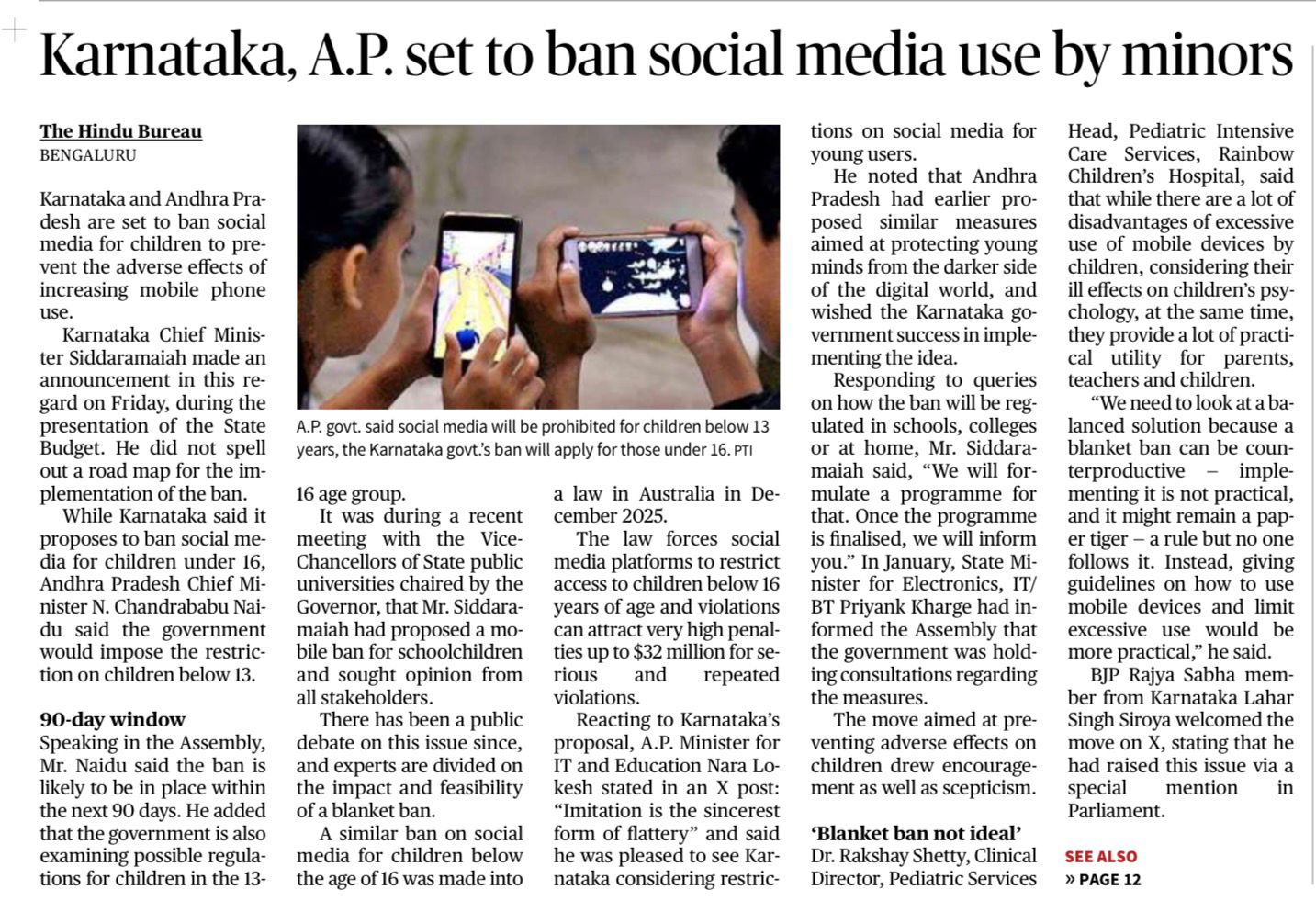
Karnataka (under-16) and Andhra Pradesh (under-13) are considering restrictions on minors’ social media use to address harms from excessive online exposure.

Summary

• Aim is to protect children from addiction, cyberbullying, harmful content and mental-health impacts.
• Karnataka proposes restrictions for under-16 users.
• Andhra Pradesh proposes restrictions for under-13 users.
• Modalities are still evolving.

Debate

• Experts argue blanket bans may be impractical.
• Many recommend balanced regulation, parental controls and digital literacy instead.

Legal Issue

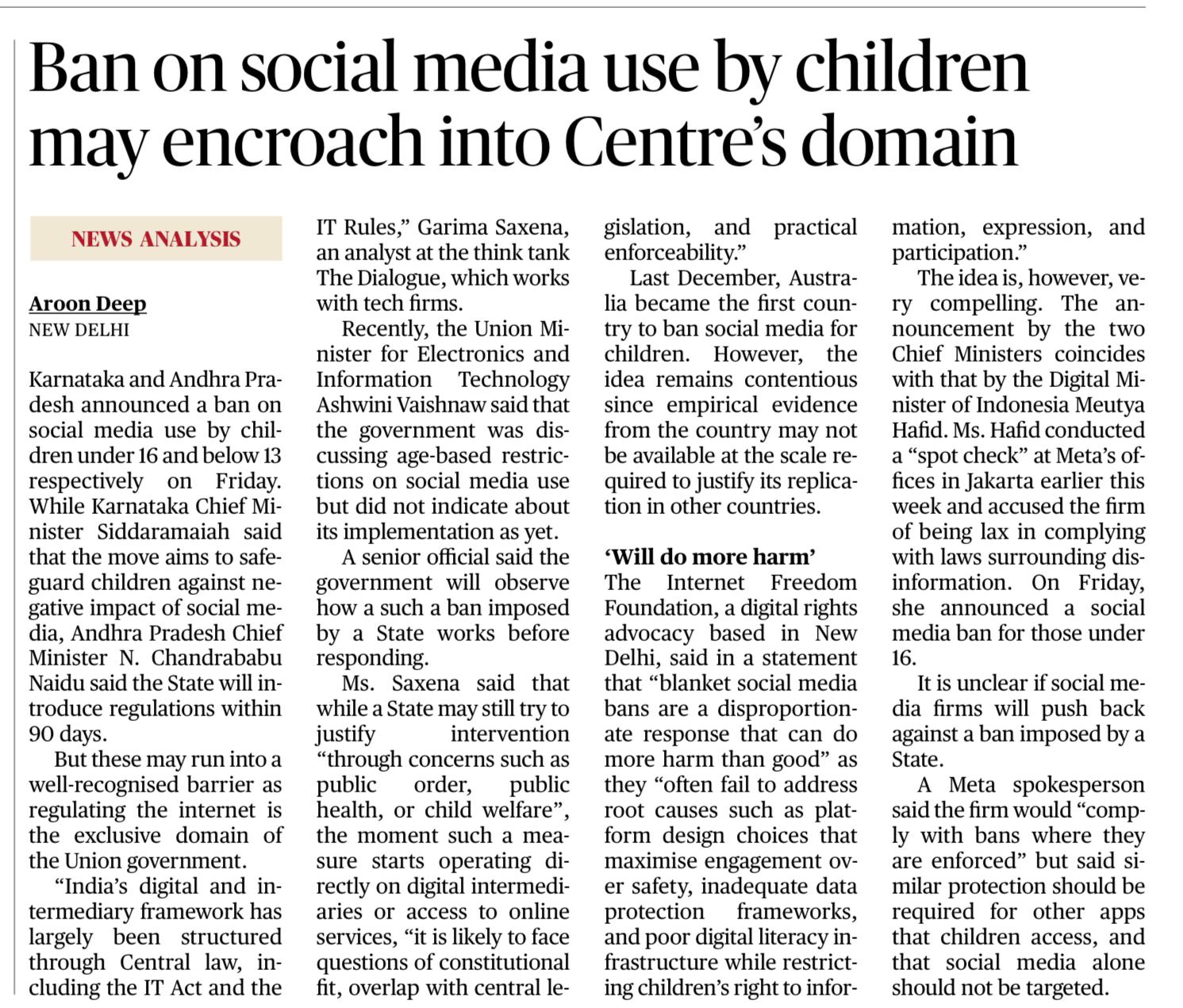
• Regulation of online intermediaries largely falls under Union jurisdiction, which means state-level bans may face constitutional and operational challenges.

IT Act & Union Role

Information Technology Act, 2000 provides the core legal framework for digital platforms.
• The Centre frames rules such as IT Rules, 2021 covering due diligence, safety and grievance redressal.
• Under Section 69A, the Centre can block online content for reasons related to sovereignty, security or public order.
• Therefore, internet regulation remains primarily a Union subject, limiting states’ regulatory scope.
LPG Production in India: Centre Orders Refiners to Maximise Output

Context:
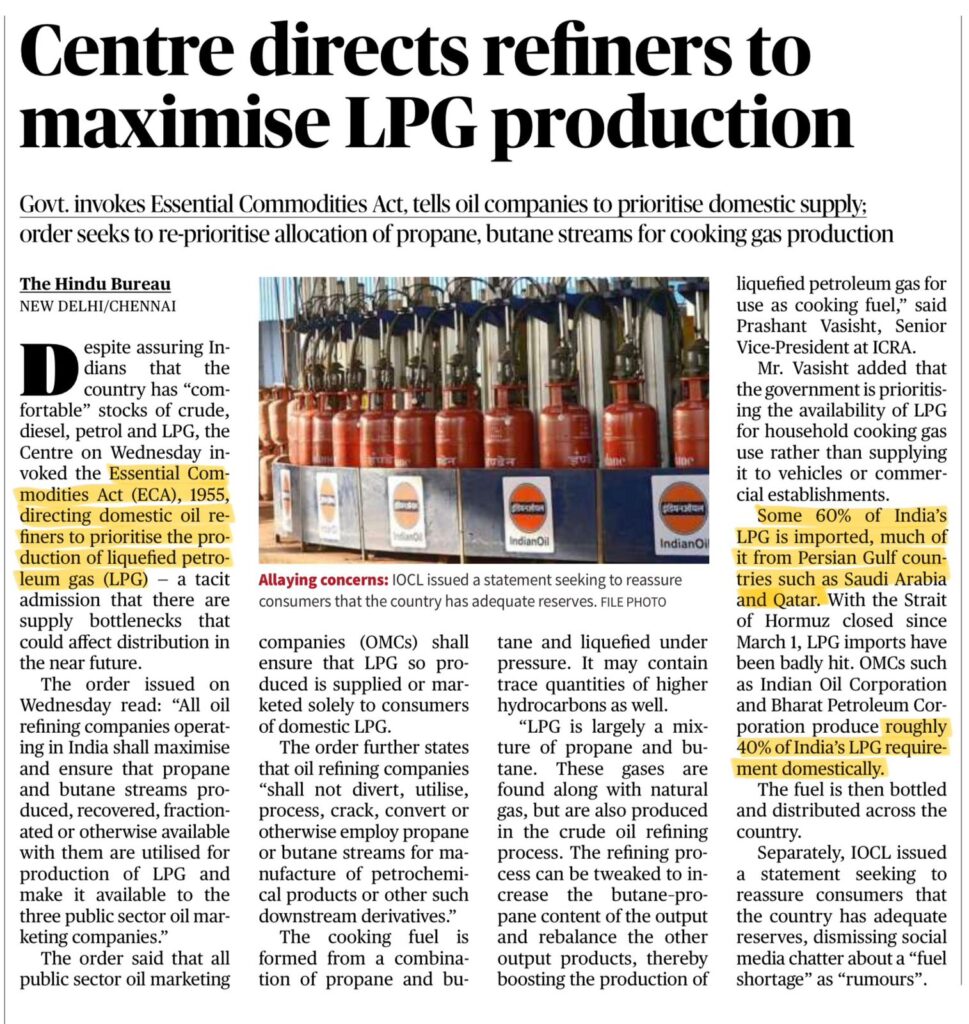
The Centre invoked the Essential Commodities Act, 1955 to direct refiners to prioritise LPG production for domestic cooking needs amid supply concerns linked to West Asia disruptions.

Key Data

• Government ordered refiners to maximise LPG production and prioritise domestic supply.
• Refiners instructed not to divert propane–butane streams for petrochemicals or other derivatives.
• LPG is mainly a mixture of propane and butane.
• Production can be increased by rebalancing refining streams.

• Around 60% of India’s LPG is imported, mainly from Persian Gulf countries such as Saudi Arabia and Qatar.
• Domestic refineries produce roughly 40% of India’s LPG requirement.
• Disruption in the Strait of Hormuz may affect LPG imports and logistics.

Essential Commodities Act — Provision Used

• Action taken under Section 3 of the Essential Commodities Act, 1955.
• Section 3 empowers the Centre to regulate production, supply, distribution and pricing of essential commodities to ensure availability and prevent hoarding.

India GCC Trade: West Asia Tensions Threaten Gem and Jewellery Sector

Context:
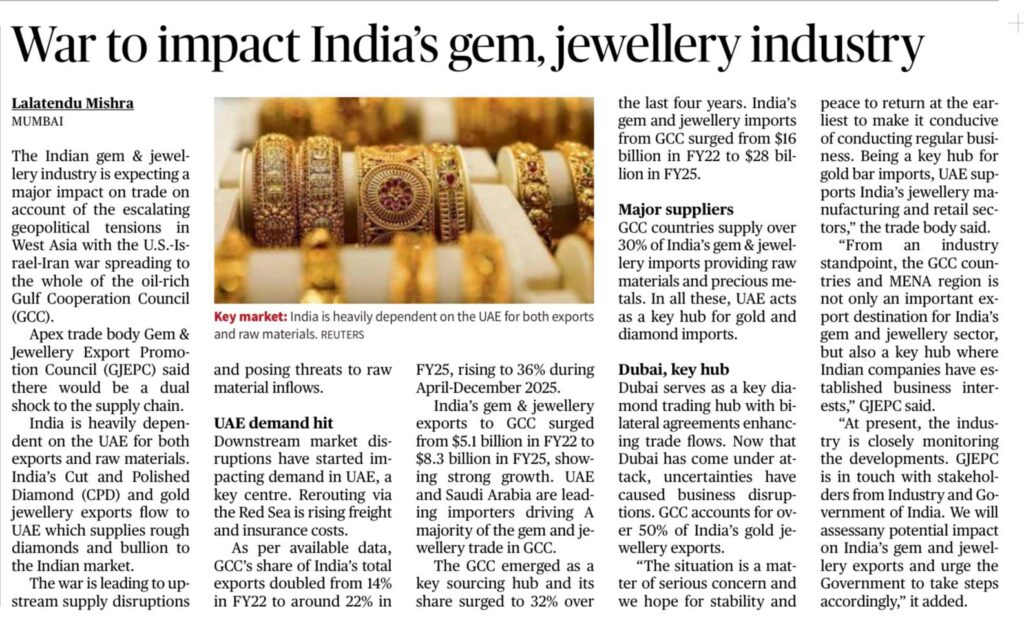
Escalating West Asia tensions threaten India’s gem and jewellery trade through supply disruptions, demand shocks and rising logistics costs linked to GCC markets.

1. India–GCC Trade (Gem & Jewellery — Key Data)

• GCC supplies 30%+ of India’s gem and jewellery imports (raw materials and precious metals).
• Imports from GCC increased from $16 billion (FY22) to $28 billion (FY25).
• India’s exports to GCC rose from $5.1 billion (FY22) to $8.3 billion (FY25).
• GCC accounts for over 50% of India’s gold jewellery exports.
• UAE serves as a major hub for gold bars, bullion and rough diamonds, with Dubai acting as a global diamond trading centre.

2. India–GCC Overall Trade

• FY 2024–25 bilateral trade ≈ $178.56 billion

  • Exports: $56.87 billion
  • Imports: $121.68 billion

• GCC accounts for about 15.4% of India’s global trade.
• GCC is one of India’s largest regional trade partners, led by UAE and Saudi Arabia.

3. Gulf Cooperation Council (GCC)

• Established in 1981.
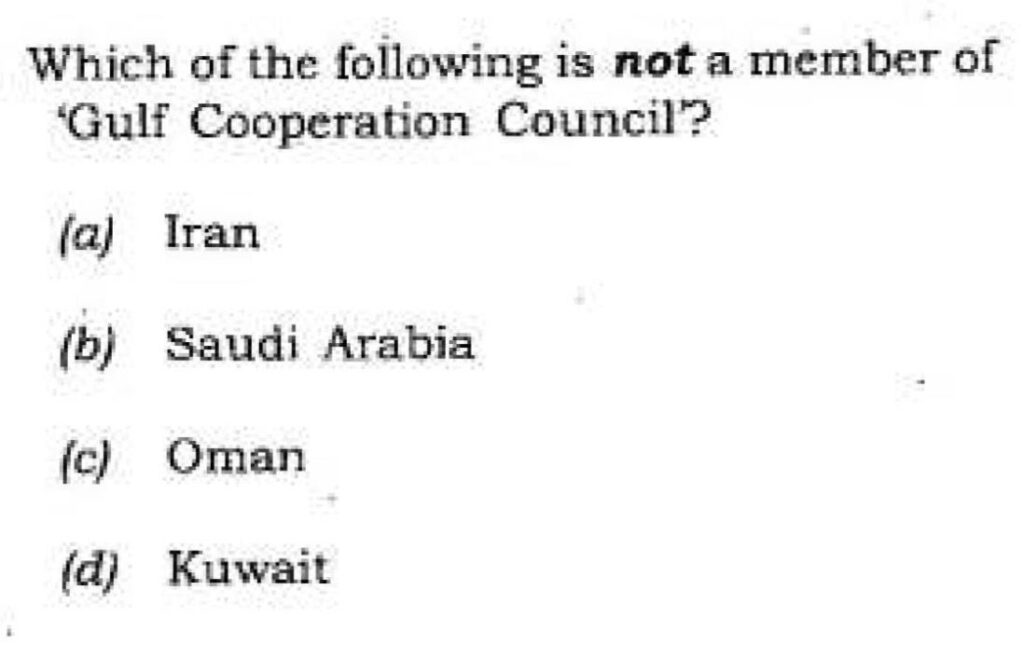
• Members: Saudi Arabia, UAE, Qatar, Kuwait, Oman, Bahrain.
• Focus areas include economic integration, energy cooperation, trade and security coordination.

PYQ – 2016, Ans – A

West Asia Conflict: Risks to India’s Core Industries and Raw Material Supply

Context:
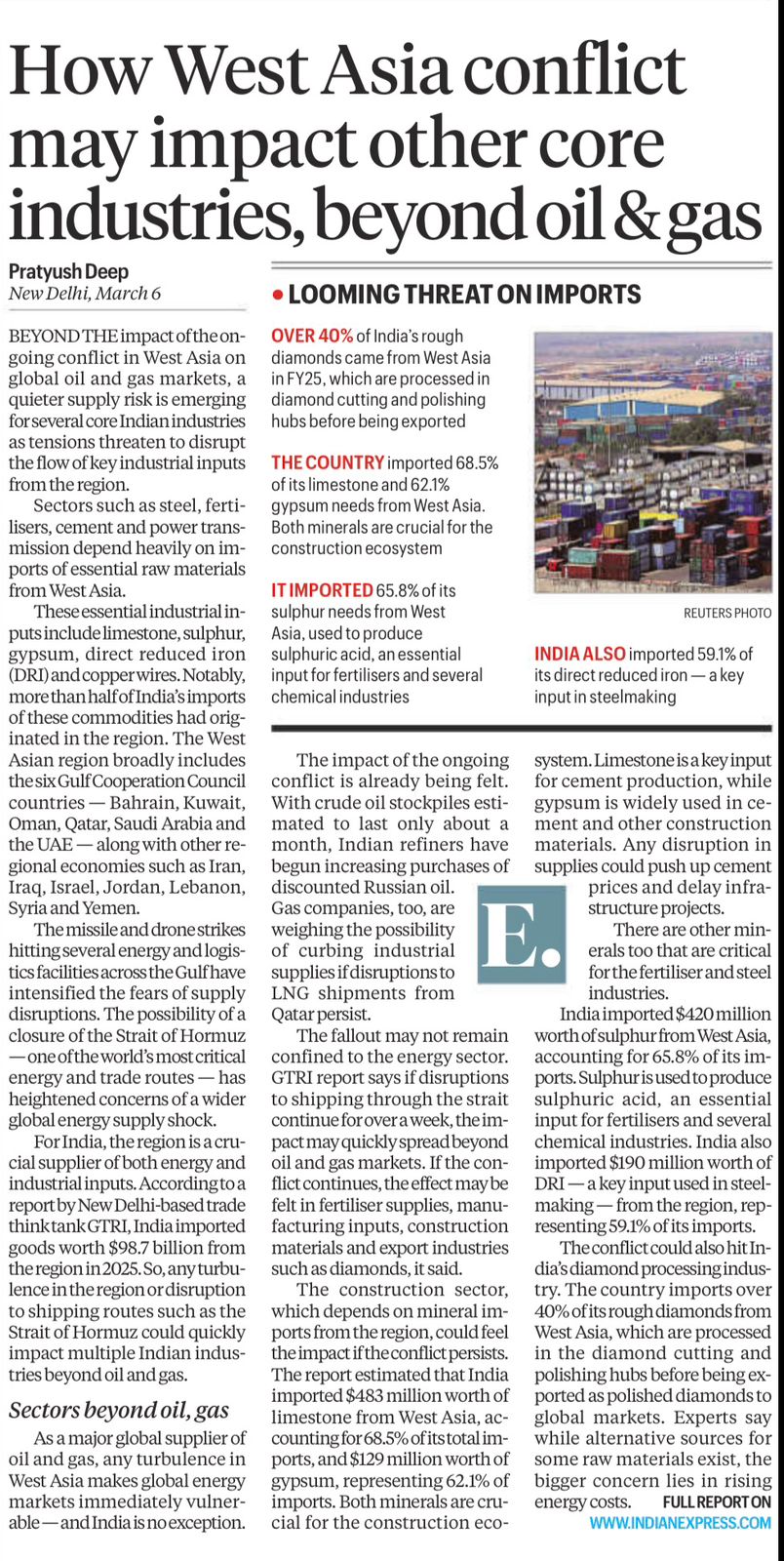
The ongoing West Asia conflict risks disrupting several critical industrial inputs for India, beyond oil and gas.

Key Raw Materials at Risk

• Limestone
• Gypsum
• Sulphur
• Direct reduced iron (iron produced from ore without melting)
Copper wires

Key Points

• Import dependence from West Asia is significant:

  • Limestone: 68.5%
  • Gypsum: 62.1%
  • Sulphur: 65.8%
  • Direct reduced iron: 59.1%

• More than 40% of India’s rough diamonds are sourced from the region for processing and export.
• Disruptions in the Strait of Hormuz could increase logistics costs and delay supplies.
• Industries likely affected include steel, fertiliser and construction sectors.

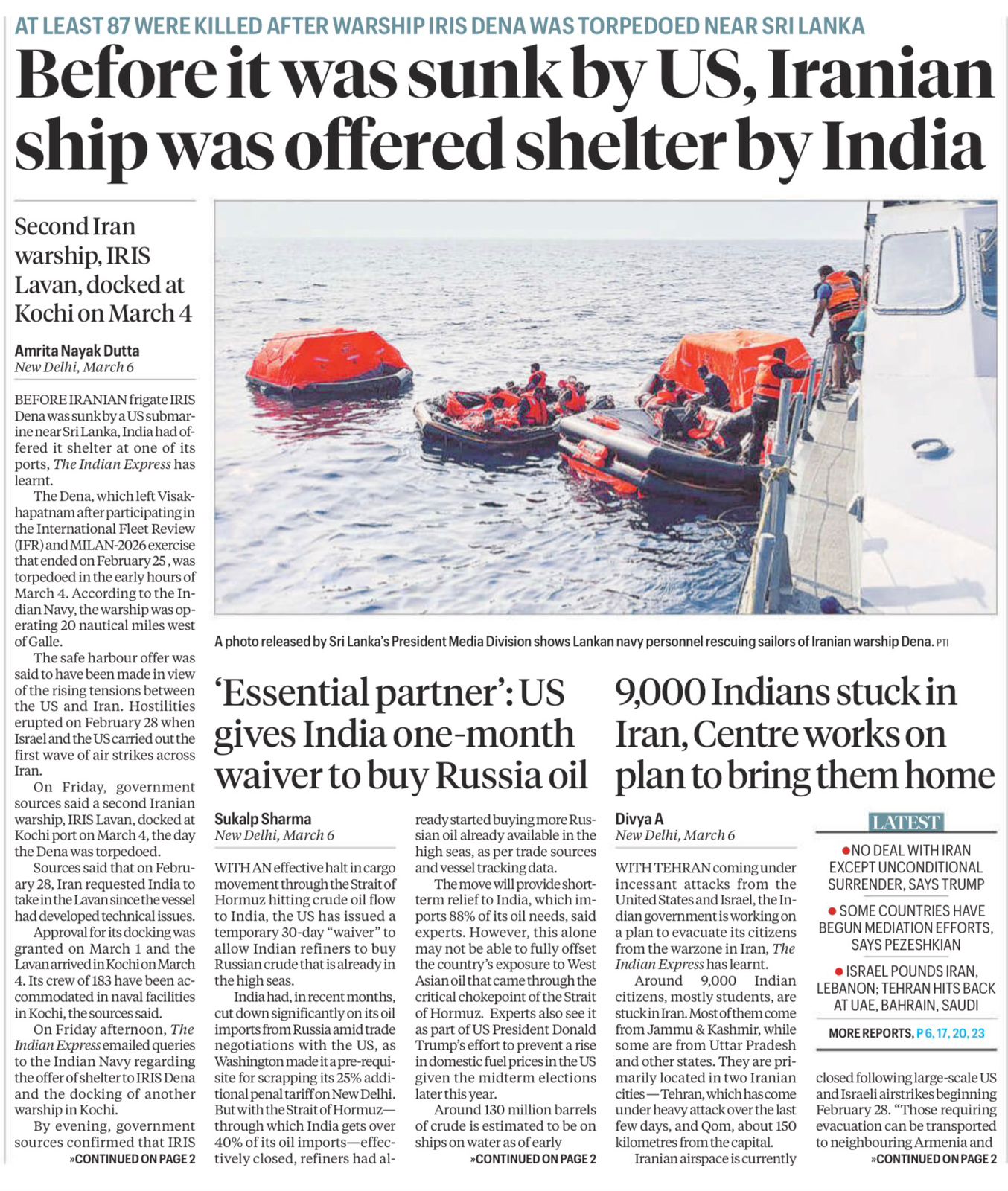
IRIS Dena: India Offered Shelter to Iranian Warship Before Sinking

Context:
Amid rising U.S.–Iran tensions, India offered port shelter to the Iranian warship IRIS Dena before it was later sunk near Sri Lanka.

Key Points

• IRIS Dena had earlier visited Visakhapatnam for IFR/MILAN exercises.
• The vessel was later targeted near Sri Lanka.
• India had previously offered safe harbour to the ship.
• Another Iranian ship IRIS Lavan docked at Kochi.
• The episode reflects India’s balancing approach in West Asia and maritime diplomacy.

Parallel Developments
• The United States had earlier granted waivers for Russian oil trade.
• India also began planning evacuation contingencies for roughly 9,000 Indians in Iran.

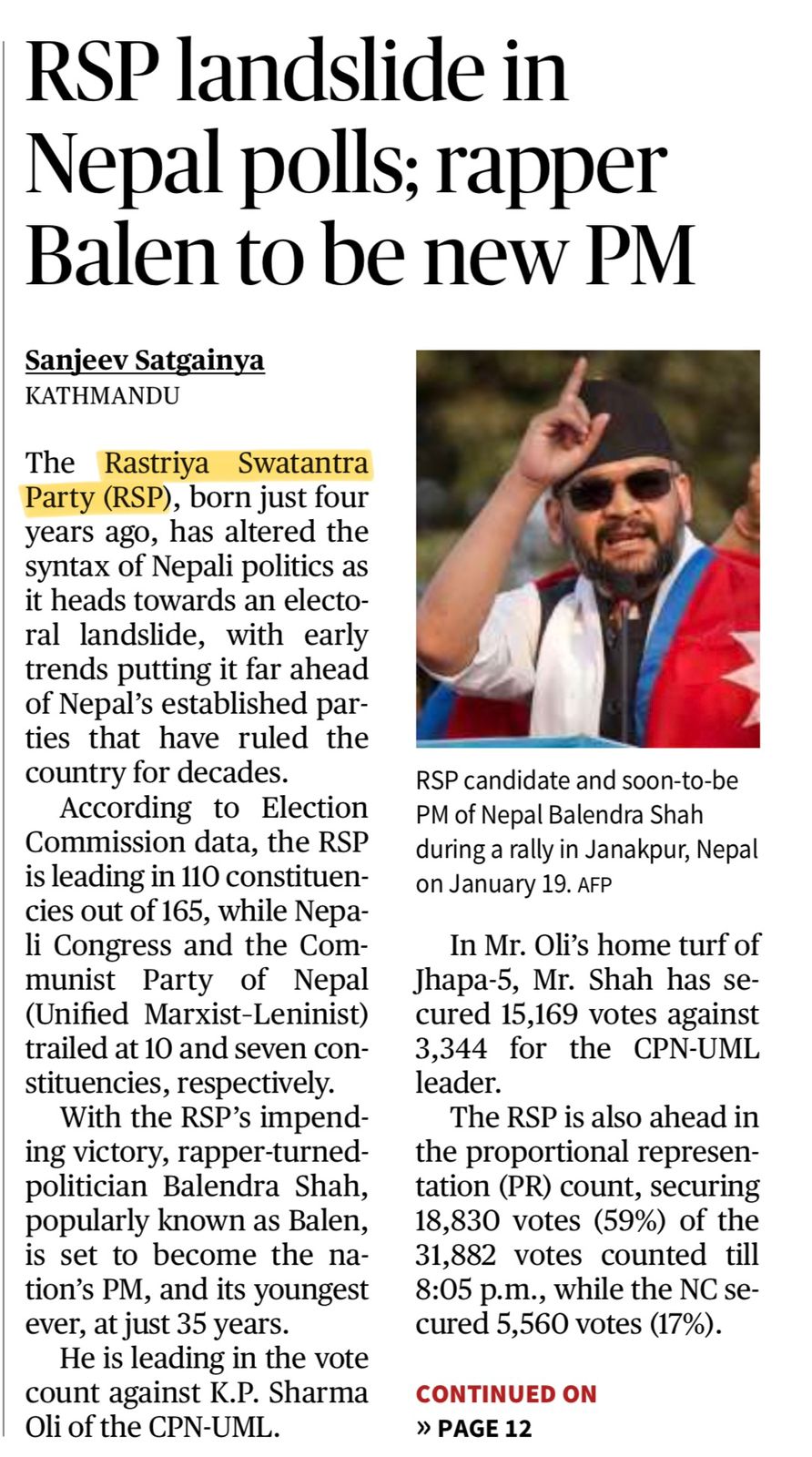
Nepal Elections 2026: RSP Victory and Impact on India–Nepal Relations

Context:
Nepal’s general elections saw the Rastriya Swatantra Party (RSP) surge ahead, with Balendra Shah (Balen) set to become Prime Minister. This reflects a political shift after prolonged instability in the country.

1. India–Nepal Relations — Key Issues

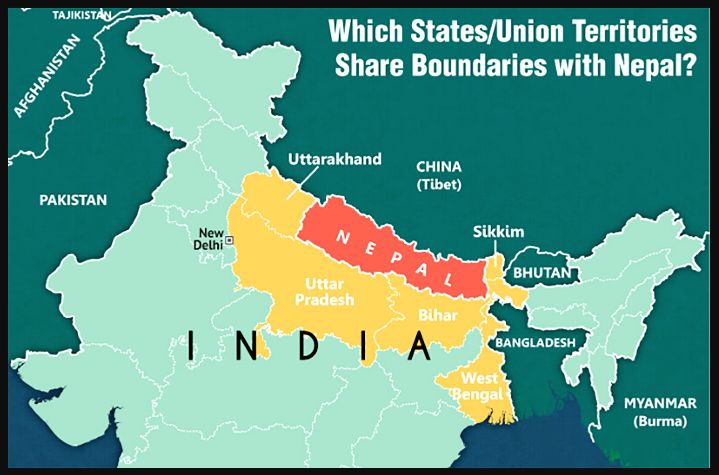
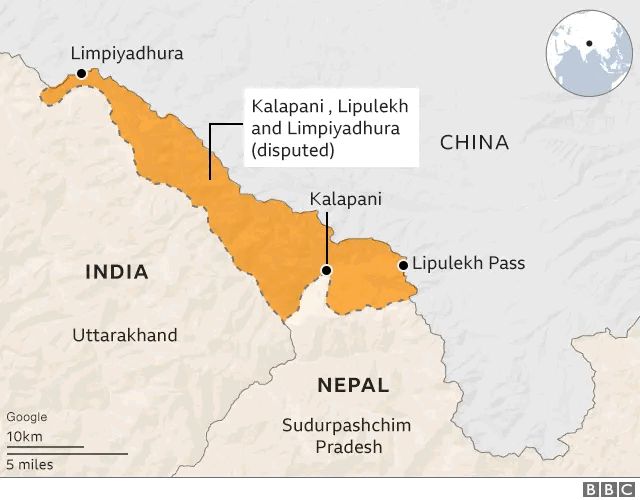
Boundary dispute: Kalapani–Lipulekh–Limpiyadhura dispute continues to strain relations.
Madhesi issue: Representation concerns and the 2015 blockade perception created diplomatic tensions.
China factor: Nepal increasingly balances relations between India and China, raising strategic sensitivities.
Political mistrust: Periodic anti-India sentiment and sovereignty concerns affect bilateral relations.

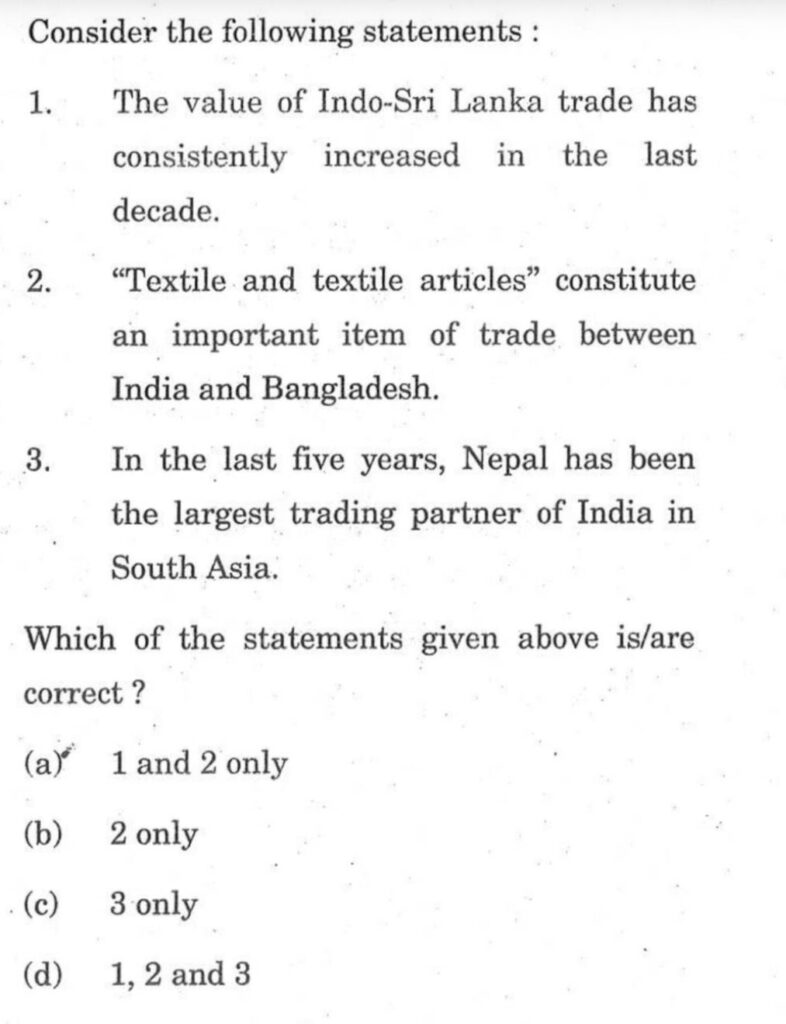
2. Economic Relations

• India is Nepal’s largest trade partner, accounting for ~64% of Nepal’s trade.
• FY 2023–24 bilateral trade ≈ $7.8 billion, with India exporting the major share.
• Nepal imports fuel, machinery, medicines from India.
• Nepal exports edible oil, tea, jute and agricultural products to India.
• Cooperation is expanding in hydropower, connectivity and transit infrastructure.

3. Nepal in Regional Groupings

SAARC
• Nepal is a founding member (1985).
• Kathmandu hosts the SAARC Secretariat.
• SAARC promotes cooperation in trade, connectivity and development.

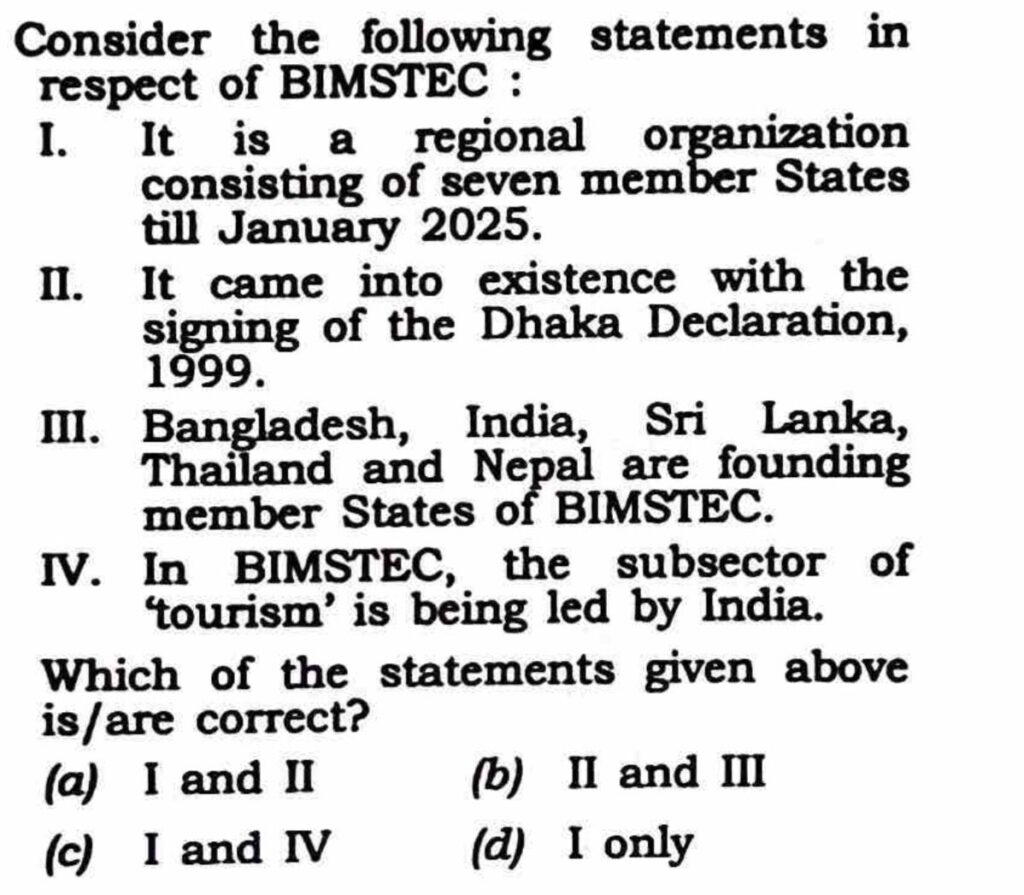
BIMSTEC
• Nepal is also a member linking South Asia and Southeast Asia.
• Focus areas include connectivity, energy, security and trade.
• Seen as an active platform amid SAARC’s slowdown.

PYQ – 2025, Ans – A
PYQ – 2020, Ans – B
About the UPSC Civil Services Examination (UPSC CSE)

The UPSC Civil Services Examination (CSE) is one of the most competitive and esteemed examinations in India, conducted by the Union Public Service Commission to recruit officers for services such as the Indian Administrative Service (IAS), Indian Police Service (IPS), Indian Foreign Service (IFS), and others. The exam comprises three stages — Prelims, Mains, and the Personality Test (Interview) — designed to test a candidate’s knowledge, aptitude, decision-making, and leadership skills.


How to Prepare Effectively for UPSC CSE

Cracking the UPSC CSE requires a deep understanding of the syllabus, consistent revision, structured answer writing, and smart test-taking strategies. The Prelims test analytical and conceptual clarity, the Mains focuses on critical thinking, articulation, and subject mastery, while the Interview assesses presence of mind, ethical judgment, and personality traits relevant to public service.

At UnderStand UPSC, we empower aspirants with a personalized and focused approach to each stage of the exam.


Why Choose UnderStand UPSC?

UnderStand UPSC is a mentorship-driven platform offering a clear, clutter-free strategy to tackle the Civil Services Examination. Our programs like Transform (for beginners and intermediate learners) and Conquer (for advanced mains preparation) provide structured study plans, syllabus-wise video content, interactive live sessions, and answer writing support.

We emphasize:

  • Concept clarity through topic-wise lectures

  • Test series designed around real UPSC standards

  • Personalized mentorship in small groups

  • Regular performance tracking and peer benchmarking

  • Doubt-clearing sessions, current affairs analysis, and monthly magazines


Join the UnderStand UPSC Learning Community

Our mission is to make UPSC preparation less overwhelming and more strategic. We combine mentorship, discipline, and academic rigor to help you clear CSE with confidence. Whether you’re preparing from Delhi, Mumbai, Bangalore, or a remote village — our online-first model ensures quality guidance reaches every corner of India.

Join the thousands of aspirants who trust UnderStand UPSC to guide their journey toward becoming civil servants.

Stay connected with us through our Telegram, YouTube, and Instagram channels for daily tips, strategies, and updates.

Copyright © 2026 USARAMBHA EDUCATION (UnderStand UPSC). All Rights Reserved.

Join the Success Journey!