Context (Transgender Persons Act Amendment)
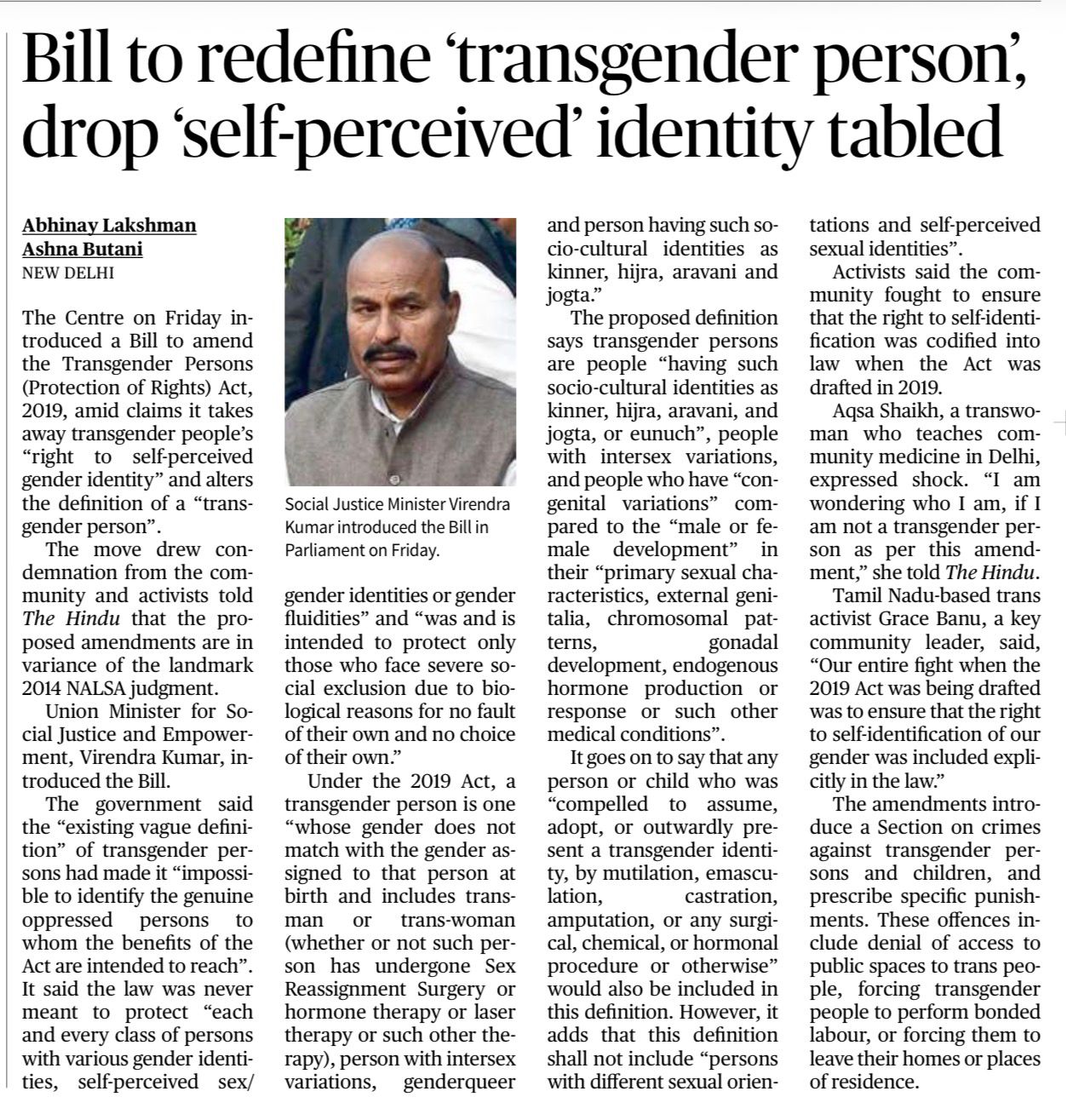
The Centre introduced an amendment Bill to the Transgender Persons (Protection of Rights) Act, 2019, seeking to revise the definition of “transgender person” and alter the framework of legal recognition, drawing criticism from the community.
The 2019 Act — Core Features
Definition
Person whose gender does not match sex assigned at birth.
Includes:
- Trans-man
- Trans-woman
- Intersex persons
- Genderqueer
- Socio-cultural identities
(hijra, kinner, aravani, jogta)
Rights
Bars discrimination in:
- Education
- Jobs
- Healthcare
- Housing
- Public services
Recognition & Certification
- Certificate of identity issued by the District Magistrate (DM).
- Reflects self-perceived gender identity after due procedure.
Institutional Support
- Welfare measures
- National Council for Transgender Persons
Penalties
Punishment for:
- Abuse
- Denial of services
- Violence against transgender persons.
Proposed Changes
- Redefinition:
Greater emphasis on socio-cultural identities and congenital/biological variations; reduces weight of self-identification. - Certification issue:
DM-based certification continues, but activists argue the change weakens the self-identification principle recognised in NALSA (2014). - Scope clarified:
Sexual orientation excluded from the definition. - Criminal provisions strengthened:
Specific punishments for:- Denial of access
- Forced labour
- Eviction
- Other abuses.