Context: Hanging Glaciers Himalaya
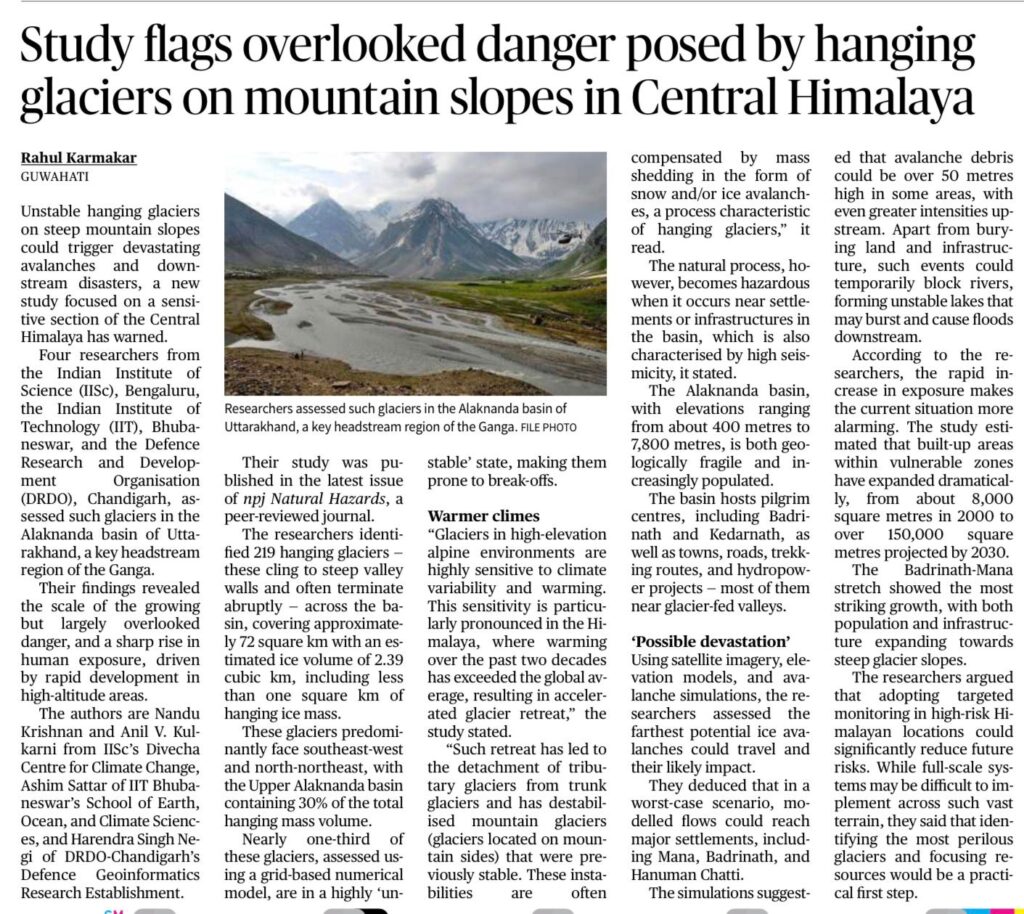
Study (IISc–IIT–DRDO; npj Natural Hazards) flags 219 unstable hanging glaciers in Alaknanda basin (Uttarakhand) → rising risk of ice avalanches, river blockage, downstream floods, especially near Badrinath–Mana.
1. Hanging Glacier (Definition)
- Glacier on steep slopes/cliffs, not reaching valley floor
- Abrupt ice front → prone to sudden break-off (avalanches)
- Typical of high, rugged Himalaya
2. Why risk is rising (Core causes)
- Warming → faster retreat & thinning
- Detachment → tributary glaciers break from main → unstable
- Steep slopes → gravity-driven collapse
- Freeze–thaw → cracks & weakening
- Seismicity → triggers collapse
- Human expansion → roads, dams, pilgrims near hazard zones
3. Impact
Avalanche → river blockage → temporary lake → sudden flood (high damage potential)
4. Important Glaciers of India
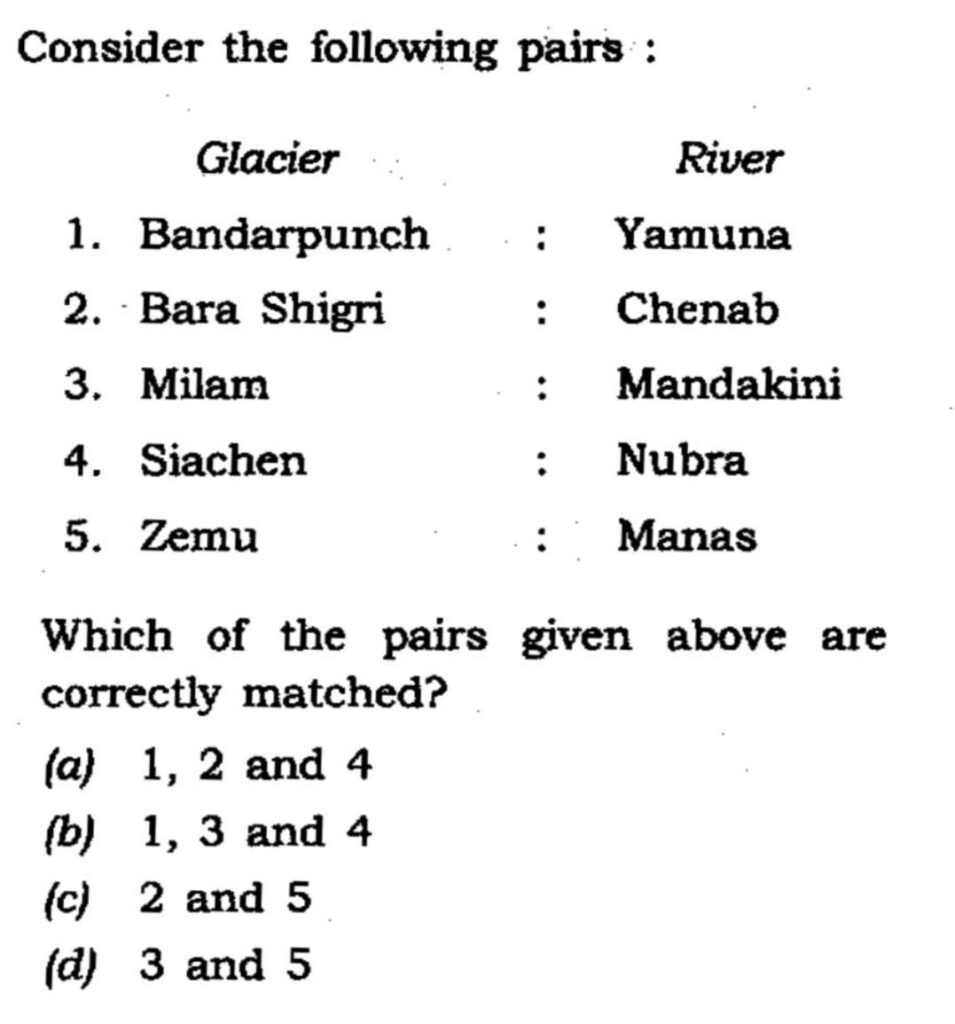
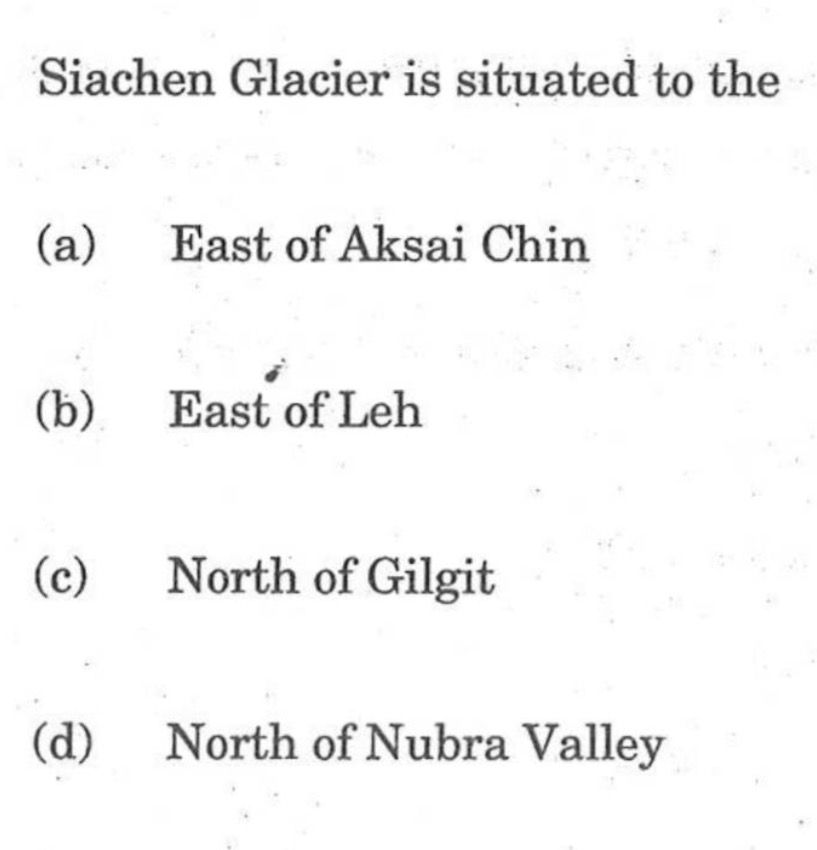
- Karakoram: Siachen (largest), Baltoro, Biafo
- Ladakh: Drang-Drung
- Uttarakhand: Gangotri, Yamunotri, Pindari, Milam
- Himachal: Bara Shigri
- Sikkim: Zemu