3 June 2026 | Daily Current Affairs

Southwest Monsoon 2026: Kerala Onset, Branches and UPSC Geography Notes

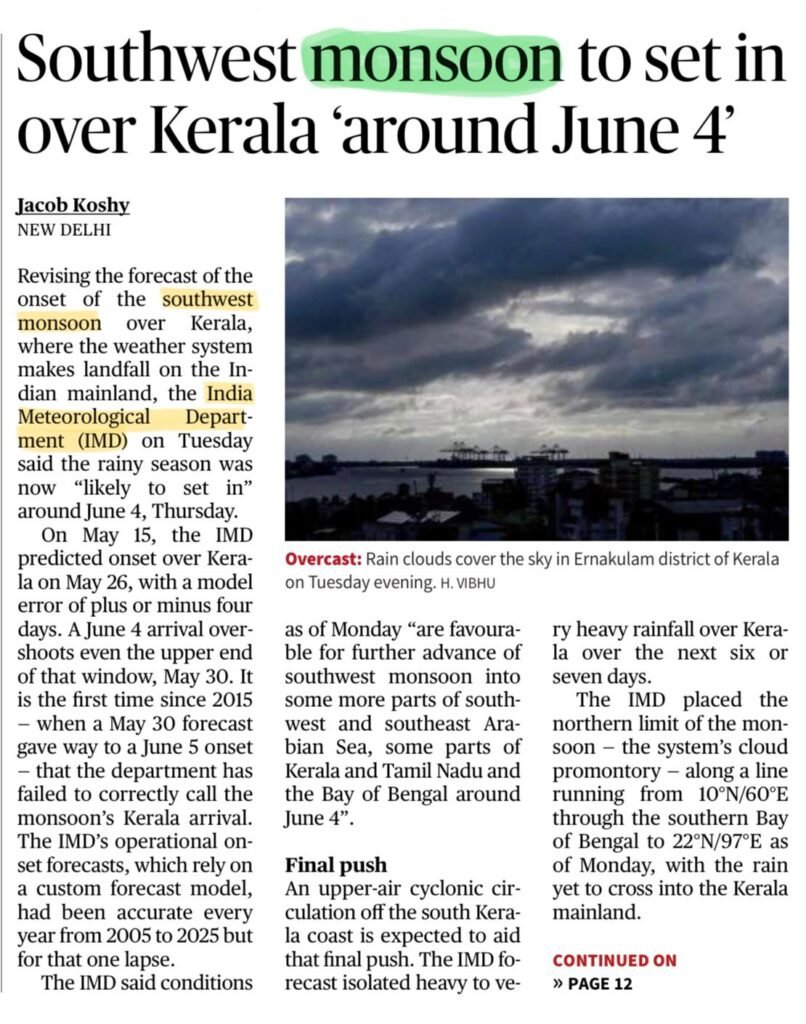
Context: Southwest Monsoon 2026 to set in over Kerala around June 4
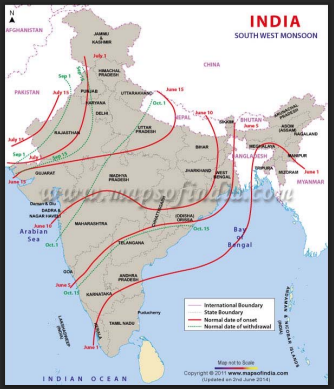
The India Meteorological Department revised the onset of the Southwest Monsoon over Kerala to around 4 June 2026. Kerala is considered the gateway for the monsoon’s arrival over the Indian mainland.

Monsoon: Basics

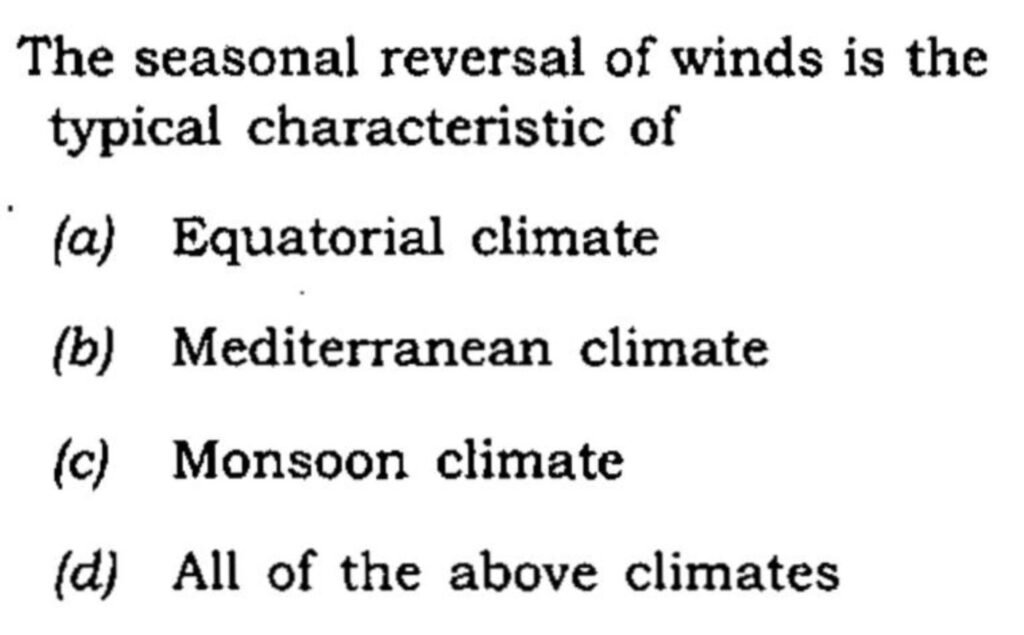
  • Monsoon refers to seasonal reversal of winds due to differential heating of land and sea.
  • Southwest Monsoon occurs from June to September.
  • It brings nearly 75% of India’s annual rainfall.
  • Retreating / Northeast Monsoon occurs from October to December.
  • The Northeast Monsoon is important for Tamil Nadu.

Two Branches of Southwest Monsoon

Arabian Sea Branch

  • First strikes Kerala.
  • Causes heavy rainfall along the Western Ghats.
  • Moves towards western and northern India.

Bay of Bengal Branch

  • First reaches Northeast India.
  • Then moves westward along the Indo-Gangetic Plains.
Southwest Monsoon 2026

PESA Act and Forest Rights Act: Gram Sabha Powers & UPSC Notes

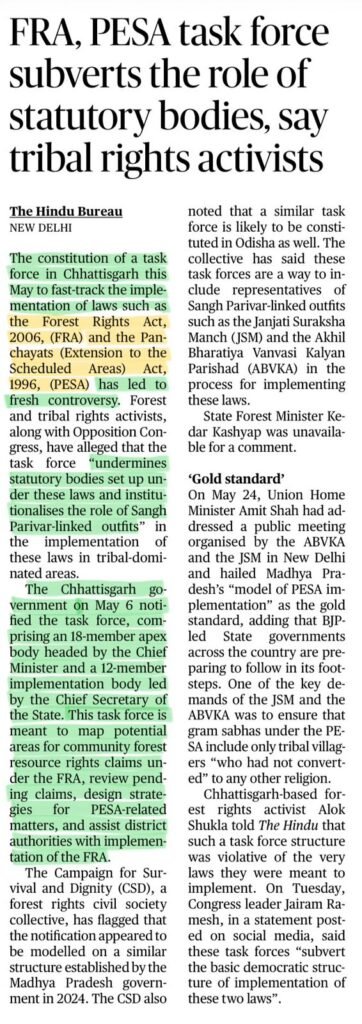
Context: FRA, PESA task force subverts the role of statutory bodies, say tribal rights activists
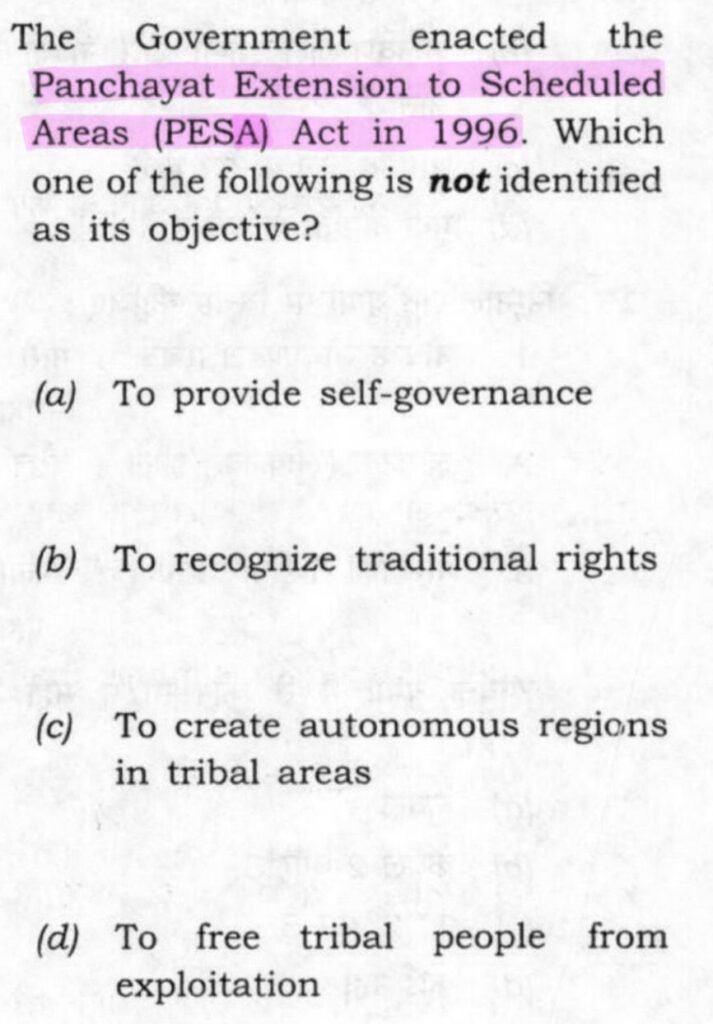
The Chhattisgarh government has constituted a task force to expedite implementation of the Forest Rights Act, 2006 and the Panchayats Extension to Scheduled Areas Act, 1996. Critics argue that the move may dilute the role of statutory institutions, particularly the Gram Sabha, which forms the foundation of both laws.

PESA Act, 1996

  • Extends Part IX of the Constitution, related to Panchayats, to Fifth Schedule Areas.
  • Nodal Ministry: Ministry of Panchayati Raj.
  • Core idea: Tribal self-governance through Gram Sabha.

Gram Sabha Powers

  • Approval of local development plans.
  • Consultation before land acquisition and rehabilitation.
  • Management of Minor Forest Produce.
  • Protection of customs, traditions and community resources.

Forest Rights Act, 2006

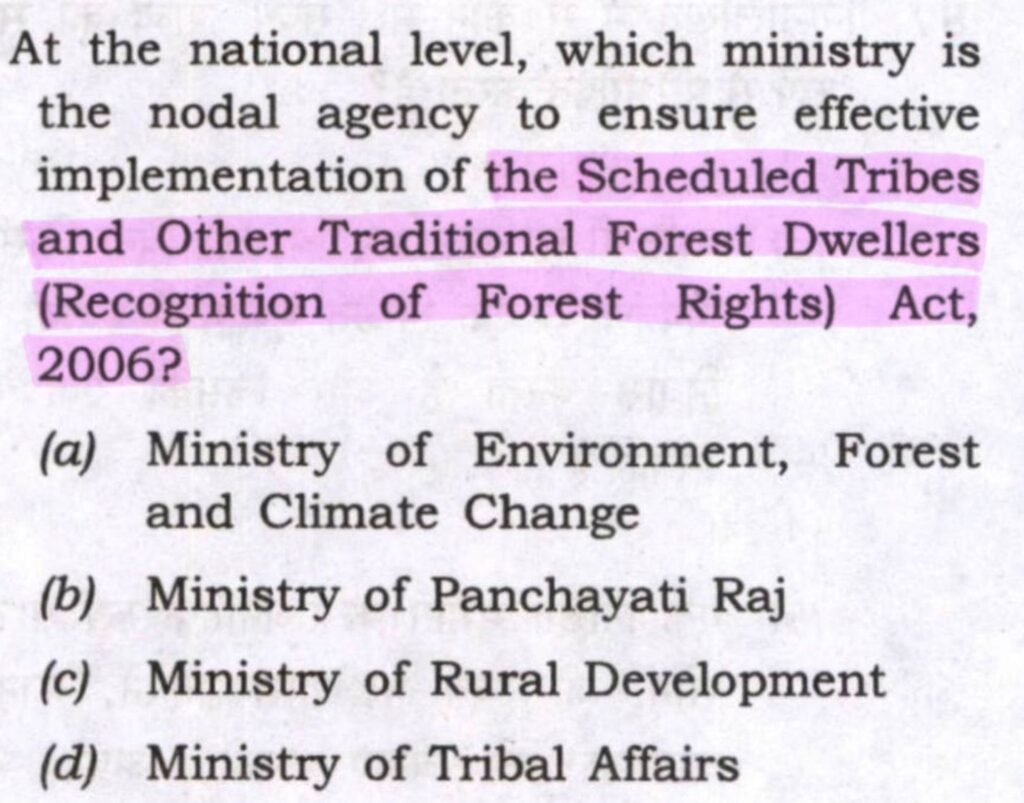
  • Recognises rights of Scheduled Tribes and Other Traditional Forest Dwellers.
  • Nodal Ministry: Ministry of Tribal Affairs.

Rights Recognised under FRA

  • Individual Forest Rights
  • Community Forest Rights
  • Minor Forest Produce rights
  • Habitat rights of Particularly Vulnerable Tribal Groups

Common Theme

Both PESA and FRA place the Gram Sabha at the centre of governance and resource management in tribal areas.

What is the Controversy?

Government’s Position

  • Faster disposal of pending claims.
  • Mapping of Community Forest Resource areas.
  • Better implementation of FRA and PESA.

Critics’ Position

  • Task force may bypass Gram Sabha-led institutions.
  • It may weaken statutory mechanisms created under FRA and PESA.
  • It may centralise powers meant for tribal communities.
PESA Act
PESA Act
PESA Act
PESA Act

RudraM-II Missile: DRDO Air-to-Surface Missile Test & UPSC Notes

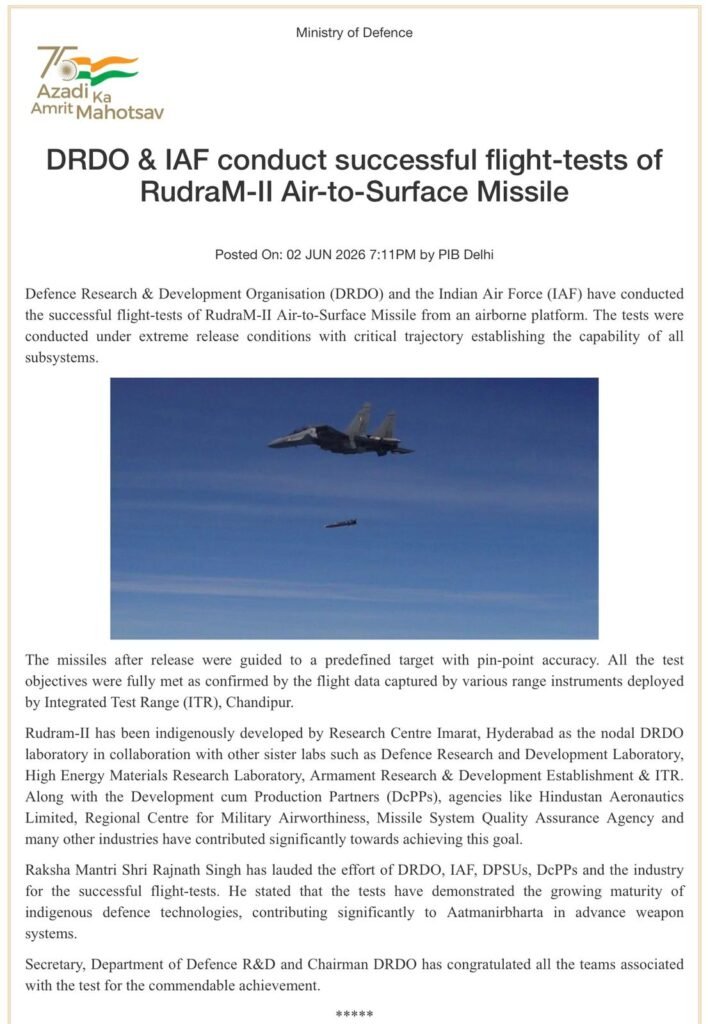
Context: DRDO & Indian Air Force conduct successful flight-tests of RudraM-II Missile Air-to-Surface Missile
The Defence Research and Development Organisation and the Indian Air Force successfully tested the indigenously developed RudraM-II Air-to-Surface Missile from a Su-30MKI fighter aircraft, demonstrating India’s growing indigenous precision-strike capability.

RudraM-II: Basics and Significance

  • Type: Air-to-Surface Missile
  • Developer: Defence Research and Development Organisation
  • Launch platform: Su-30MKI
  • Test site: Integrated Test Range, Chandipur, Odisha
  • Designed to engage high-value ground targets and enemy air-defence systems
  • Strengthens Aatmanirbhar Bharat and indigenous missile capabilities

Related Indigenous Missiles

Air-to-Air

  • Astra Mk-I
  • Astra Mk-II

Surface-to-Air

  • Akash
  • Akash-NG
  • Quick Reaction Surface-to-Air Missile

Air-to-Surface

  • RudraM-I
  • RudraM-II
  • RudraM-III

Surface-to-Surface

  • Pralay
  • Prahaar
  • Prithvi Series
  • Agni Series

Cruise Missiles

  • Nirbhay
  • Long Range Land Attack Cruise Missile

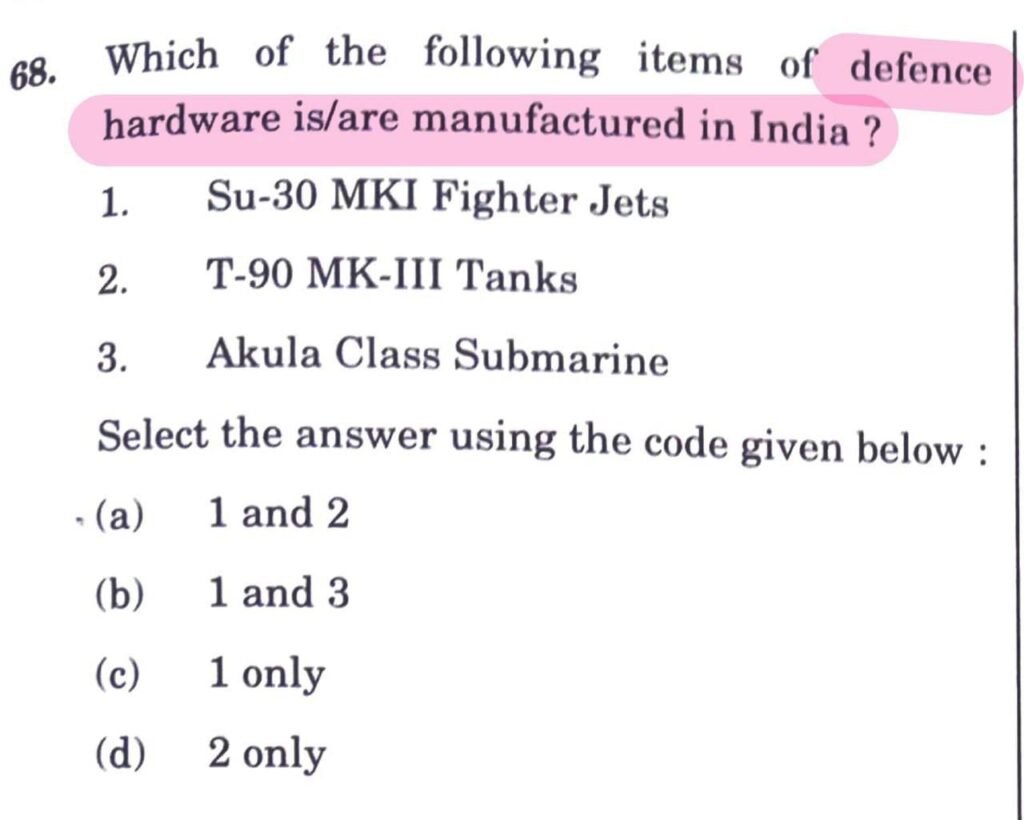
PYQ Link: Defence Manufacturing

  • Su-30MKI Fighter Aircraft and T-90 Tanks are manufactured in India under licence production.
  • Akula-class submarine is Russian-origin.
RudraM-II Missile
RudraM-II Missile
RudraM-II Missile
RudraM-II Missile

Producer Price Index (PPI): Key Features, WPI vs CPI & UPSC Notes

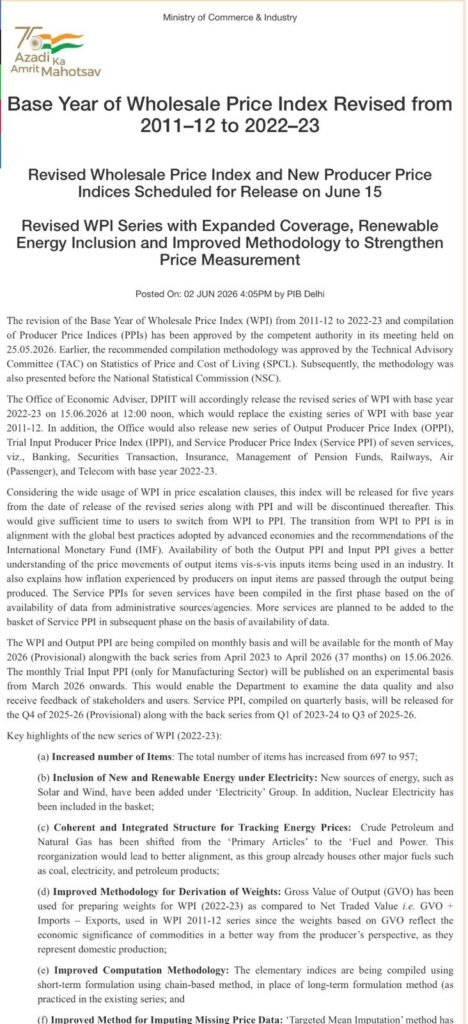
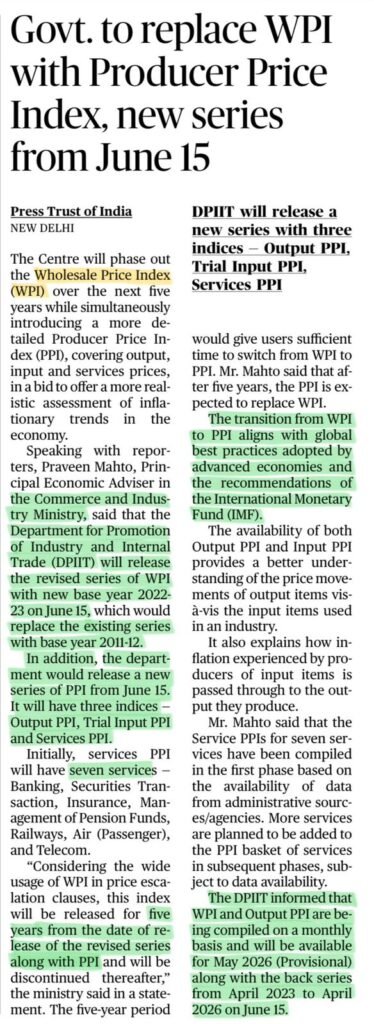
Context: Govt. to replace Wholesale Price Index with Producer Price Index
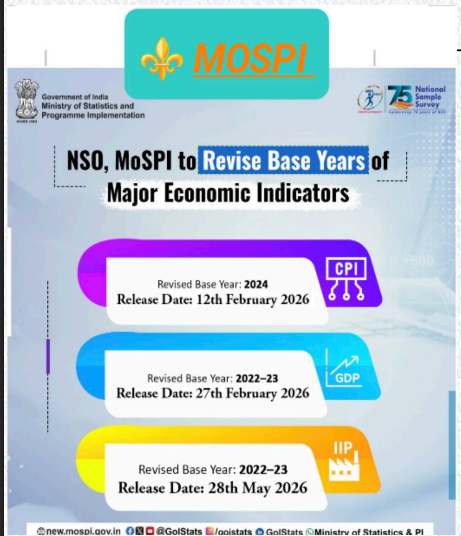
India is modernising its inflation and economic statistics framework. The Wholesale Price Index base year has been revised from 2011–12 to 2022–23, while a new Producer Price Index has been introduced. WPI and PPI will run simultaneously for five years before PPI gradually replaces WPI.

Wholesale Price Index and Producer Price Index

Wholesale Price Index

Changes in WPI

  • Base year revised from 2011–12 to 2022–23.
  • Basket expanded from 697 to 957 items.
  • Solar, wind and nuclear electricity added.

Producer Price Index

  • Measures inflation from the producer’s perspective by tracking input costs, output prices and services.

Key Features of PPI

  • Output Producer Price Index: Prices received by producers.
  • Input Producer Price Index: Prices paid for raw materials and inputs.
  • Services Producer Price Index: Measures services inflation.
  • Covers services for the first time and aligns India with global best practices recommended by the IMF.

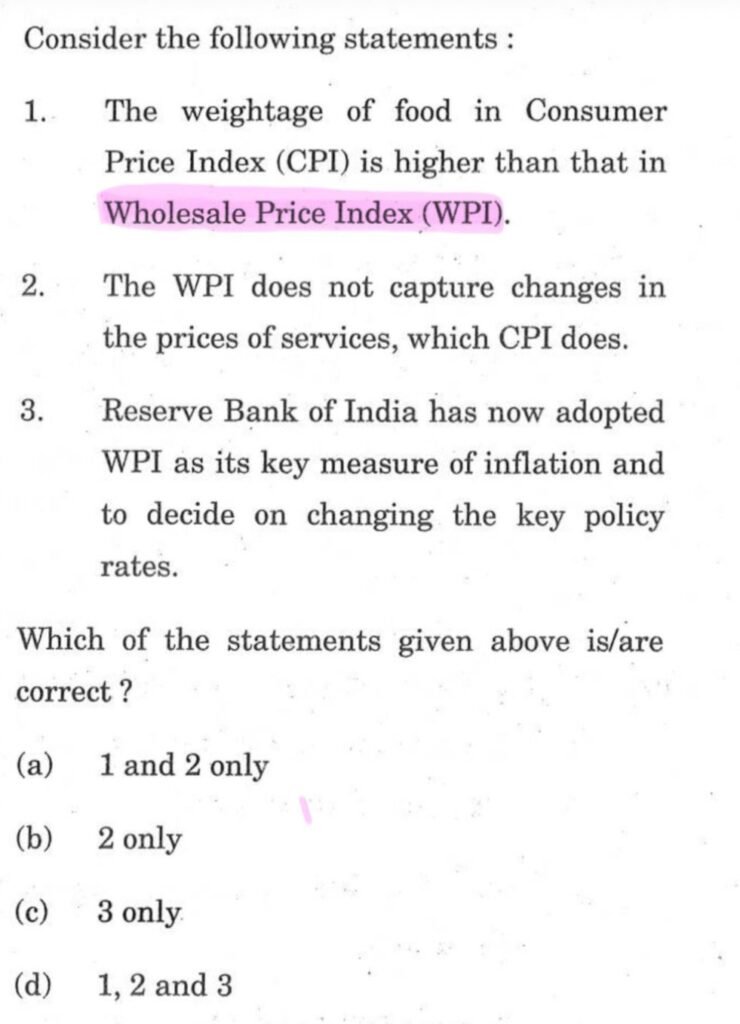
WPI vs CPI

Wholesale Price Index

  • Wholesale prices
  • Goods only
  • Lower food weight
  • Services excluded

Consumer Price Index

PYQ Link, 2020

  • Food weight is higher in CPI.
  • WPI excludes services.

Recent Base-Year Revisions

Consumer Price Index

Gross Domestic Product

  • Base year: 2022–23
  • Earlier base year: 2011–12
  • Estimated by National Statistics Office, Ministry of Statistics and Programme Implementation

Index of Industrial Production

  • Base year: 2022–23
  • Earlier base year: 2011–12
  • Compiled by National Statistics Office, Ministry of Statistics and Programme Implementation

India Semiconductor Mission: Semiconductor Manufacturing in India Explained

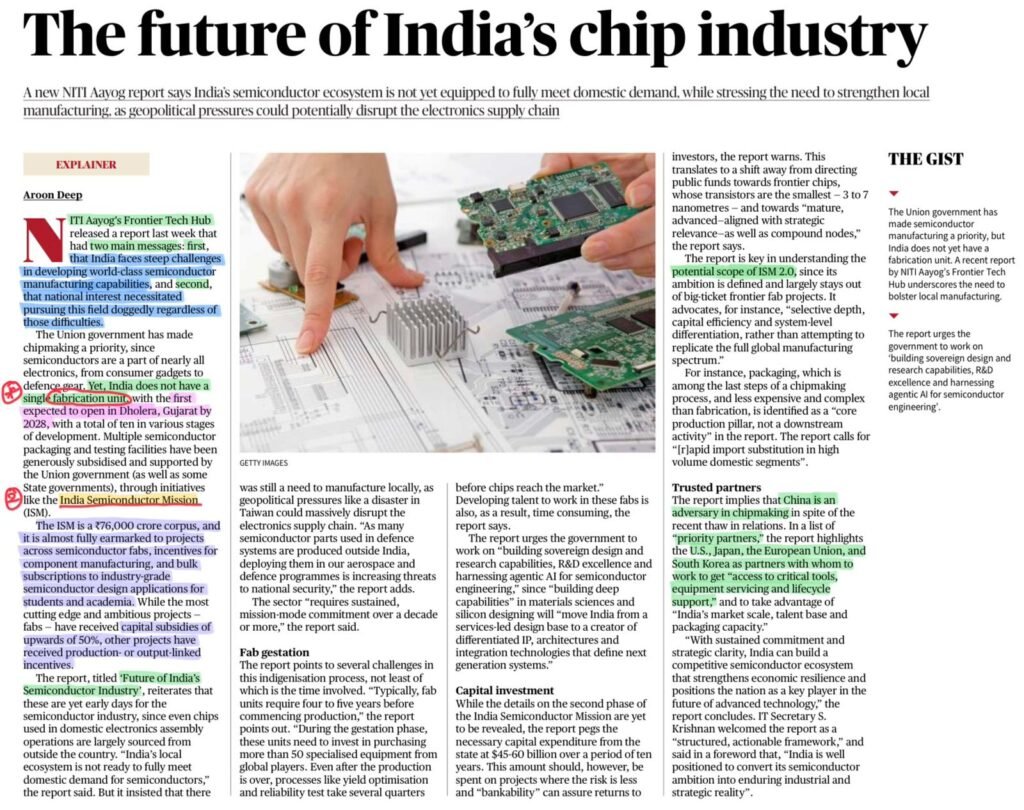
Context: Semiconductor Manufacturing Push in India / India Semiconductor Mission
India is pushing domestic semiconductor manufacturing through the India Semiconductor Mission to reduce import dependence and build a chip ecosystem from design to manufacturing.

Semiconductor Chain

Design → Fabrication → Assembly / Testing / Packaging → Final Chip

Fabrication Unit

  • A fabrication unit, or fab, is the actual factory where silicon wafers are converted into chips.
  • It is the most difficult and costly part because it needs clean rooms, advanced machines, skilled engineers, water and uninterrupted power.

India Semiconductor Mission

Aim of ISM

  • Fab plants
  • Assembly Testing Marking and Packaging
  • Outsourced Semiconductor Assembly and Test
  • Design ecosystem

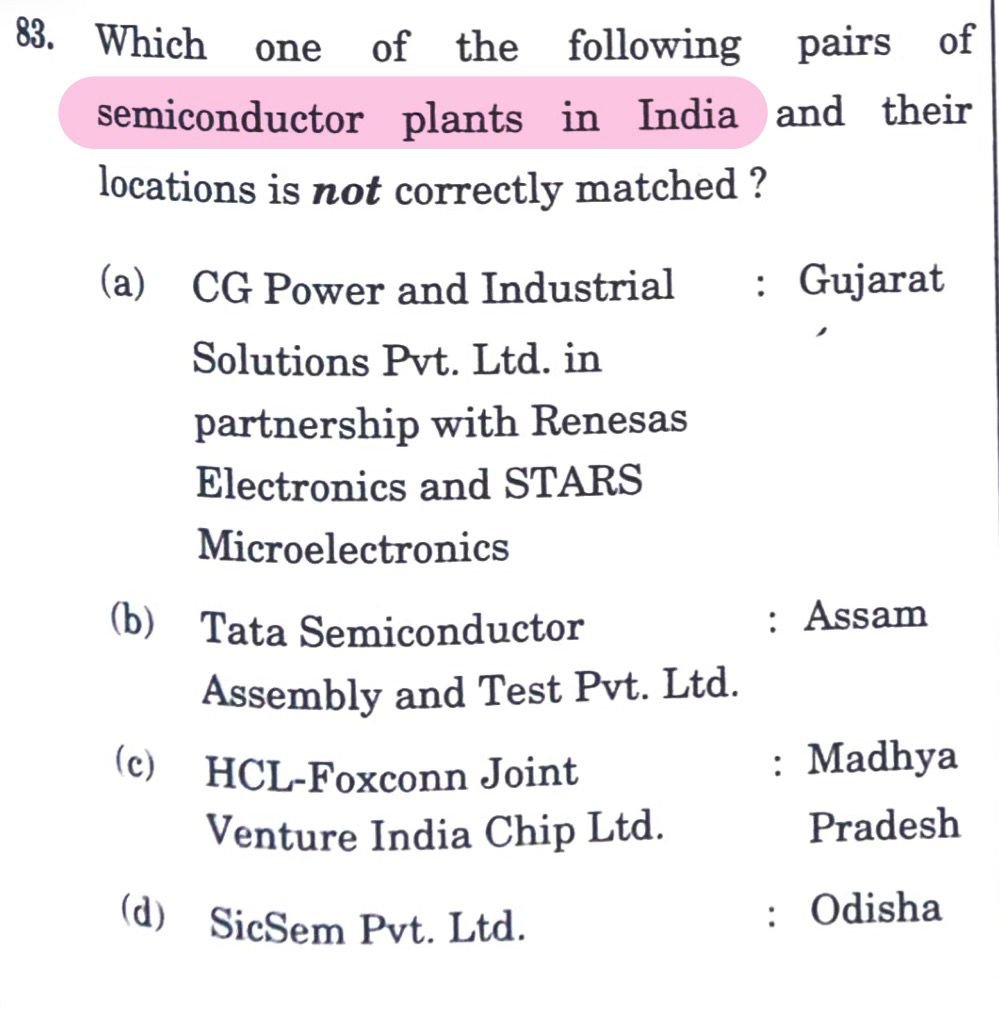
Important Semiconductor Projects

  • Tata Fab: Dholera, Gujarat
  • Tata ATMP: Morigaon, Assam
  • CG Power–Renesas–STAR: Sanand, Gujarat
  • HCL–Foxconn: Jewar, Uttar Pradesh
  • SiCSem: Odisha

PYQ Trap

  • HCL–Foxconn is in Uttar Pradesh, not Madhya Pradesh.

Why Important?

Semiconductors are used in mobiles, cars, defence, satellites, Artificial Intelligence, 5G and electronics. India wants to reduce dependence on China / Taiwan supply chains and become a trusted global chip hub.

India Semiconductor Mission
About the UPSC Civil Services Examination (UPSC CSE)

The UPSC Civil Services Examination (CSE) is one of the most competitive and esteemed examinations in India, conducted by the Union Public Service Commission to recruit officers for services such as the Indian Administrative Service (IAS), Indian Police Service (IPS), Indian Foreign Service (IFS), and others. The exam comprises three stages — Prelims, Mains, and the Personality Test (Interview) — designed to test a candidate’s knowledge, aptitude, decision-making, and leadership skills.


How to Prepare Effectively for UPSC CSE

Cracking the UPSC CSE requires a deep understanding of the syllabus, consistent revision, structured answer writing, and smart test-taking strategies. The Prelims test analytical and conceptual clarity, the Mains focuses on critical thinking, articulation, and subject mastery, while the Interview assesses presence of mind, ethical judgment, and personality traits relevant to public service.

At UnderStand UPSC, we empower aspirants with a personalized and focused approach to each stage of the exam.


Why Choose UnderStand UPSC?

UnderStand UPSC is a mentorship-driven platform offering a clear, clutter-free strategy to tackle the Civil Services Examination. Our programs like Transform (for beginners and intermediate learners) and Conquer (for advanced mains preparation) provide structured study plans, syllabus-wise video content, interactive live sessions, and answer writing support.

We emphasize:

  • Concept clarity through topic-wise lectures

  • Test series designed around real UPSC standards

  • Personalized mentorship in small groups

  • Regular performance tracking and peer benchmarking

  • Doubt-clearing sessions, current affairs analysis, and monthly magazines


Join the UnderStand UPSC Learning Community

Our mission is to make UPSC preparation less overwhelming and more strategic. We combine mentorship, discipline, and academic rigor to help you clear CSE with confidence. Whether you’re preparing from Delhi, Mumbai, Bangalore, or a remote village — our online-first model ensures quality guidance reaches every corner of India.

Join the thousands of aspirants who trust UnderStand UPSC to guide their journey toward becoming civil servants.

Stay connected with us through our Telegram, YouTube, and Instagram channels for daily tips, strategies, and updates.

Copyright © 2026 USARAMBHA EDUCATION (UnderStand UPSC). All Rights Reserved.

Fill the form

Our team will reach out to you soon