Source: Indian Express | Explained | Tags: 11 June 2026, Adivasi Rights, GS1, Modern History, Tribal Movements
Context: Birsa Munda and Adivasi Identity
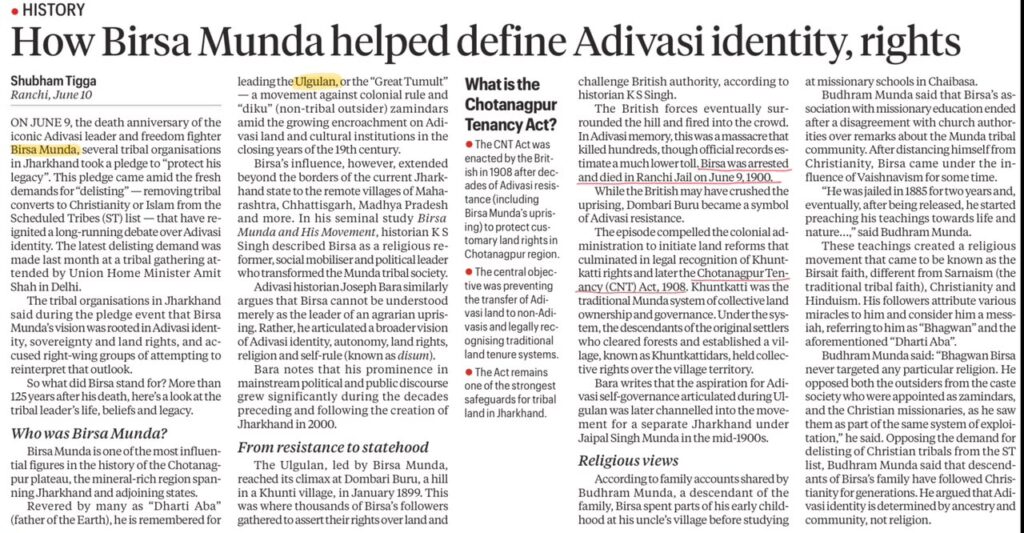
Birsa Munda’s legacy is remembered not merely for a tribal revolt but for shaping the modern idea of Adivasi identity, land rights and self-governance.
Birsa Munda, 1875–1900
- Revered as Dharti Aba, meaning Father of the Earth.
- Tribal leader, social reformer and anti-colonial freedom fighter.
- Advocated Adivasi identity, autonomy, land rights and self-rule.
- His idea of autonomy was expressed through Abua Disum.
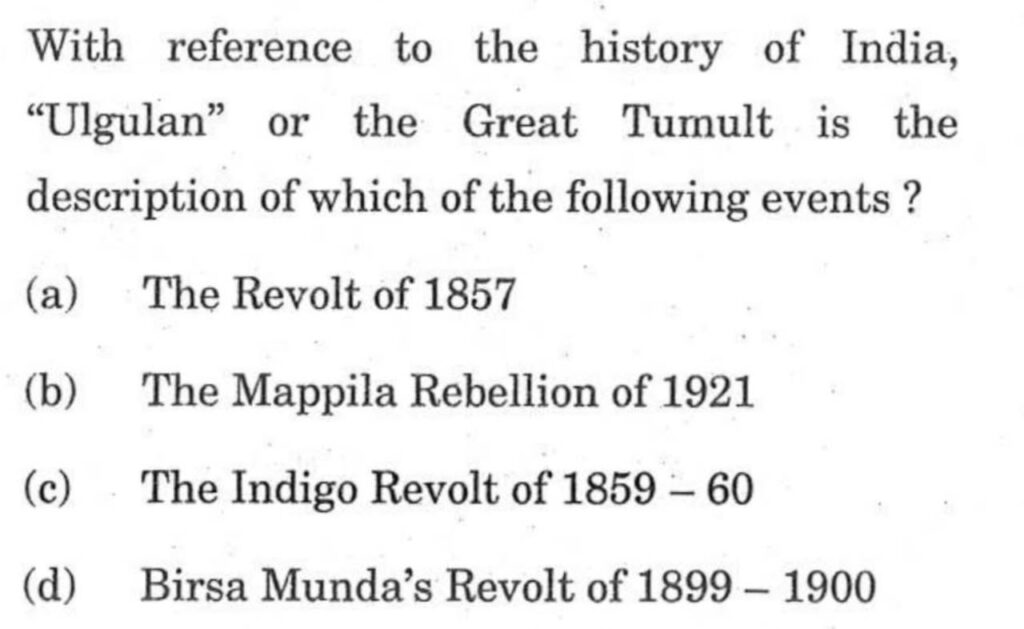
Ulgulan — The Great Tumult, 1899–1900
- Ulgulan means Great Tumult or Great Upheaval.
- Movement against British rule, zamindars and Dikus, meaning outsiders.
- Triggered by tribal land alienation and exploitation.
- Major centre: Dombari Buru.
How Ulgulan Shaped Adivasi Identity
- Linked land rights with tribal identity.
- Asserted Adivasi autonomy, culture and customary rights.
- Mobilised tribes around a shared identity rather than only economic grievances.
- Transformed tribal resistance into a broader movement for dignity, recognition and self-governance.
Impact
- Led to colonial land reforms.
- Resulted in the Chotanagpur Tenancy Act, 1908.
- Inspired the later Jharkhand movement and tribal rights discourse.
- Made Birsa Munda a lasting symbol of Adivasi identity and land rights.