Context:
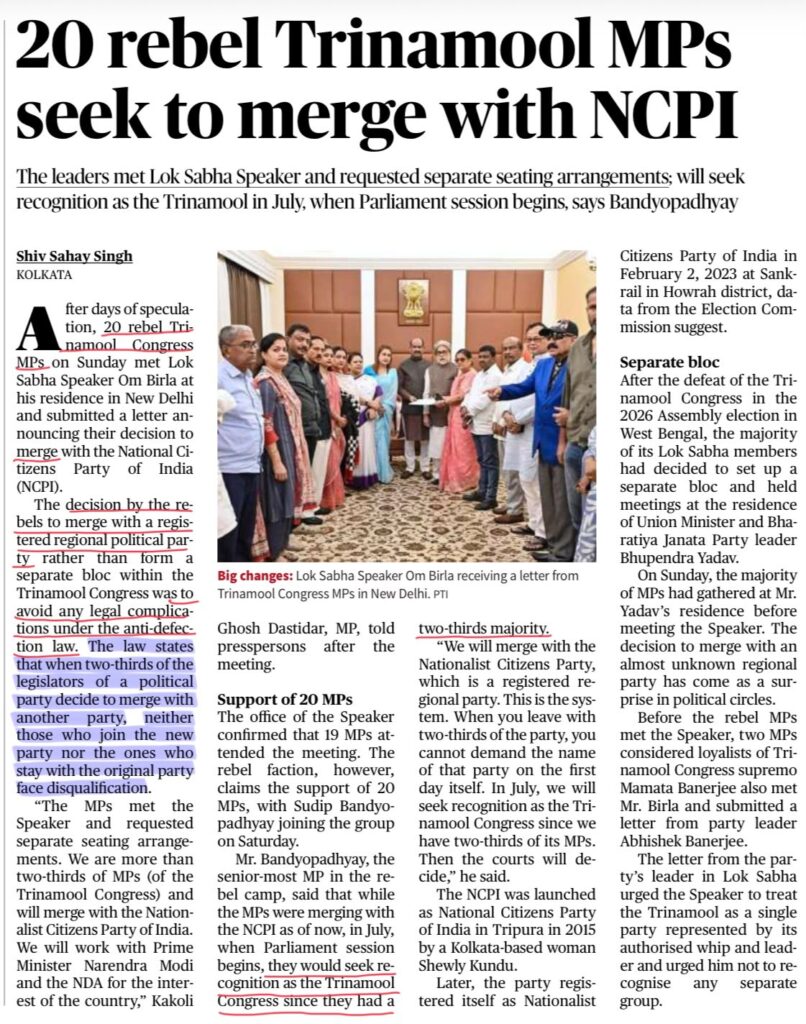
A group of around 20 Trinamool Congress MPs has informed the Lok Sabha Speaker of its decision to merge with the National Citizens Party of India. The group claims support of more than two-thirds of TMC MPs and seeks protection under the merger provision of the Anti-Defection Law.
Anti-Defection Law
Constitutional Basis
Added By
Split vs Merger
Split
Earlier, a split by one-third members was exempt from disqualification.
This exception was removed by the 91st Constitutional Amendment Act, 2003.
Merger
Merger remains valid if at least two-thirds of legislators agree to join another political party.
In such cases, members are protected from disqualification.
Why Merge with NCPI?
Since the split exception no longer exists, merely forming a separate faction can attract disqualification.
Therefore, the MPs have chosen to merge with a registered political party and claim protection under the merger clause.
This is being seen as the first legal step before seeking recognition of their faction in Parliament.
Why Was This Not Seen in Shiv Sena / NCP Cases?
In those cases, the dispute was mainly over which faction represented the original party and controlled its name and symbol.
Here, the MPs are first relying on the merger provision of the Tenth Schedule through another registered party.
Registered vs Recognised Party
Registered Party
- Registered with Election Commission of India under Section 29A of the Representation of the People Act, 1951.
- A registered party that fulfils ECI criteria for State Party or National Party status.
- Gets a reserved symbol.
Key Difference
Every recognised party is registered, but every registered party is not recognised.
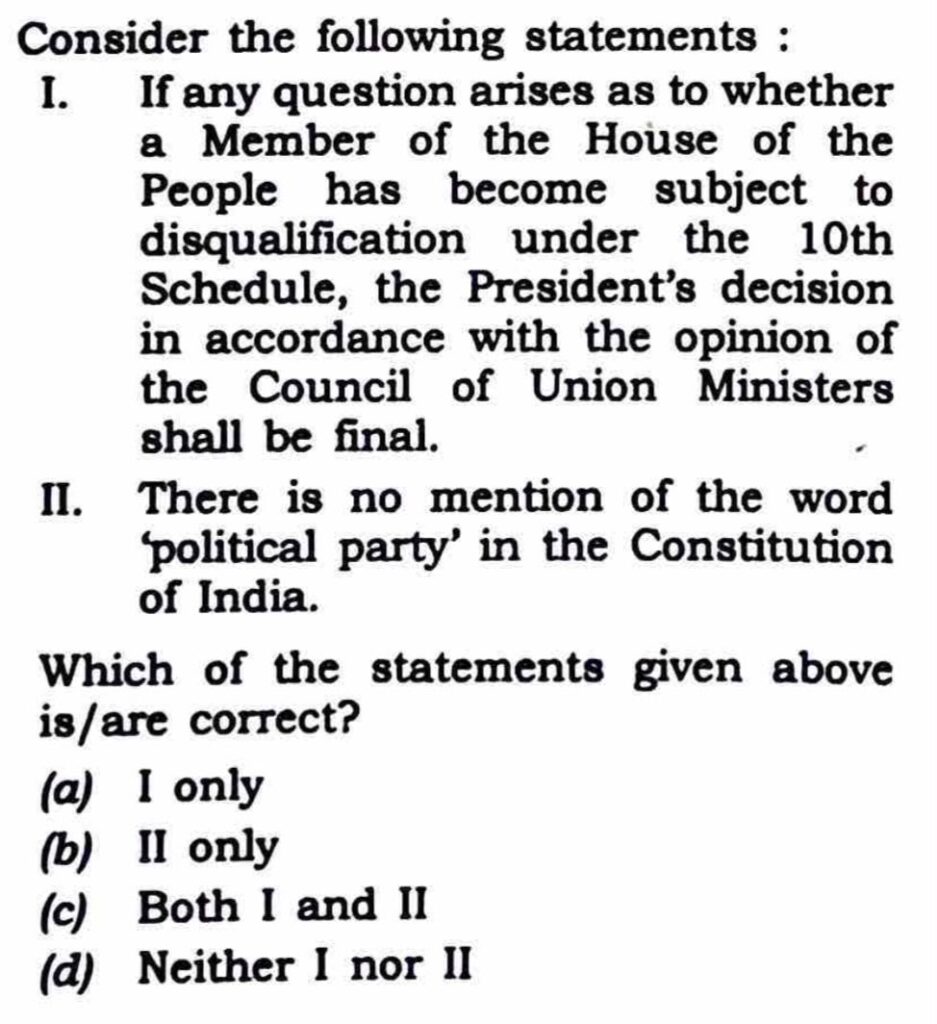
PYQ Fact
The term “political party” appears in the Constitution through the Tenth Schedule.