Context: Junk Food Advertising Regulations India
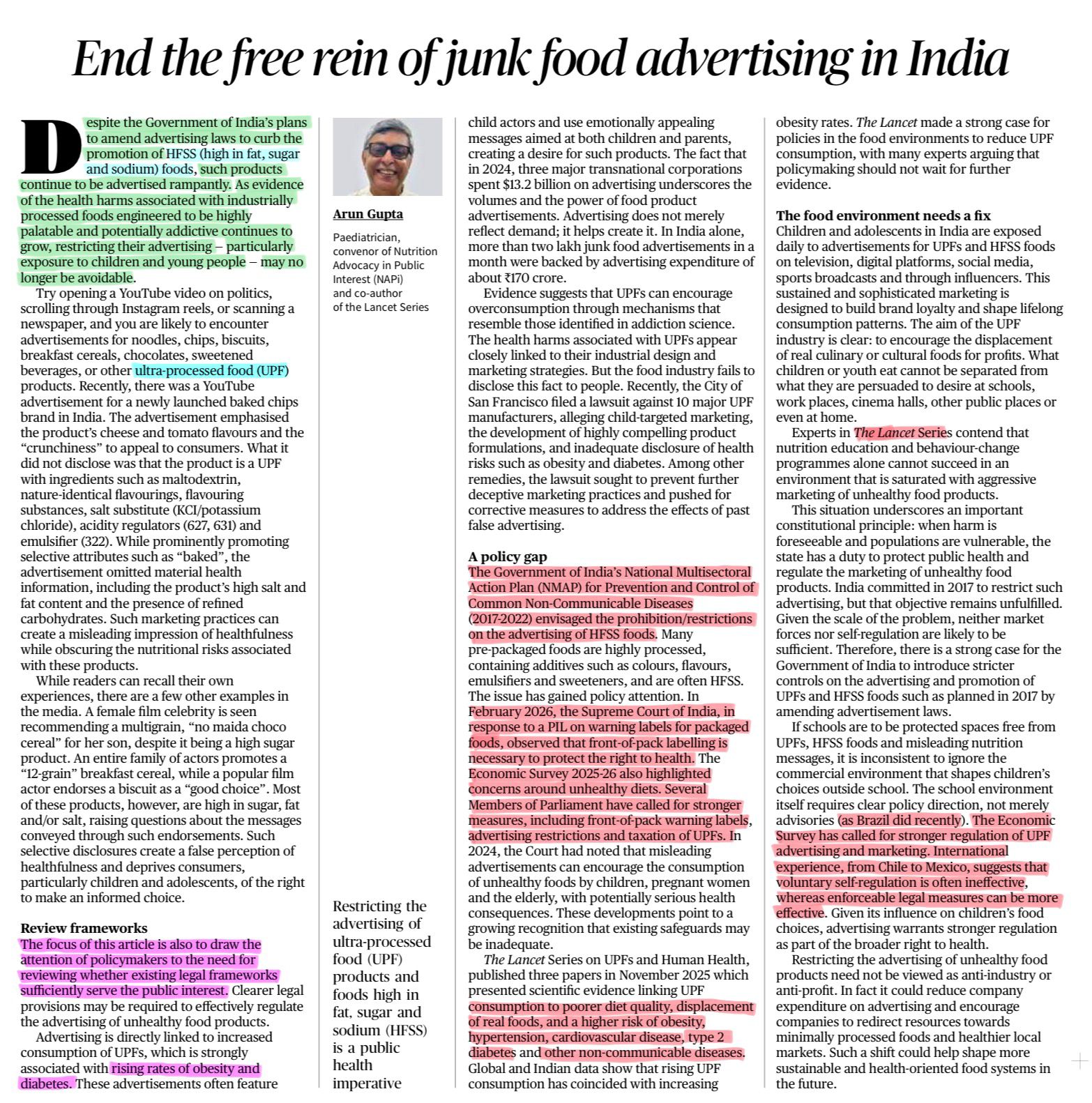
The article argues that India needs stricter regulation of junk food advertising, especially advertisements targeting children, because aggressive marketing of unhealthy foods is worsening obesity, diabetes and other non-communicable diseases.
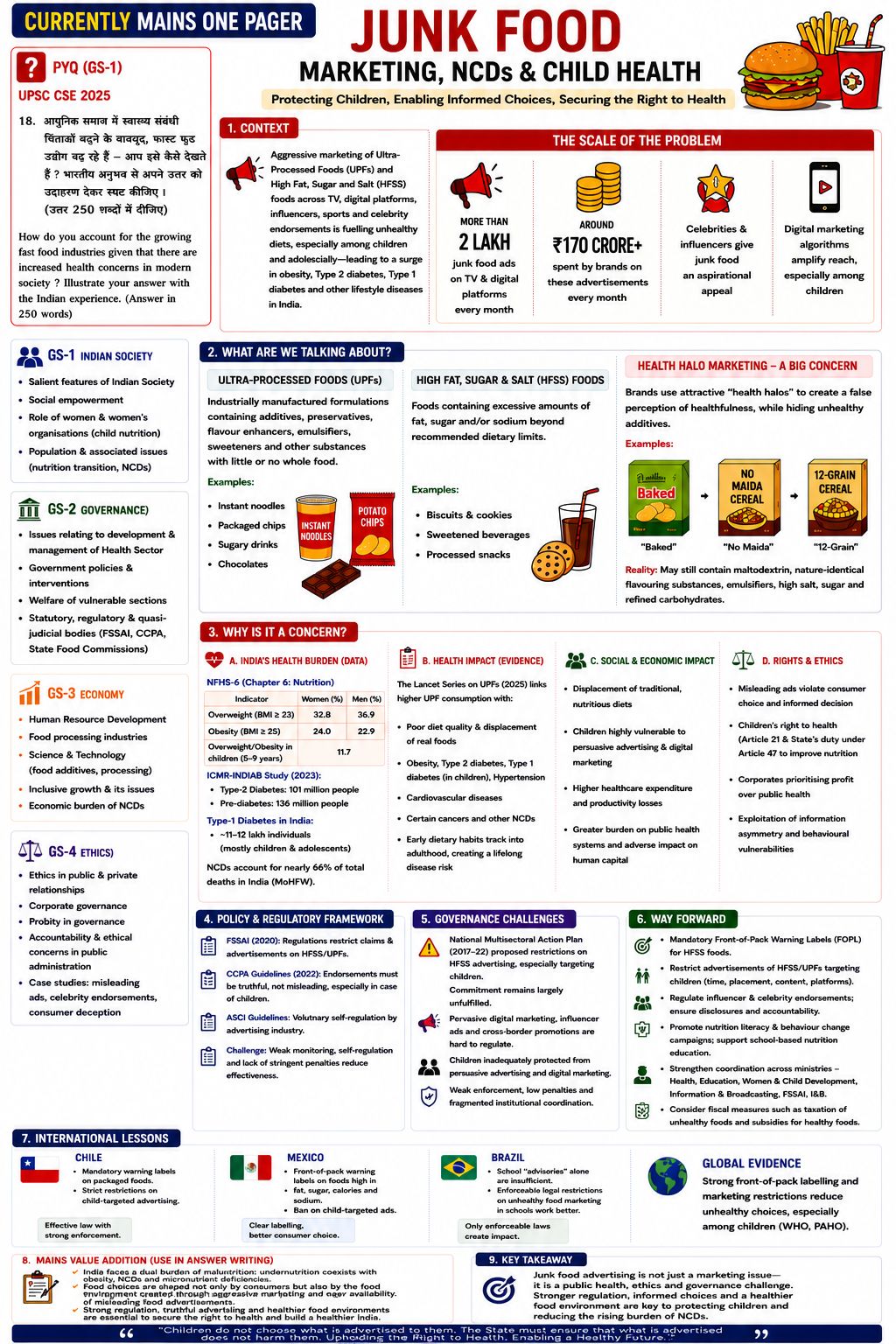
Junk Food / HFSS Foods
HFSS foods refer to foods high in:
- Fat
- Salt
- Sugar
These include:
- Packaged snacks
- Sugary drinks
- Fast food
- Ultra-processed foods
- Sweetened breakfast cereals
- Chocolates and confectionery
- Fried and salty snacks
Why Is This a Concern?
India is facing a rising burden of non-communicable diseases.
Junk food advertising influences:
- Children’s food choices
- Family consumption habits
- Brand loyalty from a young age
- Normalisation of unhealthy diets
Health Concerns
Excessive consumption of junk food is linked to:
- Obesity
- Type-2 diabetes
- Hypertension
- Cardiovascular diseases
- Fatty liver disease
- Poor gut health
- Childhood malnutrition in the form of hidden hunger
Child Health Angle
Children are especially vulnerable because:
- They cannot always distinguish advertisements from information.
- Digital marketing targets them through influencers, gaming and social media.
- Cartoon characters, celebrity endorsements and attractive packaging shape preferences.
- Peer pressure and aspirational branding increase demand.
Regulatory Framework in India
FSSAI
Food Safety and Standards Authority of India
- Regulates food safety and standards.
- Works under the Ministry of Health and Family Welfare.
FSSAI Draft Norms
The Food Safety and Standards Authority of India has proposed front-of-pack labelling and warning-based mechanisms for high fat, salt and sugar foods.
CCPA
Central Consumer Protection Authority
- Can act against misleading advertisements and unfair trade practices.
Consumer Protection Act, 2019
Provides protection against:
- Misleading advertisements
- Unfair trade practices
- Harmful consumer messaging
ASCI
Advertising Standards Council of India
- Self-regulatory body for advertising.
- Issues guidelines against misleading advertisements.
Key Problem
India’s regulatory approach remains fragmented.
There is no strong comprehensive law that directly restricts junk food advertising targeted at children across television, digital platforms, schools and influencer marketing.
Global Examples
Chile
- Front-of-pack warning labels.
- Restrictions on marketing unhealthy foods to children.
- Ban on cartoon characters on unhealthy food packaging.
Mexico
- Strong warning labels.
- Restrictions on child-directed marketing.
Brazil
- Child-focused junk food advertising is treated as abusive advertising.
Way Forward
- Mandatory front-of-pack warning labels.
- Ban misleading health claims on junk food.
- Restrict celebrity and influencer endorsements of unhealthy food targeted at children.
- Regulate digital advertising and gaming-based food marketing.
- Ban junk food ads during children’s programming.
- Strengthen FSSAI, CCPA and ASCI coordination.
- Promote nutrition literacy in schools.
- Encourage reformulation of processed foods with lower sugar, salt and fat.
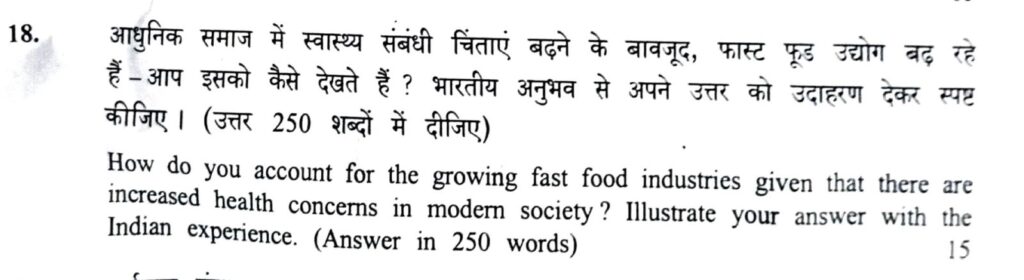
Mains Value Addition
This topic can be used in answers on:
- Public health governance
- NCD prevention
- Consumer protection
- Child rights
- Behavioural regulation
- Nutrition security
- Preventive healthcare