Right to be Forgotten UPSC Explained in GS-2

Context:
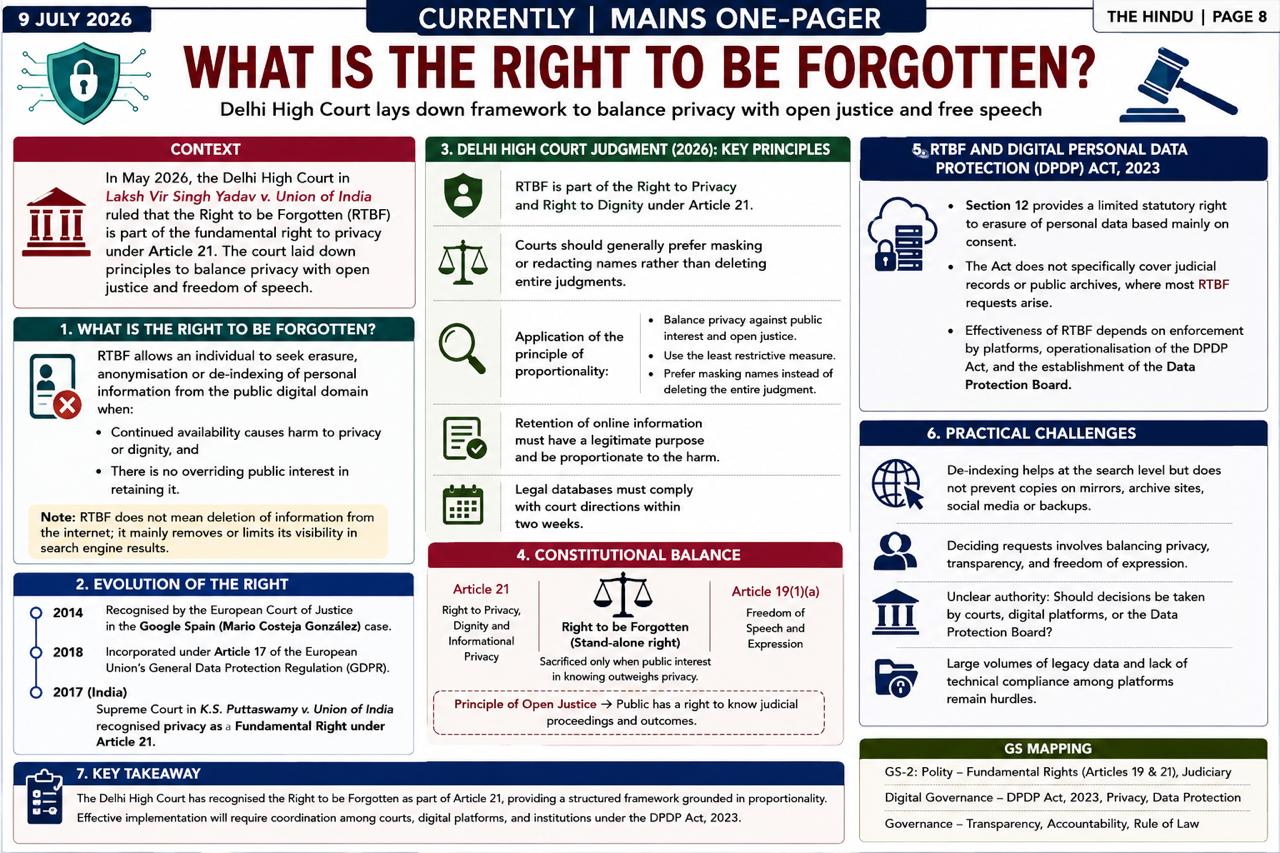
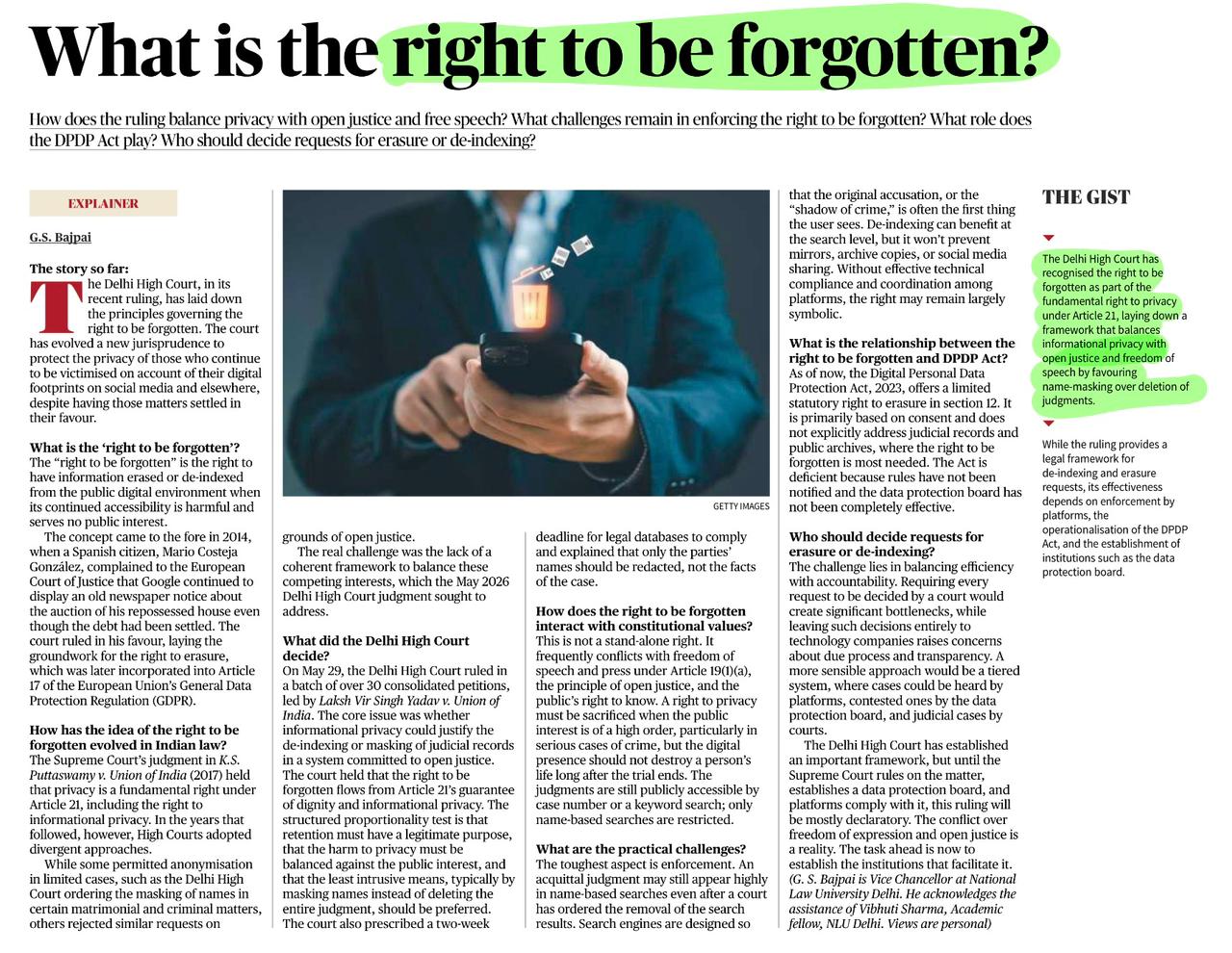
The Delhi High Court, in Kalki v. Singh Yadav v. Union of India, held that the Right to be Forgotten must be balanced with open justice and freedom of speech.

Right to be Forgotten

The Right to be Forgotten allows an individual to seek removal, deletion or de-indexing of personal information from public digital access when continued availability causes harm and no longer serves a legitimate public interest.

Meaning

It does not mean automatic deletion of all information.

It usually means reducing easy public access to outdated, irrelevant or harmful personal data.

Constitutional Basis

The Right to be Forgotten is part of the broader Right to Privacy.

Right to Privacy

Recognised by the Supreme Court in:

K.S. Puttaswamy v. Union of India, 2017

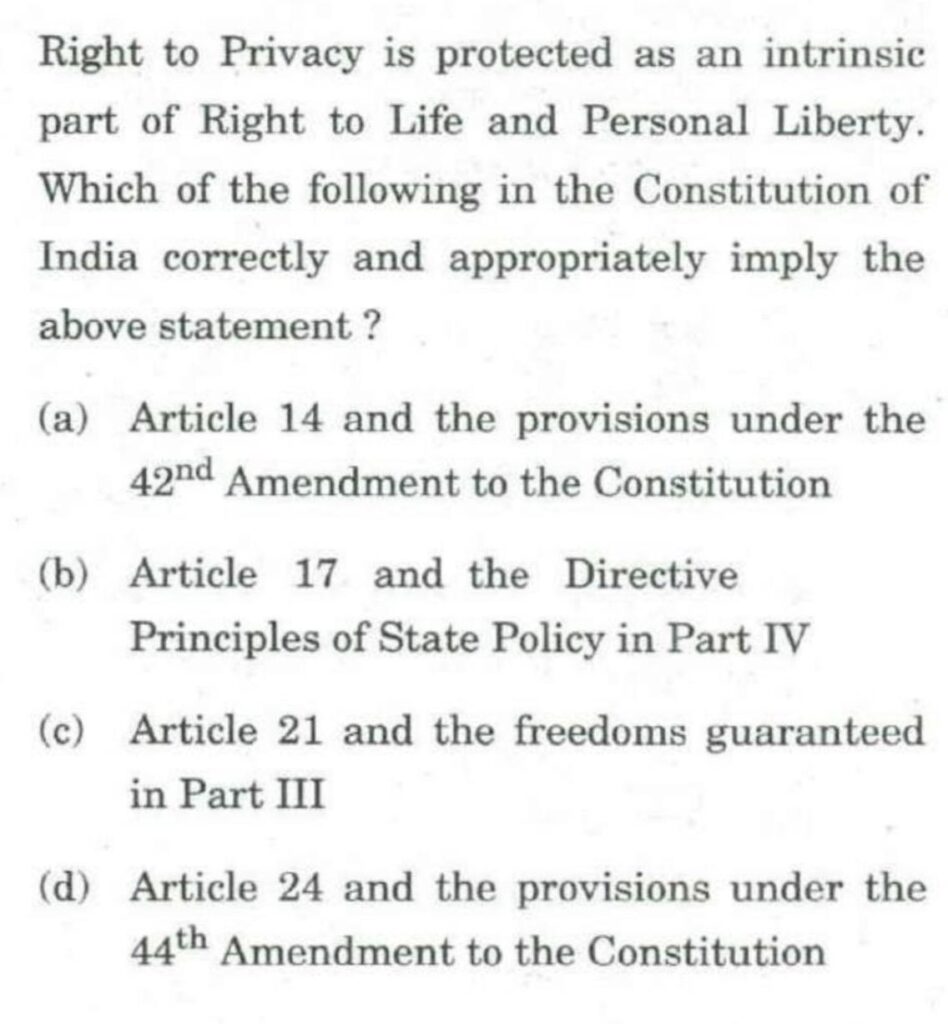
Privacy is protected under:

Constitutional Balance

The Right to be Forgotten must be balanced against:

Article 19(1)(a)

  • Freedom of speech and expression
  • Public right to know
  • Press freedom

Open Justice Principle

Court proceedings and judgments are generally public to ensure transparency and accountability.

Article 21

  • Privacy
  • Dignity
  • Reputation

Practical Examples

A person may seek de-indexing of:

  • Old acquittal records
  • Personal details in judgments
  • Sensitive personal information
  • Irrelevant search results
  • Outdated content causing disproportionate harm

Delhi High Court Position

The Court laid down that requests should generally be made before masking or redacting names rather than deleting entire judgments.

Key Principles

1. Balancing Test

Courts must balance privacy with public interest.

2. Proportionality

The restriction should be proportionate and not excessive.

3. Legitimate Purpose

Retention of online information must serve a legitimate public purpose.

4. Open Justice

Judicial transparency should not be undermined.

DPDP Act, 2023 Link

The Digital Personal Data Protection Act, 2023 provides a limited statutory basis for erasure of personal data.

However, it does not specifically use the phrase “Right to be Forgotten”.

Challenges

  • Search engines may remove links but copies may remain elsewhere.
  • Balancing privacy with press freedom is difficult.
  • Court records serve public accountability.
  • Large volumes of legacy data make compliance hard.
  • Lack of clear procedural framework.

Key Takeaway

The Right to be Forgotten protects privacy and dignity, but it cannot override open justice, public interest and freedom of expression in every case.
Subscribe
Notify of
guest
0 Comments
Oldest
Newest Most Voted

Right to be Forgotten UPSC Explained in GS-2

Got a question? We're here to help!

Our dedicated Student Support team is ready to assist you and guide you every step of the way.
Reach out to us, and let’s tackle your queries together!

About the UPSC Civil Services Examination (UPSC CSE)

The UPSC Civil Services Examination (CSE) is one of the most competitive and esteemed examinations in India, conducted by the Union Public Service Commission to recruit officers for services such as the Indian Administrative Service (IAS), Indian Police Service (IPS), Indian Foreign Service (IFS), and others. The exam comprises three stages — Prelims, Mains, and the Personality Test (Interview) — designed to test a candidate’s knowledge, aptitude, decision-making, and leadership skills.


How to Prepare Effectively for UPSC CSE

Cracking the UPSC CSE requires a deep understanding of the syllabus, consistent revision, structured answer writing, and smart test-taking strategies. The Prelims test analytical and conceptual clarity, the Mains focuses on critical thinking, articulation, and subject mastery, while the Interview assesses presence of mind, ethical judgment, and personality traits relevant to public service.

At UnderStand UPSC, we empower aspirants with a personalized and focused approach to each stage of the exam.


Why Choose UnderStand UPSC?

UnderStand UPSC is a mentorship-driven platform offering a clear, clutter-free strategy to tackle the Civil Services Examination. Our programs like Transform (for beginners and intermediate learners) and Conquer (for advanced mains preparation) provide structured study plans, syllabus-wise video content, interactive live sessions, and answer writing support.

We emphasize:

  • Concept clarity through topic-wise lectures

  • Test series designed around real UPSC standards

  • Personalized mentorship in small groups

  • Regular performance tracking and peer benchmarking

  • Doubt-clearing sessions, current affairs analysis, and monthly magazines


Join the UnderStand UPSC Learning Community

Our mission is to make UPSC preparation less overwhelming and more strategic. We combine mentorship, discipline, and academic rigor to help you clear CSE with confidence. Whether you’re preparing from Delhi, Mumbai, Bangalore, or a remote village — our online-first model ensures quality guidance reaches every corner of India.

Join the thousands of aspirants who trust UnderStand UPSC to guide their journey toward becoming civil servants.

Stay connected with us through our Telegram, YouTube, and Instagram channels for daily tips, strategies, and updates.

Copyright © 2026 USARAMBHA EDUCATION (UnderStand UPSC). All Rights Reserved.

Fill out the form for

Downloading the free Agriculture Short Notes


0
Would love your thoughts, please comment.x
()
x