

Context: Long-duration energy storage UPSC
India’s electricity demand is rising rapidly, with peak demand reaching a record 270.8 GW in May 2026.
At the same time, the growing share of renewable energy requires reliable storage to ensure uninterrupted power supply.
India’s current storage roadmap envisages:
- 80 GW of Battery Energy Storage Systems
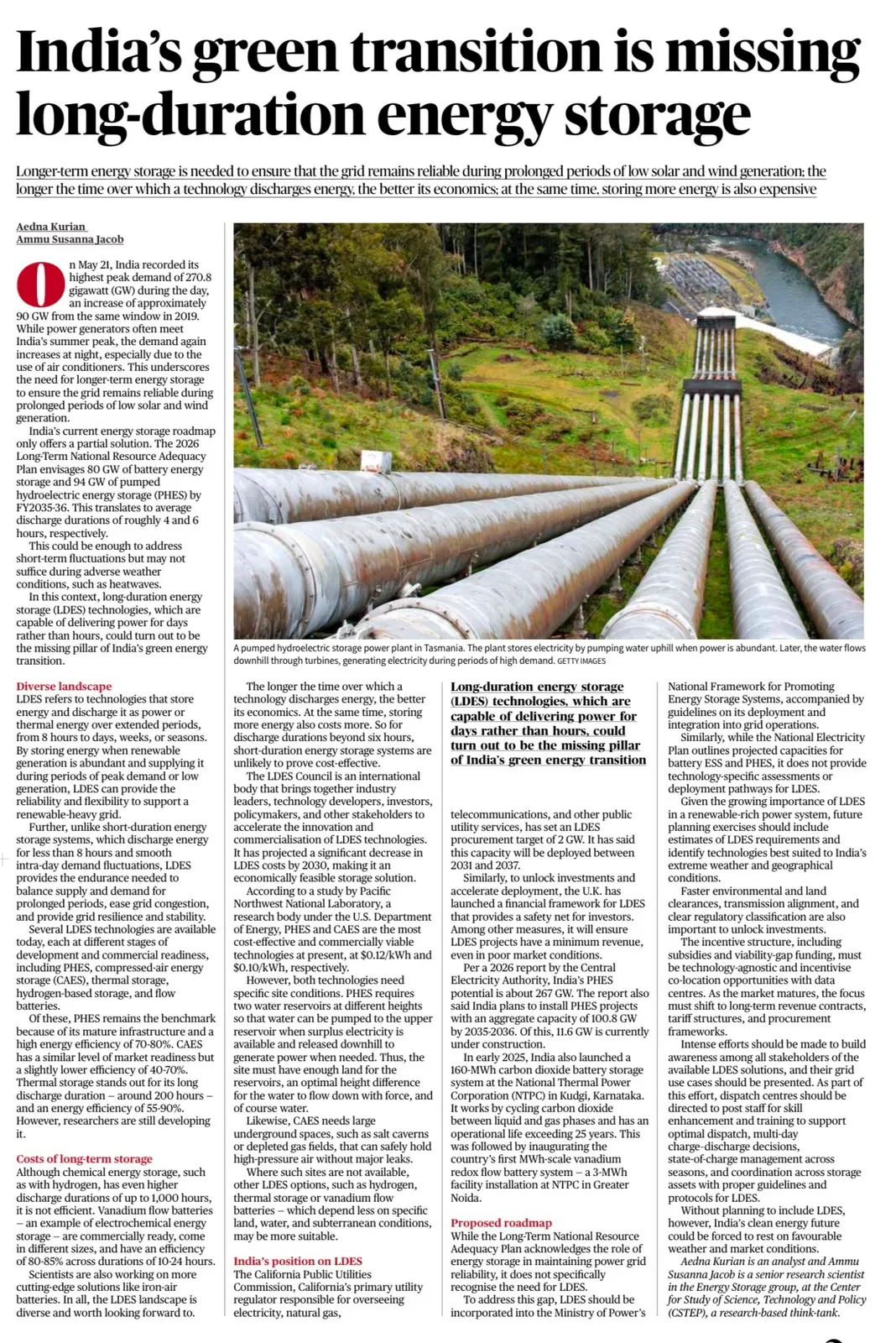
- 94 GW of Pumped Hydro Energy Storage
by 2035–36, but much of this capacity is designed for short-duration storage.
Core Issue
Renewable energy sources such as solar and wind are intermittent.
They depend on:
- Sunlight
- Wind speed
- Weather conditions
- Seasonal patterns
This creates a need for reliable energy storage.
Long-Duration Energy Storage
Long-Duration Energy Storage refers to technologies that can supply electricity for days rather than hours.
This is important when solar and wind generation remain low for extended periods.
Why Short-Duration Storage Is Not Enough
Short-duration storage can help manage daily fluctuations, but it may be inadequate during:
- Seasonal variation
- Extreme weather events
- Long periods of low solar generation
- Long periods of low wind generation
- Peak demand stress
Storage Technologies Needed
India needs a diversified portfolio of storage technologies, including:
1. Pumped Hydro Energy Storage
Uses water reservoirs at different heights to store and generate electricity.
2. Compressed Air Energy Storage
Stores energy by compressing air and releasing it later to generate power.
3. Thermal Energy Storage
Stores energy in the form of heat for later use.
4. Hydrogen Storage
Uses electricity to produce hydrogen, which can later be used as fuel.
5. Flow Batteries
Use liquid electrolytes to store and release electricity over longer durations.
Core Arguments
1. Grid Reliability
LDES is essential to ensure grid reliability during prolonged low renewable generation.
2. Renewable Integration
India’s clean energy transition requires storage that can balance supply and demand.
3. Climate Resilience
Extreme weather events may disrupt generation, making long-duration backup important.
4. Policy Gap
Absence of dedicated policy, incentives and deployment roadmap for LDES can become a bottleneck.
Way Forward
- Integrate LDES into national energy planning.
- Set clear deployment targets.
- Provide regulatory support.
- Promote research and innovation.
- Support pilot projects.
- Encourage domestic manufacturing.
- Develop market mechanisms and investment incentives.
- Use viability gap funding to attract private participation.
- Strengthen grid planning with LDES.
Key Takeaway
India’s green transition cannot depend only on short-duration batteries. Long-duration storage is essential for a reliable renewable energy grid.








