Context:
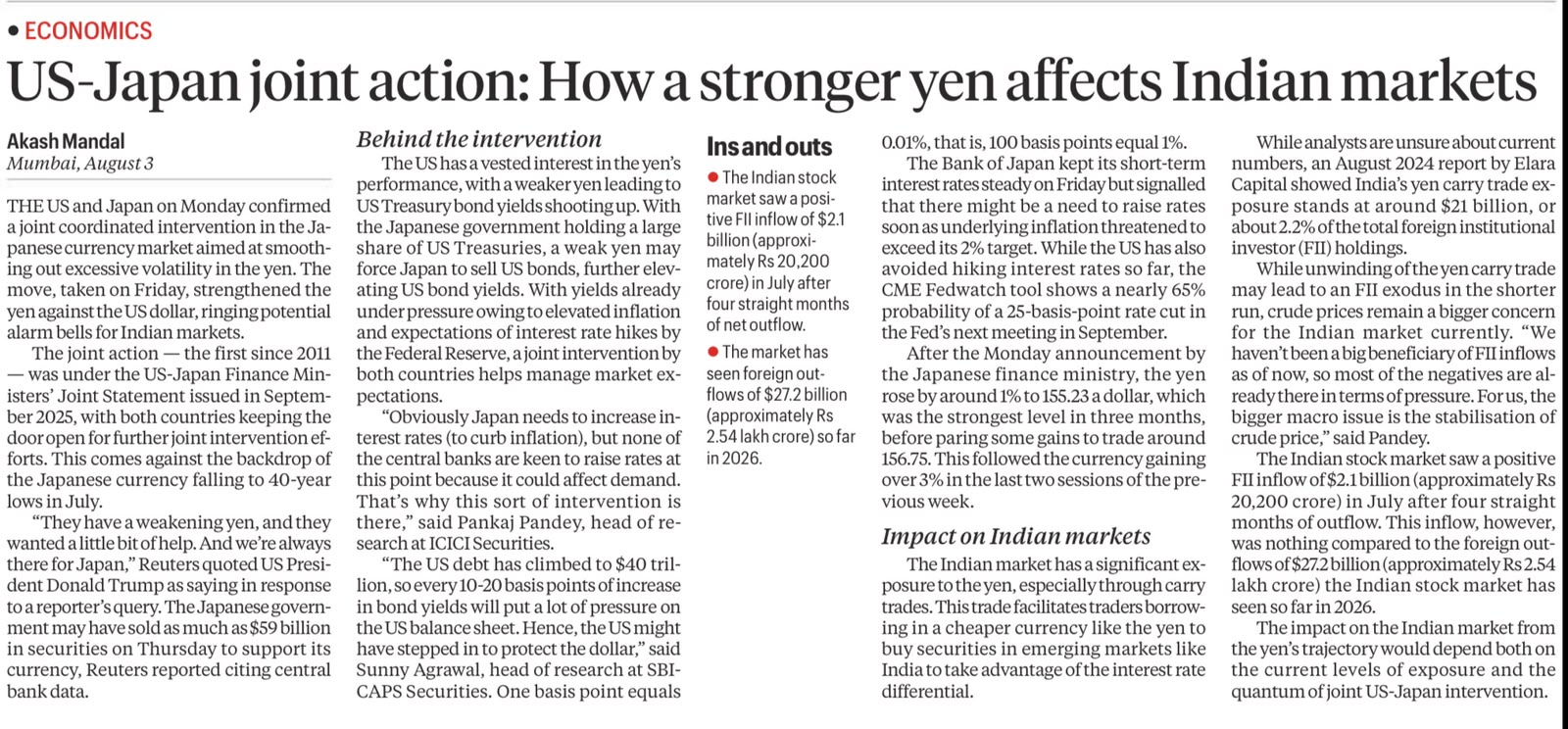
The United States and Japan jointly intervened in the foreign exchange market to stabilise the Japanese yen.
A stronger yen can influence global capital flows, especially Foreign Portfolio Investment into emerging markets like India. This makes the issue important for understanding exchange rates, carry trade and Indian financial markets.
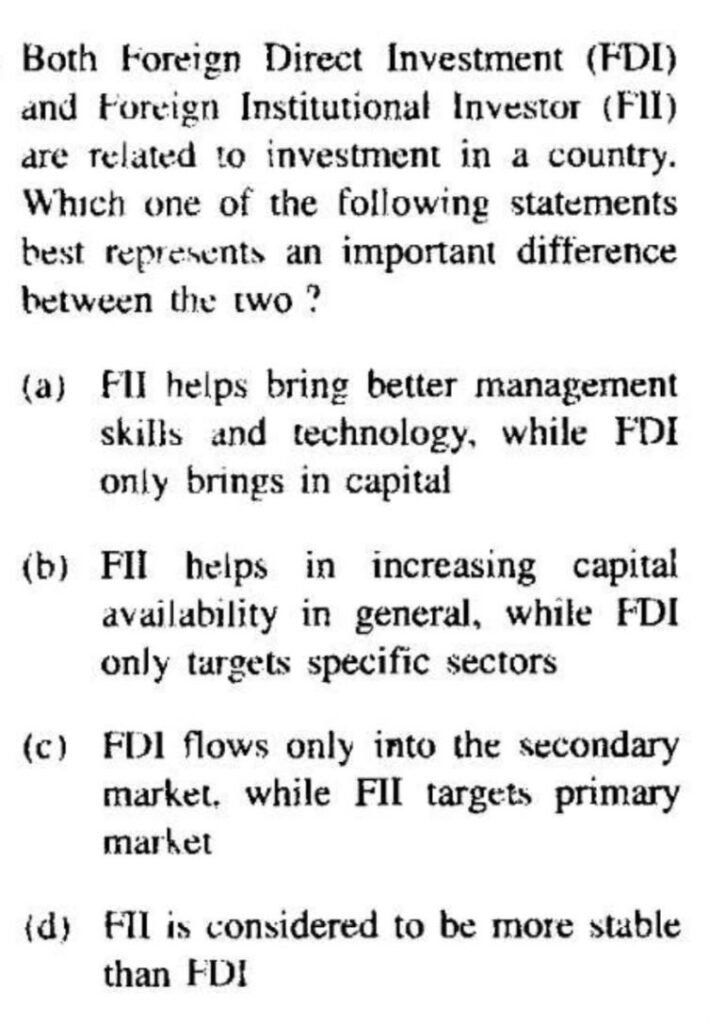
Foreign Portfolio Investment
Foreign Portfolio Investment refers to investment in financial securities without management control.
Investment below 10% of a company’s voting equity is treated as FPI.
Investment of 10% or more is generally treated as Foreign Direct Investment.
FPI is more volatile than FDI because investors can quickly move funds in and out of financial markets.
Yen Carry Trade
Yen carry trade means investors borrow money cheaply in Japanese yen and invest it in higher-return markets.
Japan has historically had very low interest rates.
This encouraged investors to borrow in yen and invest in emerging markets where returns are higher.
Why a Stronger Yen Matters
When the yen strengthens, repayment becomes costlier for those who borrowed in yen.
This reduces the profitability of carry trade.
As a result, investors may withdraw money from emerging markets to reduce risk.
This can affect stock markets, bond markets and currency stability in countries like India.
Why the Intervention Took Place
Japan wanted to stabilise the yen and control imported inflation.
The United States wanted to avoid excessive volatility in currency and bond markets.
The intervention reflects coordinated action to maintain global financial stability.
Impact on India
India recorded Foreign Portfolio Investment outflows of around US$27.2 billion, despite US$2.1 billion inflows in July.
A stronger yen may reduce FPI inflows into India because carry trade becomes less attractive.
This can create short-term volatility in equity and debt markets.
It can also put pressure on the Indian rupee.
However, the overall impact is expected to remain limited because India’s domestic economic fundamentals remain relatively strong.
Key Takeaway
A stronger yen can disturb global carry trade and affect FPI flows into India, but India’s strong domestic fundamentals may limit the long-term damage.